

For six long months, something strange happened every single day at exactly 3:00 p.m.
A huge biker with a gray beard walked into my 17-year-old daughter’s hospital room, held her hand for one hour, and left.
And I, her own mother, had no idea who he was.
My name is Sarah. I’m 42. American. And my daughter, Hannah, is 17 years old.
Six months ago, a drunk driver ran a red light and smashed into the driver’s side of her car. She had just finished her shift at the little bookstore where she worked part-time after school. She was five minutes from home. Five minutes.
That’s all it took.
Now she’s in Room 223. In a coma. Surrounded by machines that beep and hum and flash numbers I’ve learned to read like a second language.
I practically live there.
I sleep in a stiff recliner that never fully closes. I eat from vending machines. I know which nurse gives the softest blankets.
(It’s Jenna.)
Time inside a hospital is not normal. It’s just a ticking clock and the sound of beeping. Morning and night mean nothing. Only visiting hours and doctor rounds.
And every day at exactly 3:00 p.m., the same thing happens.
The door opens.
And he walks in.
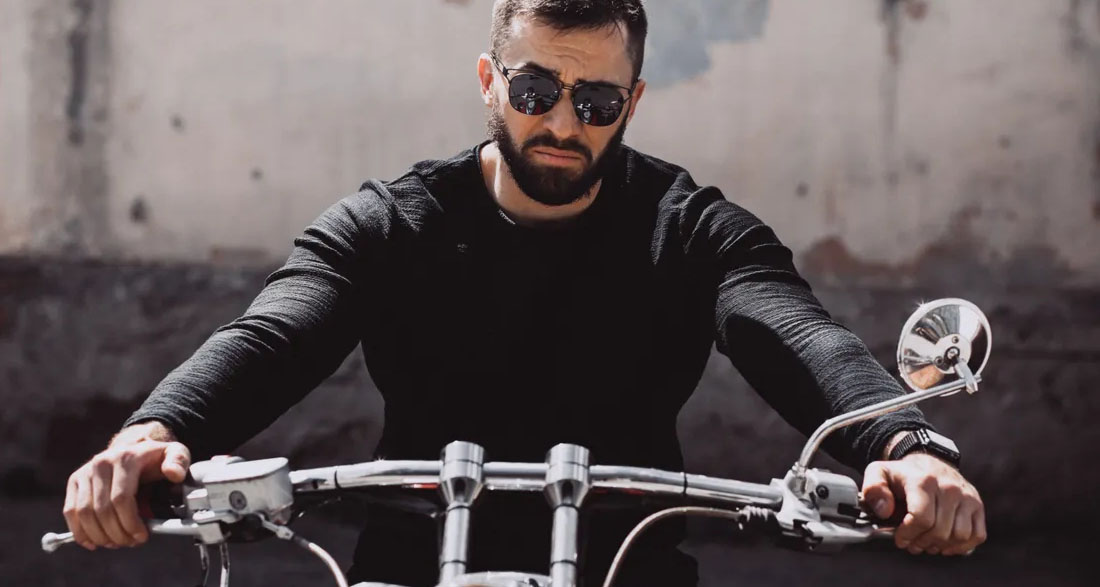
Huge. Broad shoulders. Gray beard. Leather vest. Heavy boots. Arms covered in tattoos. He looks like the kind of man people move out of the way for.
But when he steps into that room, he nods at me politely. Almost shy. Like he’s afraid to take up too much space.
Then he looks at my unconscious daughter and smiles softly.
“Hey, Hannah,” he says in a deep voice. “It’s Mike.”
Like she’s expecting him.
Like this is normal.
Nurse Jenna always lights up when she sees him.
“Hey, Mike,” she says cheerfully. “You want coffee?”
“Sure, thanks,” he replies easily.
Like he belongs there.
Then he pulls a chair close to the bed, takes Hannah’s hand in both of his giant ones, and sits.
For one hour.
Sometimes he reads from a fantasy novel. Dragons. Magic kingdoms. Brave girls with swords.
Sometimes he just talks in a low, steady voice.
One day I heard him say quietly, “Today sucked, kiddo. But I didn’t drink. So there’s that.”
At exactly 4:00 p.m., he gently places her hand back on the blanket, stands up, nods at me again, and leaves.
Every. Single. Day.
At first, I let it slide.
When your child is in a coma, you don’t push away kindness. Even strange kindness.
But after months, it started to crawl under my skin.
He wasn’t family.
He wasn’t one of Hannah’s friends’ parents. I asked Maddie. I asked Emma. They both said, “We don’t know any Mike.”
Her dad, Jason, had no idea who he was either.
Yet the nurses talked to him like he was part of the routine.
One afternoon, I asked Jenna, “Who is that guy?”
She hesitated.
“He’s… a regular,” she said carefully. “Someone who cares.”
“That doesn’t answer my question,” I said.
She gave me a look that said she couldn’t say more.
I tried to let it go.
But I’m the one signing forms. I’m the one sleeping in that chair. I’m the one who brushes Hannah’s hair and whispers to her at night.
And some stranger is holding her hand like it’s his job.
Still… he didn’t look mean. He looked tired. Broken, maybe. But not cruel.
So one afternoon, when he left at 4:00 like always, I followed him into the hallway.
“Excuse me,” I said. “Mike?”
He turned.
Up close, he was even bigger. Scarred knuckles. Weathered skin. Eyes that looked like they hadn’t slept properly in years.
“Yeah?” he said gently.
“I’m Hannah’s mom.”
He nodded once. “I know. You’re Sarah.”
That stopped me cold.
“You… know my name?”
“Jenna told me,” he said. “She also told me not to bother you unless you wanted to talk.”
“Well,” I said, my voice shaking, “I’m talking now.”
He glanced toward Room 223.
“Can we sit?” he asked, nodding toward the waiting area.
I didn’t want to. I wanted to scream. But I followed him.
We sat in two hard plastic chairs.
He rubbed his beard and took a breath.
“My name is Mike. I’m 58. I’ve got a wife, Denise. And a granddaughter named Lily.”
I stared at him.
“And?”
He swallowed.
“I’m also the man who hit your daughter,” he said. “I was the drunk driver.”
The world went silent.
“What?” I whispered.
“I ran the red light,” he said. “It was my truck. I hit her car.”
Heat rushed through me. Then ice.
“You have got to be kidding me,” I said, standing up. “You did this to her—and you come in here and talk to her like—”
“I pled guilty,” he said quietly. “Ninety days in jail. Lost my license. Court-ordered rehab. AA. I haven’t had a drink since that night.”
“But she’s still in that bed!” I shouted.
He spread his hands helplessly. “I know. None of that fixes anything.”
“I should call security,” I said. “I should have you banned.”
“You can,” he said calmly. “You’d be right to.”
He didn’t argue.
He just sat there, looking like a man waiting to be sentenced.
“The first time I came,” he said softly, “was after I finished my sentence. I needed to see if she was real. Not just a name in a report.”
He nodded toward the ICU.
“Dr. Patel wouldn’t let me in. So I sat in the lobby. Then I came back the next day. And the next.”
He gave a tired half-smile.
“Finally, Jenna said you were meeting with the social worker. She let me sit with Hannah for a little while. She warned me you probably wouldn’t want me there if you knew.”
“She was right,” I snapped.
He nodded. “Yeah. She was.”
He looked down at his hands.
“I picked three o’clock because that’s what the accident report said.”
My chest tightened.
“So every day at three, I sit with her. I tell her I’m sorry. I tell her about my AA meetings. I read the books she likes. My wife asked the bookstore manager what she used to buy, and I got them.”
He shrugged.
“It doesn’t undo what I did. But it’s something that isn’t hiding.”
“You could’ve stayed away,” I said.
“I tried,” he answered. “Didn’t last. My sponsor said if I wanted to make amends, I had to face it.”
He hesitated.
“My son died when he was 12. Bike accident. Nobody’s fault. I know what it feels like to stand where you’re standing.”
I flinched.
“And then you chose to put someone else here,” I said.
He closed his eyes briefly. “I know. I live with that every day.”
I was shaking.
“I don’t want you near her,” I said finally. “Not right now.”
He nodded.
“Okay. I’ll stay away. If you ever change your mind… I’m at the noon meeting on Oak Street. Every day.”
The next day, three o’clock came.
And the door stayed closed.
No boots. No deep voice reading about dragons.
I thought it would feel better.
It didn’t.
After a few days, Jenna said quietly, “You told him, didn’t you?”
“Yes.”
She nodded slowly. “I can’t tell you what to do. But for what it’s worth, I’ve never seen anyone show up like he did.”
That night I sat beside Hannah and whispered, “Do you want him here? Because I don’t know what to do.”
She didn’t move.
But I felt like she heard me.
A few days later, I went to the noon AA meeting on Oak Street.
I sat in the back.
When it was his turn, he stood.
“I’m Mike, and I’m an alcoholic,” he said. “And I’m the reason a 17-year-old girl is in a coma.”
He talked about the crash. About jail. About trying to drink himself to death afterward. About his sponsor. About sitting in a hospital room at three p.m.
He never said our names.
After the meeting, he saw me.
“I’m not promising to talk to you,” I said.
He froze.
“I don’t forgive you,” I added.
“I don’t expect you to,” he said.
“But… if you still want to sit with her… you can. I’ll be there. You can read.”
His eyes filled with tears.
“Are you sure?” he asked.
“No,” I said honestly. “But I’m saying yes anyway.”
The next day at three, he stood in the doorway.
“Is it okay?” he asked.
I nodded.
He sat down.
“Hey, kiddo. It’s Mike. Got chapter seven for you.”
He started reading.
Her heart rate, which had been jumpy, slowly steadied on the monitor.
I pretended not to notice.
Days turned into weeks.
Then one Tuesday, halfway through a chapter, he read, “…and the dragon said—”
Hannah’s fingers tightened around mine.
Not a twitch.
A squeeze.
“Mike,” I whispered sharply. “Stop.”
We stared at her hand.
“Hannah? Sweetheart, it’s Mom. If you can hear me, squeeze again.”
A pause.
Then another squeeze.
I slammed the call button.
“Jenna! Dr. Patel! Now!”
The room filled with people.
Hannah’s eyelids fluttered.
“Mom?” she whispered.
I broke.
“I’m here. I’m right here.”
In the corner, Mike covered his mouth and sobbed.
Hannah’s eyes shifted toward him.
“You read… dragons,” she murmured. “And you always say… you’re sorry.”
She didn’t know yet.
She only knew his voice.
Later, when she was stronger, we told her everything. Me. Jason. Her therapist, Dr. Alvarez. And Mike.
Hannah listened quietly.
“You were drunk,” she said to him.
“Yes,” he said.
“You hit my car.”
“I did.”
“You come here every day?”
“As much as I can. If you don’t want that, I’ll stop.”
She stared at him for a long time.
“I don’t forgive you,” she said.
He nodded. “I understand.”
“I hate my stupid legs,” she said angrily.
My heart cracked.
“But I don’t want you to disappear either,” she added. “I don’t know what that means yet. But don’t just vanish.”
He let out a shaky breath. “Okay. I’ll be here. On your terms.”
Recovery was brutal.
Physical therapy. Pain. Nightmares. Days she screamed, “I hate my stupid legs!” and refused to move.
Mike never pushed.
He just showed up. Sat quietly. Read when she wanted. Talked when she asked.
We later found out he’d been quietly helping with hospital bills.
When I confronted him, he said, “I can’t undo what I did. I can help pay for what comes after.”
Almost a year after the crash, Hannah walked out of the hospital.
Slow.
With a cane.
But walking.
I held one arm.
She hesitated… then took Mike’s arm with the other.
Outside the hospital doors, she looked at him.
“You ruined my life,” she said.
He flinched. “I know.”
“And you helped keep me from giving up on it,” she said. “Both can be true.”
He started crying again.
“I don’t deserve that,” he whispered.
“Probably not,” she said. “But I’m not doing it for you. I’m doing it for me.”
Now Hannah is back at the bookstore part-time.
She’s starting community college next semester.
She still limps. She still has bad days.
Mike is still sober.
He and Denise bring her snacks sometimes at therapy.
Every year, on the anniversary of the crash, at exactly three p.m., the three of us meet at the little coffee shop down the street from the hospital.
We don’t give speeches.
We don’t pretend.
We just sit.
Drink coffee.
Talk about her classes. About his granddaughter Lily. About nothing important.
It’s not forgiveness.
It’s not forgetting.
It’s three people who got trapped in the same terrible story… trying to write the next chapter without pretending the first one didn’t happen.