

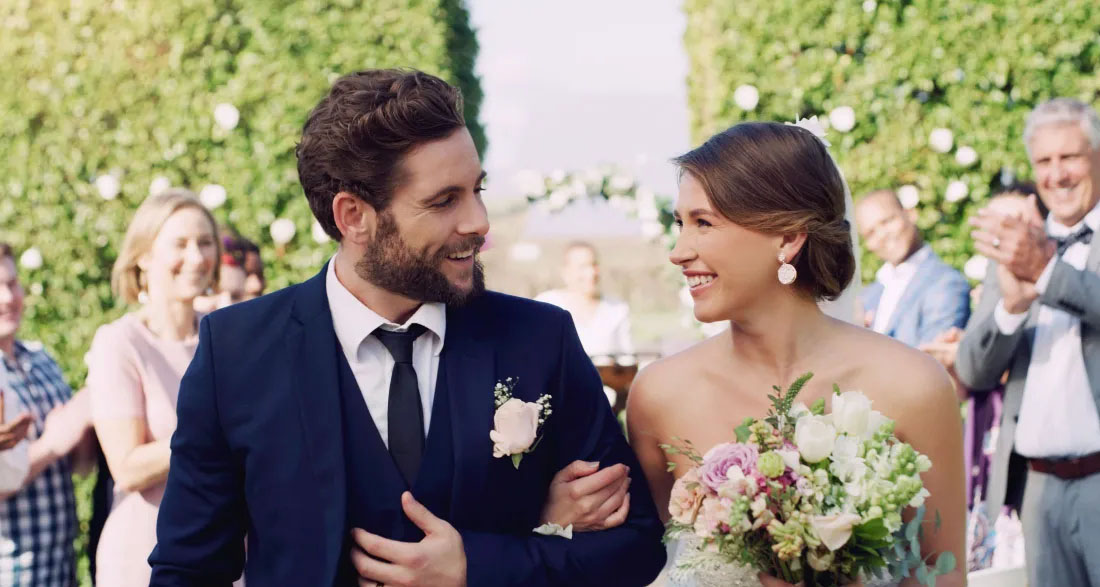
On a day that was meant to celebrate me, I was once again asked to step aside.
But this time, I didn’t stay quiet.
This wedding wasn’t just about love. It was about old habits, unspoken truths, and a lifetime of loyalty that had never really included me. And finally, after all these years, I decided to take back the one thing I was never given freely—my place.
I already knew my sister was going to wear white to my wedding.
She wouldn’t ask. She never did. She wouldn’t even check. Emily never needed permission. She would just decide, the same way she always had, and expect everyone else to move around her like she was the sun and we were all stuck in her orbit.
I could picture it perfectly.
Our mother would fuss over her veil, adjusting it with dramatic care. Our father would offer his arm proudly, like this was the most natural thing in the world. The three of them would walk into my wedding as if it were Emily’s moment—Emily’s chance at love, attention, and admiration.
And I promised myself something important.
Whatever they were planning, it would not go the way they expected.
The family dinner had been Bryan’s idea.
“It’s just a dinner, Anna,” he said gently. “Just a few hours, my love. One meal. No landmines.”
“I know,” I said, already tense. “But why do you really want to do it?”
He smiled, calm as ever. “Because I know your family. If they’re planning something ridiculous, they won’t be able to keep it quiet over dinner. They’ll slip. And then we’ll be ready.”
I nodded, even though deep down, I should have known better.
Even when I prepared myself, my family always found a way to surprise me.
We were halfway through dessert when Mom placed her fork down carefully and dabbed her mouth with her napkin, like she was about to make an official announcement in court.
“Anna, sweetheart,” she said softly, “you do understand that Emily has to walk down the aisle first, right?”
I blinked. “You mean… as the first bridesmaid?”
Dad spoke without even looking at me. “She’s older, Anna. It doesn’t really matter what role she has. It just makes sense.”
“Sense?” I said, my voice rising. “Emily doesn’t even have a partner to walk with. There’s a theme, Dad. Everything is coordinated.”
Mom sighed, long and dramatic.
“It wouldn’t be fair for the younger sister to go first and take all the attention,” she said. “Emily deserves that moment. You know it. She knows it. We all know it.”
I opened my mouth to respond, but nothing came out.
There was a tightness in my chest, the familiar feeling of shrinking myself so someone else could shine brighter. I stared at the lemon tart in front of me—Emily’s favorite. Not mine. I’d always hated how sharp it tasted.
“She’s not the bride,” I finally said.
“She’s your sister,” Mom replied, like that explained everything.
And in their eyes, it did.
“I just think it would mean a lot to her,” Mom added. “To go first. To be seen first.”
I was adopted when I was three years old, and they never let me forget it.
Emily was six at the time. My parents had wanted another child, but my mother couldn’t have one. Emily was their miracle.
“Your sister is our miracle, Anna,” Mom used to say. “She’s the one we made ourselves. We love you, of course, darling… but we made her.”
I was too young to understand what those words really meant back then. But as I grew older, it became painfully clear.
Emily got the bigger bedroom. The nicer clothes. The bigger gifts. Even on my birthdays, it somehow felt like the candles belonged to her, too.
I learned early not to ask for much. Gratitude was expected—for the house, for the food, for being given a family at all.
Most of all, I was expected to be grateful for not being left behind.
They reminded me often, sometimes gently, sometimes not, how bad my life could have been if they hadn’t taken me in.
I was “saved.”
Which meant I owed them.
And I owed her.
“She’s still figuring things out,” Dad would say whenever Emily messed up.
She dropped out of college twice. Her car was impounded three times after wild nights out. When she couldn’t pay rent, they covered it without hesitation.
When I earned a scholarship and left the state for college, there was no celebration.
“That’s good,” Mom said. “It’ll be quieter with just the three of us here.”
I met Bryan during my first semester.
He looked at me like I wasn’t a burden. Like I didn’t need to make myself smaller to deserve space beside him. He never asked me to apologize for existing.
And now, weeks before our wedding, my mother was still making Emily’s feelings the priority.
Again.
My fingers dug into the edge of my chair. I wanted to say everything. To let the years pour out. But then Bryan squeezed my hand.
“You know what,” he said calmly, “that sounds reasonable. Emily can walk first.”
He leaned in and kissed my cheek.
“Trust me, my Anna,” he whispered.
So, I did.
The morning of the wedding, I got ready in the smaller dressing room.
The mirror had a crack in the corner. The light flickered when the air conditioner turned on. It felt fitting.
Emily took the bridal suite. No one questioned it. No one asked if I minded.
I did my own hair. My own makeup. I stepped into my dress alone.
There was no champagne. No fuss.
Just silence.
And honestly? It felt like relief.
An usher knocked and handed me a note from Bryan.
“This is your big day, my Anna. You are the moment. I’ll see you at the end of the aisle. Don’t trip.”
I stood behind the double doors as the music started.
Emily walked first, of course.
She took both parents with her. My father at her side. My mother fluffing her white veil with pale pink embroidery.
She looked like a bride.
Then the music stopped.
“Wait.”
Bryan’s voice echoed through the chapel.
“There’s one condition before my bride walks down the aisle.”
“What’s going on, Bryan?” my father asked sharply.
Bryan didn’t raise his voice.
“She’s done everything on her own. All her life. She’s walked in her sister’s shadow. Anna has been treated like a guest in her own story. But not today, Elvis. Not today.”
The room went silent.
“Today,” Bryan continued, “Anna walks alone. Not because she has to—but because it’s the last time she ever will.”
He looked at me.
“The moment Anna takes my hand, she’ll never be overlooked again.”
I stepped forward.
I didn’t look at Emily. I didn’t look at my parents.
I looked at Bryan.
“Is Anna really walking alone?” someone whispered.
Yes. I was.
This wasn’t just a walk down the aisle. It was a final step out of a role I had been trapped in my entire life.
When I reached him, Bryan kissed my hand.
“This is all yours,” he whispered. “Finally.”
The reception was warm and glowing.
Emily left early. She didn’t say goodbye.
Near the end of the night, Bryan stood and held up a piece of paper.
“A few years ago,” he said, “I found a letter Anna wrote when she was sixteen.”
He read:
“Dear future Anna,
I hope you found someone who loves you just because you’re you. I hope you stopped apologizing. I hope you’re someone’s first choice.”
Bryan folded the paper.
“Anna is mine,” he said. “And I will protect her. Always.”
Later, I leaned into him and whispered, “Do you think they’ll ever understand me?”
He shrugged. “Maybe. But you don’t need them to.”
That day, I walked alone.
Just once.
And never again.