

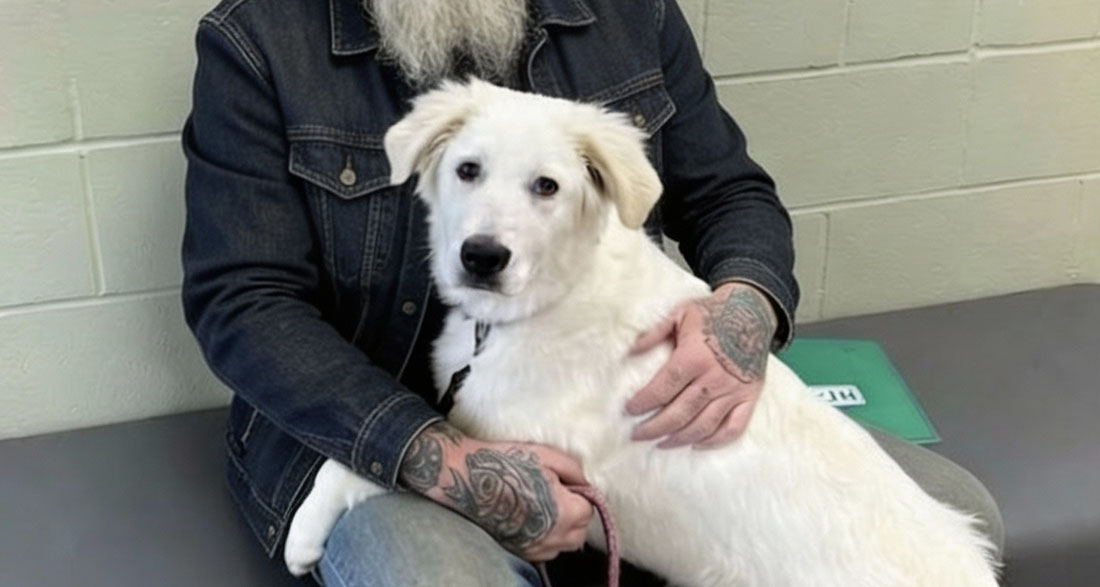
The road was quiet, empty except for me, my old motorcycle, and the soft whisper of wind brushing through the trees. It was just past three in the morning, the kind of hour where the world feels paused, almost suspended between sleep and wakefulness.
Up ahead, the old Cedar Creek Bridge came into view, dimly lit by the pale moonlight, its worn beams casting long shadows that made it look more like a place from a nightmare than a bridge.
My bike gave a sudden cough, a metallic rattle that made my stomach tighten. I knew that sound too well. Trouble. I pulled over, muttering a curse under my breath, the engine giving one last splutter before falling completely silent. I swung my leg off, kicked at the gravel, and reached for my flashlight.
And then I heard it—a faint, broken whimper, barely carried by the wind.
I froze. That sound wasn’t the random noise of the night. It was pain, pure and unmistakable. I followed it around one of the bridge’s old concrete supports, my heart hammering. That’s when I saw her.
A Golden Retriever, chained to the beam. Her fur was matted, dull, and dirty, her ribs visible beneath her skin. Hanging from her belly was a large, ugly tumor, dragging her down like a cruel anchor.
Someone had tried to make her comfortable—a threadbare blanket beneath her, a metal bowl with a little water, and a stuffed yellow duck, frayed and loved almost to death.
Taped to the bridge support was a note, written in careful, adult handwriting. It said they were sorry. They couldn’t afford surgery, or even to have her put down. They begged whoever found her not to let her suffer. Some words were shaky, smudged like tears had dripped over the paper.
The dog lifted her head when she saw me. Even in that state, she wagged her tail. It was slow, hesitant, but there was a message in that wag. Gratitude. A quiet “thank you,” mixed with something that felt like goodbye.
I knelt beside her, my hands trembling as I stroked her head. Her fur was rough but warm, and that little warmth cut through the chill in the air. That’s when I noticed something tucked into her collar—a folded piece of paper, scribbled in purple crayon.
“My name is Madison. I’m seven. Daisy is my dog. Mommy went to heaven. Daddy said Daisy has to die. But I prayed and prayed because I think angels ride motorcycles. Please help her. I love her. She’s all I got.”
My throat tightened. Inside the collar, taped carefully, was a small bag of coins—quarters, nickels, pennies. $7.43. Tooth fairy money.
I just sat there. Fifty-eight years old, grease-stained hands, the kind of man who hadn’t cried in decades—but that night, I cried. Harder than I had in a long time. I’d just left my brother in hospice. Cancer was winning, and there was nothing I could do. I felt useless, angry, beaten down by life.
And yet here was Daisy, dragging her tired body closer, resting her head in my lap. Something cracked inside me. I couldn’t save my brother, but maybe I could save her.
I pulled out my phone and called my vet. He answered groggily. I told him what I’d found. Without hesitation he said, “Bring her in. Now.”
I wrapped Daisy in the blanket, carried her to my bike, and rode slowly through the empty streets, her head resting on my arm.
The surgery was long, expensive, and the vet warned me the cancer had spread. But Daisy survived. When she opened her eyes afterward, groggy but alive, she gave me that soft wag again. It wasn’t triumph—it was grace.
A week later, I tracked down Madison and her father. They lived in a small house at the edge of town, peeling paint, a tired porch swing creaking in the wind. Her dad looked worn, the weight of grief and bills written in every line of his face.
“I—I just didn’t want her to suffer,” he said quietly. “I couldn’t afford the surgery… and I couldn’t bear to see Madison watch her die. I thought… maybe if I left her by the bridge, someone could help.”
Madison ran out when she saw my bike. Blonde curls messy, pajamas covered in stars, her eyes wide as if she’d spotted something miraculous.
“Are you the motorcycle angel?” she asked, her voice trembling.
I knelt so we were eye to eye. “I don’t know about angel,” I said softly, “but I did find Daisy.”
Her hands flew to her mouth. “You found her?”
“She’s safe,” I told her. “She had surgery. She’s tired, but she’s okay.”
When I brought Daisy out of the truck, Madison let out a sound between a sob and a laugh. Daisy’s tail thumped against the blanket. Madison hugged her, whispering, “I told you the angels would come.”
After that, I kept visiting. Sometimes to check on Daisy, sometimes just to fix a leaky faucet or mow the yard. Madison would sit on the porch steps, drawing pictures of Daisy and me on my bike, always adding wings to my back. “That’s how I see you,” she said.
Daisy recovered slowly. She still had cancer, and we knew her time was limited. But dogs live in moments. She played in the yard, chased balls, and slept with her head on Madison’s pillow. She was loved—and that was enough.
Her father changed, too. He smiled more, drank less. “Seeing her wag her tail again… it made me feel like maybe I could survive losing your mom,” he admitted one evening.
When Daisy finally passed, it was peaceful. Madison held her, whispering love into her fur. Her tail wagged one last time, as if saying thank you. We buried her under the big oak, the stuffed duck beside her, and Madison placed her $7.43 on the grave. “It’s hers now,” she said.
But the story didn’t end. Madison and her dad began volunteering at a local animal rescue.
Madison created “Daisy’s Angels,” a project where kids could donate spare change to help sick or abandoned dogs. Soon, newspapers wrote about it. TV stations covered it. Within a year, Daisy’s Angels had paid for dozens of dogs’ medical care.
Every time I visit, Madison shows me drawings or tells stories about the dogs they helped. On my living room wall hangs her first drawing—me on my bike with wings, Daisy behind me in a tiny helmet. Next to it is the original crayon note, framed with the $7.43 taped underneath.
I sometimes think back to that night on Cedar Creek Bridge. I almost drove past, thinking it was too late, too dark, too far out of my hands. But I stopped. And everything that followed—laughter, healing, hope—happened because I listened to a cry in the dark.
I’m not a man of faith, really. But that night taught me what angels might look like. They don’t always have halos or wings. Sometimes they ride motorcycles, cry over a sick dog at three in the morning, and answer a little girl’s prayer.
Now, whenever I cross Cedar Creek Bridge, I slow down. The air feels softer. I imagine Daisy’s tail wagging in the wind, Madison’s voice laughing, and I whisper a quiet thank you. Because sometimes angels really do ride motorcycles—and sometimes, stopping for a small act of kindness can change everything.