

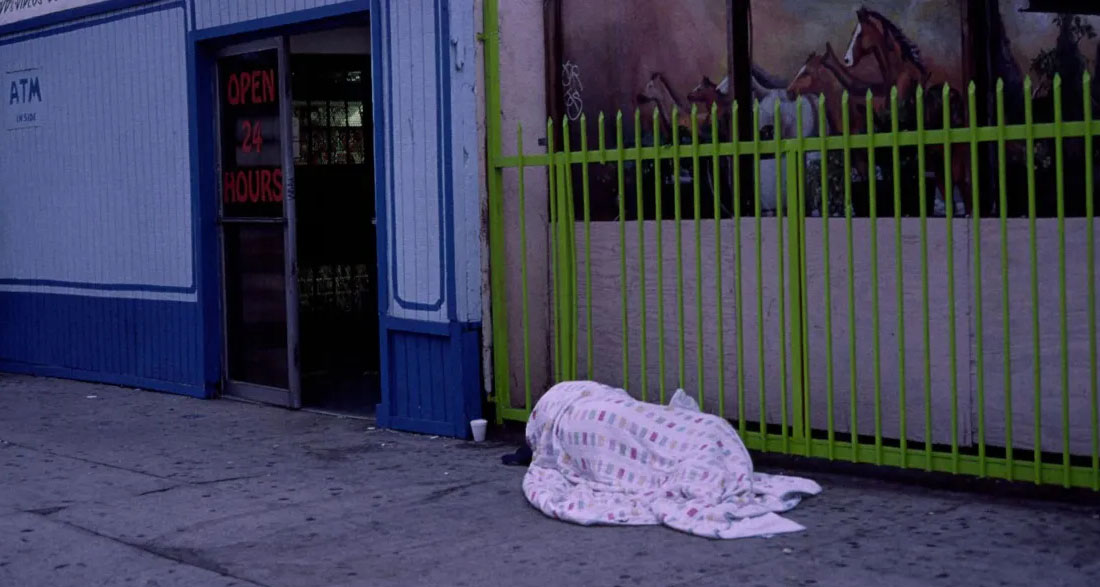
I was sixteen years old when I met a homeless pregnant woman at a community outreach center. I had no idea then that she would change my life forever, or that years later, my husband would uncover something that would break my heart and force me to see my son in a completely new way.
I started volunteering at the community outreach center when I was sixteen, mostly because that’s what everyone told you to do if you wanted your college applications to look good. You know how it is — grades, clubs, essays, and this constant pressure to prove you cared about something bigger than yourself.
The center was an old brick building near the riverwalk. It used to be a warehouse, I think, but it had been turned into a place that offered free prenatal checkups, donated clothes, and hot meals twice a week.
The paint peeled in places, the floors always smelled faintly of bleach, and the plastic chairs never quite matched.
That’s where I met the woman who changed my life.
That’s where I met
the woman who
changed my life.
My job was painfully boring. I folded donated clothes that didn’t quite match in size or season, wiped down tables after meals, handed out intake forms, and smiled at people who looked like they hadn’t been smiled at in a very long time.
Most people came in loud or desperate or angry. Some talked too much. Some avoided eye contact completely.
Marisol was different.
She never came during meal hours. She would slip in quietly when the building was half empty, pregnant and painfully thin, her hair always pulled back tight like she didn’t want a single strand out of place.
Marisol was different.
Her eyes were sharp but tired — the kind of tired that made you wonder when she’d last slept without fear. She always thanked everyone, even when they did almost nothing for her.
We offered her shelter referrals every single time. Every time, she refused.
She wouldn’t give an address. Once, when someone gently pushed, she said she slept “near the water.” It was so vague it somehow told us nothing and everything at the same time.
Her voice was soft. Polite. Almost apologetic for existing, if that makes sense.
I started noticing that Marisol never asked questions. She never complained. She never stayed longer than she absolutely had to.
She refused the shelter referrals
every time we offered.
She’d take what she needed, say “thank you” like she truly meant it, and disappear.
Sometimes, while folding sweaters or wiping down plastic chairs, I’d find myself wondering about her.
Where did she go at night?
Who was she before she ended up sleeping by the river?
When her son was born, she named him Noah.
When her son was born,
she named him Noah.
I remember the first time I held him.
She’d gone back to meet with the nurse, and I’d been sitting near the door. Noah was maybe three months old then, wrapped tightly like a tiny burrito.
When I looked down at him, his eyes were wide and serious. Not like a baby’s eyes should be. It felt like he was already studying the world, measuring it, deciding what kind of place it was.
I remember the first time
I held him.
“Are you watching us all?” I whispered, smiling as he gripped my finger tightly. “What do you think of it, little man?”
He blinked at me, but didn’t make a sound.
“He doesn’t cry much,” I said when Marisol came back.
“He listens,” she replied quietly, rocking him against her chest. Then, out of nowhere, she said, “People think I’m stupid. I just loved the wrong person.”
That was it. She didn’t explain. She didn’t say anything else about her past.
We all worried about her and Noah.
We all worried about
her and Noah.
The staff talked to her constantly about shelters, safety, and resources. They tried to help her plan, tried to convince her.
Marisol thanked them every time.
And then she left anyway.
I’d watch her go, pushing that stroller with one broken wheel that always veered left, disappearing toward the riverwalk.
For four years, I watched her come and go with Noah. Four years of quiet fear, quiet hope, and quiet waiting.
It felt like something had to give.
And one day, it did.
One afternoon, the center doors burst open.
A woman I vaguely recognized — another outreach volunteer — stumbled inside carrying Noah. Her face was red and streaked with tears.
“Eliza!” she cried. “There’s been an accident… Marisol. Oh God. She— the car came out of nowhere. Didn’t even stop. I need to get back. She’s still— please, take him.”
I took Noah from her.
I took Noah
from her.
He was clutching a red toy truck so tightly his knuckles were white. His face was completely blank, like someone had turned all the lights off inside him, and that terrified me.
I set him down and knelt in front of him.
“Hey, Noah. You know me, right? It’s Eliza.”
He nodded once. “When’s Mama coming?”
I couldn’t answer.
Marisol never came back. She was gone before the ambulance arrived.
Child services showed up within hours.
We sat together, trying to remember if Marisol had ever mentioned family or friends, but there was no one. Just a little boy with serious eyes and a broken toy truck.
He would have to go into foster care.
When they explained it to Noah, he wrapped himself around my leg.
“Please don’t make me sleep with strangers,” he said quietly.
Something broke open inside me.
“Don’t worry, bud,” I said, my voice shaking. “It will be okay. I’ll do everything I can to take care of you.”
I had no right saying that.
I was working full-time, volunteering, and putting myself through college while barely making rent. I was twenty years old. I could barely look after myself.
But I fought for Noah anyway.
Paperwork. Home studies. Background checks.
Three-quarters of my meals were Ramen.
I cried in the shower almost every night, terrified I was ruining both our lives.
I adopted him when he was five.
Noah never asked for toys. Never complained about hand-me-downs. He helped with chores without being asked.
When he was ten, I found him patching his sneakers with duct tape.
“Why didn’t you tell me they were falling apart?” I asked.
“They still work,” he said, honestly confused.
I laughed. I thought it was cute.
I should have seen what was really going on.
Noah was twelve when Caleb and I got married.
Caleb is logical, observant, methodical. He stepped into parenting carefully.
Years passed before he noticed something I had missed. Or maybe I didn’t want to see it.
One morning at breakfast, Caleb tried to bring it up.
“Noah, one egg or two?” I asked.
“One’s fine.”
“You have a big math test today, right?” Caleb asked.
“Mostly review.”
I offered to make a sandwich for later. Noah declined.
“You never stay after school for clubs,” Caleb said gently. “Anything you’re interested in?”
“I’m good.”
After Noah left, I smiled. “He’s doing so well.”
Caleb frowned. “He’s very low-maintenance.”
That was the last time he mentioned it — until last night.
When I came home, Caleb sat me at the kitchen table.
“Eliza,” he said quietly, “here’s what your son has been hiding from you for years.”
He slid a folder toward me.
Inside were emails from teachers recommending Noah for programs I’d never heard of. Notes from counselors. An unsigned permission slip for a school trip.
In the margins, Noah had written:
Too expensive.
Not necessary.
They have enough to worry about.
Then there was a notebook.
It wasn’t a journal. It was lists. Budgets. Plans.
Halfway down one page was a sentence written smaller than the rest:
If they’re happier without me, I’ll understand.
The last page was titled “Rules.”
Don’t be loud.
Don’t need too much.
Don’t make people choose.
Be ready.
I went to Noah’s room immediately.
He looked up. “Did I do something wrong?”
“No,” I said, sitting on the floor in front of him. “But I did.”
I showed him the page.
“Who taught you this?”
“Nobody,” he said softly. “I just figured it out. So I wouldn’t be a burden.”
My heart shattered.
I tore the page in half before I could stop myself.
“Those rules don’t exist anymore,” I said, holding his shoulders. “You are my son. This is your home. Forever.”
Then I slid a new folder toward him.
“Plans,” I wrote on the tab. “These are the plans that matter now.”
For the first time in years, Noah cried in my arms.
And I promised myself I would never let him feel unwanted again.