

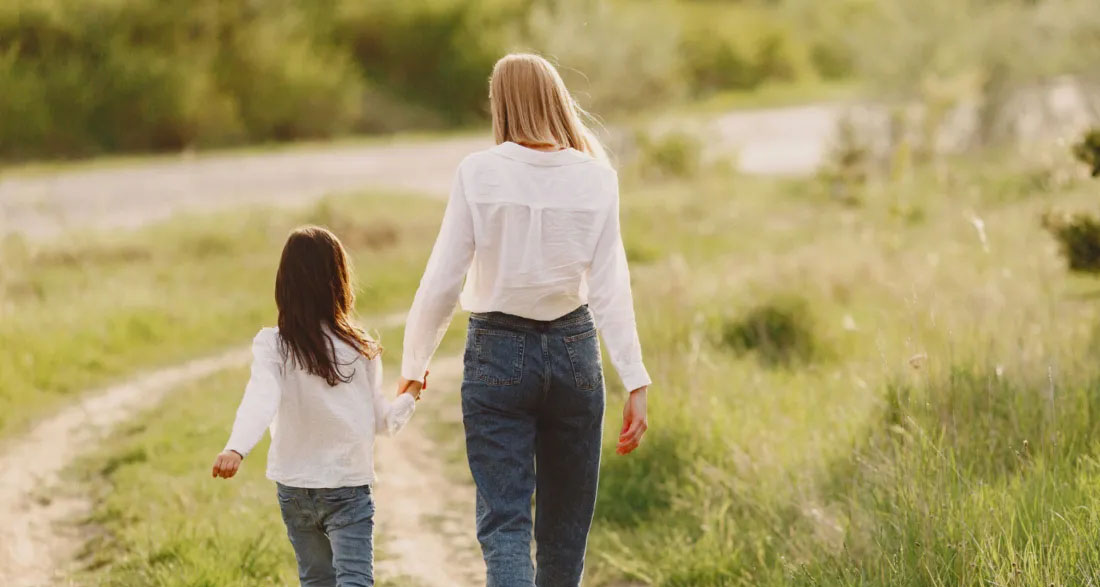
I adopted my best friend’s daughter after a tragedy that shattered us all. For thirteen years, I poured every bit of love, time, and energy I had into that little girl. I made sure she always felt wanted, chosen, and safe. I sacrificed everything for her.
But on her 18th birthday, the girl I loved more than life itself did something that made me cry harder than I ever had in my life.
My name is Anna. I grew up in an orphanage, sleeping in a room with seven other girls. Some got adopted. Some aged out. But me? I stayed… alongside my best friend, Lila.
We weren’t friends because we picked each other. We were friends because we survived each other. And together, we promised that one day, we’d have a family like the ones in movies—full of love, laughter, and safety.
When we turned eighteen, we left the orphanage. Lila took a job at a call center, and I started waitressing at an all-night diner. We shared a tiny studio apartment with mismatched furniture from yard sales, and a bathroom so small that you had to sit sideways on the toilet. But it was ours. No one could kick us out.
Three years later, everything changed. Lila came home from a party looking like she’d seen a ghost.
“I’m pregnant,” she said, her voice trembling, standing in our doorway at 2 a.m. “And… Jake isn’t answering my calls.”
Jake—the guy she’d been seeing for four months—blocked her number the next day. No family to call. No parents to lean on. Just me.
I held her hand through every doctor’s appointment, every ultrasound, and every 3 a.m. panic attack. I was in the delivery room when baby Miranda arrived, a tiny screaming bundle that transformed Lila from a terrified girl into an exhausted mother in eight hours.
“She’s perfect,” Lila whispered, tears streaming down her face, holding Miranda against her chest. “Look at her, Anna. She’s beautiful.”
Miranda had dark hair and Lila’s nose, perfect in that wrinkled, newborn way that made you want to hold her forever.
“We did well,” Lila said softly, wiping her tears.
For five years, we made it work. Lila got a better job in medical billing, and I picked up extra shifts to pay for braces, birthday parties, and shoes. We learned how to be a family. Three hearts against a world that hadn’t promised us anything.
Miranda called me “Aunt Anna” at first, climbing into my lap during movie nights, falling asleep on my shoulder, drooling on my shirt. I’d carry her to bed, thinking, This is what happiness must feel like.
Then tragedy struck. Lila was driving to work when a delivery truck ran a red light. She was gone instantly. The officer said, “She didn’t suffer,” as if that was supposed to help.
Miranda was five. She kept asking when her mommy was coming back.
“She’s not, sweetheart,” I whispered. And twenty minutes later, she asked again.
Social services arrived three days after Lila’s funeral. A woman with a clipboard sat at my kitchen table.
“There’s no one willing or able to take custody of Miranda,” she said.
“What happens to her?” I asked.
“She’ll enter the foster system…”
“No.” The word came out harder than I meant it. “She’s not going into the system.”
“Are you related to the child?”
“I’m her godmother.”
“That’s not a legal designation.”
“Then make it legal,” I said, leaning forward. “I’ll adopt her. Whatever paperwork you need, I’ll sign it. She’s not going into foster care.”
The woman studied me. “This is a permanent commitment.”
I thought of every lonely night Lila and I had survived. Of every moment we’d promised each other that no child of ours would ever feel unwanted.
“I understand.”
Six months later, the adoption was finalized. Six months of home visits, background checks, parenting classes—and every day, Miranda asking, “You’re not going to leave me, right?”
“I’m not going anywhere, sweetheart,” I told her. “You’re stuck with me.”
She was six when the judge signed the papers. That night, I sat her down.
“You know I’m not your birth mom, right?”
She nodded, twisting the corner of her blanket.
“But I’m your mom now. Legally. Officially. That means I get to take care of you forever, if that’s okay with you.”
Her eyes—so much like Lila’s—filled with tears. “Forever?”
“Forever,” I said.
She threw herself into my arms. “Can I call you ‘Mommy’ then?”
“Yes!” I cried, holding her so tight I could feel my heart breaking and mending all at once.
Growing up together was messy and beautiful. I was learning motherhood on the fly.
Miranda was grieving, sometimes silently, sometimes with screams that could shatter glass. Some nights, she cried for Lila, and I couldn’t fix it. Some mornings, I poured orange juice into her cereal instead of milk, and we laughed until we cried.
But step by step, we built our life.
She joined the drama club in middle school.
“You hate being on stage,” I said, confused.
“But there’s no harm in trying!” she shot back, grinning.
I helped her memorize lines, attended every performance, and cried through her first lead role in eighth grade. “That’s my daughter,” I whispered, my heart full.
High school brought heartbreak, friends who were complicated, and a speeding ticket that sent her back to my lap crying like she was seven again.
“I’m sorry, Mom. Are you mad?” she asked.
“Terrified, yes. Mad? No,” I said. “We all make mistakes. That’s growing up, sweetheart.”
She got a part-time job at a bookstore, bringing home coffee and stories, helping with Sunday dinner, and loving both musicals and terrible reality TV. By seventeen, she was taller than me, confident, independent, and completely my own.
Then came her 18th birthday. We threw a party. Friends, coworkers, neighbors. Laughter, homemade dumplings, music, and candles.
After everyone left, Miranda appeared in my doorway. I noticed the seriousness in her eyes.
“Mom? Can we talk?”
“Of course, dear. What’s going on?” I said, heart thumping.
She shifted, hands deep in her hoodie pockets. “I’m 18 now. I have access to my mom’s money—Lila’s insurance, her savings… everything.”
“That’s good,” I said, keeping my voice steady. “That’s your money. You can do what you want.”
Her eyes were fierce. “I know what I want to do with it.”
I froze.
“You need to pack your things,” she said.
“What?” My voice cracked.
She handed me an envelope. Hands shaking, she almost dropped it. I opened it. In messy handwriting, it read:
“Mom,
I’ve been planning this for six months. I realized I’ve spent 13 years watching you give up everything for me.
You gave up promotions, relationships, trips… all so I could have a life. So I used some of Mom’s money to book us two months in Mexico and Brazil—every place you’ve ever dreamed of visiting.
That’s why you need to pack your things. We leave in nine days.
I love you.
Thank you for choosing me every day for 13 years.
Now let me choose you back.
P.S. I’m filming this. Your face is going to be hilarious.”
I looked up. She was in the hallway, phone pointed at me, tears streaming, grinning like an idiot.
“Surprise!” she whispered.
I sobbed, and she ran into my arms. “You scared me,” I choked.
“I wanted it to be dramatic,” she laughed through her own tears.
“So… will you come?” she asked, smiling.
“Sweetheart, I’d follow you anywhere,” I said.
“Good,” she said. “Because the tickets are non-refundable.”
We spent nine days planning. Spreadsheets, backup plans, color-coded itineraries. Miranda had learned Spanish and Portuguese. She had thought of everything.
The trip was beyond perfect. Markets in Mexico City, swimming in cenotes, sunrises over Rio de Janeiro, dancing under the stars. We got lost, tried too-spicy food, laughed until our stomachs hurt, and took hundreds of photos.
One night, on a quiet beach in Brazil, Miranda leaned against me.
“Do you think Mom would be happy with how things turned out?”
“I think she’d be proud of us,” I whispered.
She squeezed my hand. “Me too.”
We stayed there until the stars faded, two people who had built a family from nothing, finally allowing ourselves to just exist together.
I’m forty now. I’ve spent most of my life expecting people to leave. But Miranda taught me this: family isn’t who stays because they have to—it’s who stays because they choose to. Every single day, even when it’s hard, even when it costs something.
To anyone who’s loved a child that isn’t theirs by birth… thank you. The best families aren’t born. They’re built—one choice, one sacrifice, and one moment of love at a time.