

My first Christmas as a widow was supposed to be quiet. Dull. Predictable in the saddest way possible.
Work at the library.
Ride the bus home.
Sit in a silent house.
Repeat.
That was the plan.
Instead, an old man on a bench outside the library—someone I thought was just another stranger I handed sandwiches to—turned my entire life upside down on Christmas Eve.
My name is Claire. I’m 35 years old. And this is my first Christmas as a widow.
I lost my husband, Evan, to cancer three months ago.
We were married for eight years. The first six were full of noise and plans and stupid little arguments about nothing. The last two were made of chemo rooms, scan results, bad hospital coffee, and doctors using the word “stable” like it was a fragile bandage holding everything together.
Then one morning, Evan didn’t wake up.
That was it.
No warning. No dramatic last words. Just silence.
After the funeral, our small house felt fake, like a stage set that someone forgot to strike.
His jacket still hung on the chair.
His shoes were still by the door.
His toothbrush stood beside mine, like he was only running late.
But the mortgage didn’t care that I was shattered.
Bills kept coming. Life kept moving. Grief didn’t pause anything except my heart.
So I took a job as an assistant librarian at the town library.
It wasn’t glamorous. But it was quiet.
I shelved books. Fixed printer jams. Helped kids find chapter books. And tried not to cry between the shelves where no one could see me.
That’s where I first noticed him.
The first week, I walked right past him.
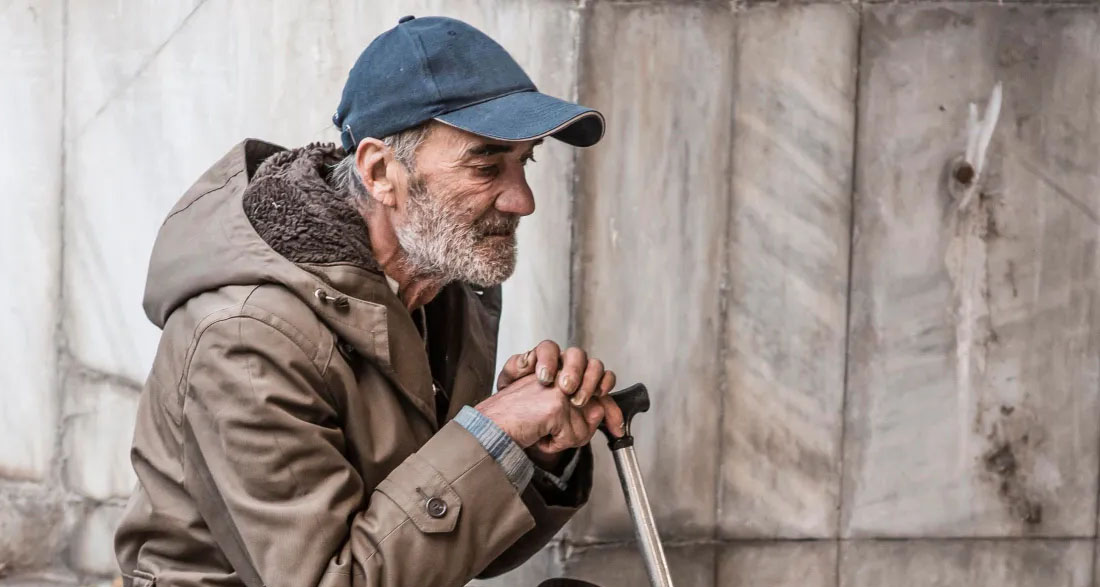
An older man sat on a bench near the library gate. Gray hair under a knit cap. A worn brown coat. Gloves with the fingers cut off. He always held the same folded newspaper, even though it never seemed to change.
The first week, I walked past him.
The second week, I found a dollar in my bag and dropped it into his Styrofoam cup.
He looked up at me. His eyes were clear. Sharp. Not dull like I expected.
He said softly,
“Take care of yourself, dear.”
That was it.
The next day, I brought him a sandwich and a cheap coffee.
“Turkey,” I said awkwardly. “It’s not fancy.”
He took them with both hands like they mattered.
“Thank you,” he said. Then again,
“Take care of yourself, dear.”
That became our quiet routine.
I got off the bus. Gave him whatever I could spare. Sometimes food. Sometimes a few dollars.
He never asked questions. Never tried to chat. Just nodded and said the same thing every time:
“Take care of yourself, dear.”
Strangely, it helped more than all the “you’re so strong” speeches people kept throwing at me.
December turned mean.
The library put up crooked tinsel. Kids dragged slush across the floors. A tiny speaker played Christmas music that felt too cheerful.
Every night, I went home to a house that felt too big.
Smile.
Scan.
Shelve.
Go home.
Repeat.
The day before Christmas, the cold was brutal.
When I stepped off the bus, I saw him shaking on the bench. His newspaper drooped in his lap.
I went home first.
I grabbed an old fleece blanket. Filled a thermos with tea. Made a sandwich. Tossed some cookies into a bag and shoved it all into my tote.
When I came back, he was still there, shoulders hunched.
“Hey,” I said gently. “I brought upgrades.”
I spread the blanket over his knees, handed him the thermos, set the bag beside him.
His hands shook.
At first, I thought it was just the cold.
Then he looked up at me.
And I saw it.
Fear.
Real fear.
“Please don’t go home today,” he said.
I froze.
“What?”
He swallowed hard.
“Please,” he said quietly. “Don’t sleep at your house tonight.”
My skin went cold.
“Why?” I asked.
“Stay with your sister,” he said. “Or a friend. Or a hotel. Anywhere else.”
My heart started pounding.
“How do you know I have a sister?” I demanded.
He met my eyes.
“I’ll explain tomorrow.”
Then he said my name.
“Thank you, Claire.”
My stomach dropped.
“I never told you my name,” I whispered.
His voice shook.
“It’s about your husband,” he said. “About Evan.”
My throat closed.
“My husband is dead,” I said weakly.
“I know,” he replied. “That’s why I’m here.”
“Tell me everything right now,” I said.
He shook his head.
“Tomorrow. Same bench. Same time. Please, Claire. Just don’t go home tonight.”
Before I could grab his sleeve, he stood up.
For weeks, I’d watched him move like every step hurt. But now he walked away steady, newspaper tucked under his arm, disappearing into the snow.
He’d known my name.
He’d known about my sister.
He’d said Evan’s name like it cost him something.
When my bus stop came, I stayed seated.
I rode all the way to my sister Meghan’s place.
She opened the door in leggings and fuzzy socks.
“Claire?” she said. “What’s wrong?”
“Can I stay here tonight?” I asked. “I don’t want to be alone.”
She stepped aside immediately.
“Of course,” she said. “You don’t need a reason.”
Later, at her kitchen table, I told her everything.
“The guy on the bench?” she said slowly. “And he knew your name?”
“Yeah.”
“That’s creepy,” she said. “You should call the cops.”
“And say what?” I asked. “‘A man with a newspaper knows basic facts’?”
She didn’t laugh.
“At least text your neighbor,” she said. “Make sure the house looks normal.”
I did.
My neighbor replied:
Looks fine. No lights. No cars. Want me to check the door?
I barely slept.
Every sound made me think of my house.
Morning came with no emergency texts. Just a cheerful “Merry Christmas!”
The library was closed, but I walked there anyway.
He was already on the bench.
No newspaper this time.
He stood when he saw me.
“Thank you for trusting me,” he said.
“You promised to explain,” I said. “Start talking.”
“My name is Robert,” he said. “And I knew your husband long before you did.”
He told me about construction jobs. About Evan using his middle name, Daniel. About taped leftovers and ‘80s rock Fridays.
Every detail hit like proof.
“He called me when he got sick,” Robert said. “Asked me to watch over you. From a distance.”
He handed me an envelope.
It had my address.
Evan’s full name.
And the logo of Child Protective Services.
“They came to your house last night,” Robert said. “I didn’t want you finding this alone.”
Inside was a photo.
A boy. About ten. Messy dark hair. Evan’s eyes.
“He has a son,” I whispered.
“He had one,” Robert said gently. “From before you. He never cheated.”
He gave me another envelope.
Evan’s handwriting.
Inside was a letter.
You were my home.
By the time I finished reading, I was shaking.
“What do they want from me?” I asked.
“To know if anyone cares,” Robert said. “The boy’s mother died.”
I stared at the phone number.
“I won’t sleep if I don’t call,” I said.
When I hung up, my hand was trembling.
“What now?” Robert asked.
“Now I go home,” I said. “And when that social worker knocks, I answer.”
He smiled softly.
“Then I kept my promise.”
“Were you ever really homeless?” I asked.
“I’ve had rough years,” he admitted. “But people ignore an old man on a bench. Your husband needed that.”
Before I left, he said it again.
“Take care of yourself, dear.”
“I’m going to try,” I said. “And if I can… I’ll take care of that boy too.”
I walked away with grief still heavy in my chest.
But now it wasn’t the only thing there.
Now there was truth.
Love that wasn’t perfect—but real.
And a promise kept, all the way to Christmas Eve.