

I thought I was doing a small good deed when I stopped and handed a homeless man a meal. But what he said and did next pulled me into a story I could never have imagined.
A few weeks ago, my marriage ended. And I don’t mean a dramatic, movie-style breakup with shouting or doors slamming. No, it ended quietly. Painfully. The kind of heartbreak you can feel in your chest, lingering, without anyone else noticing.
The day it happened was a cold Tuesday afternoon. I remember the suitcase by the door, the soft click of my wife’s key on the table, and then silence. That was it. No arguments. No explanations. Just… gone.
The first few nights, I couldn’t sleep. I lay on the couch, staring at the ceiling, my mind spinning in circles. Then, I started walking. Not for exercise. Not with a destination. I walked to keep moving, to keep my thoughts from drowning me. The more steps I took, the less time I had to think.
A few blocks from my apartment was a park. One of those city parks that has seen better days—benches with peeling paint, a rusty jungle gym, pigeons strutting around like they owned the place. The pond was more like a sad puddle someone forgot to fill.
That day, the wind cut through my coat like knives. The sky was gray, heavy, like someone had painted over the sun with cement. I was halfway through one of my endless walks when I saw him.
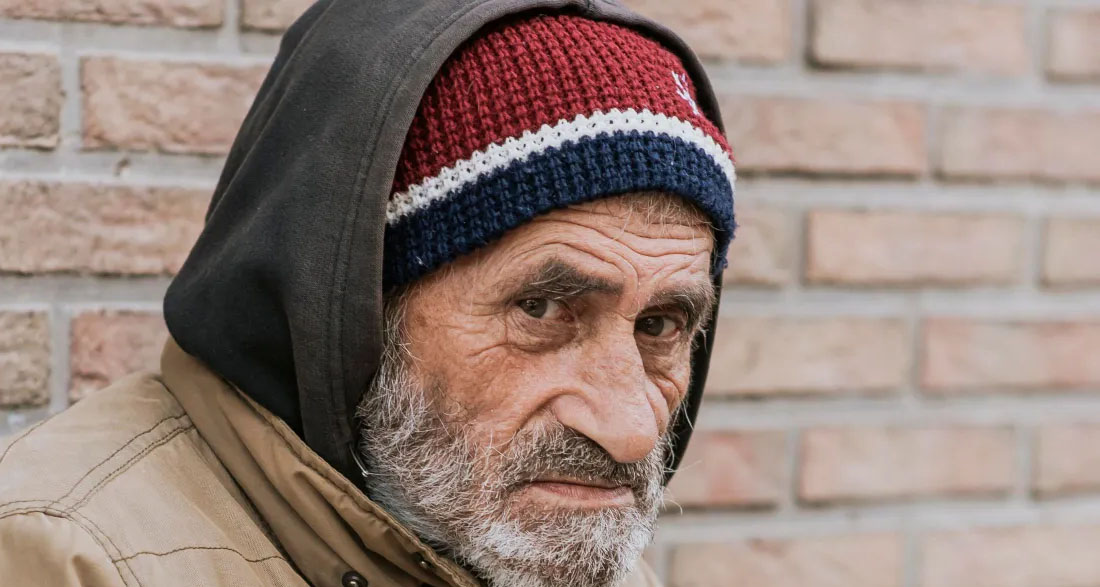
He was sitting alone on a bench near the pond. His clothes were in layers, too thin for the cold. His hair was long, tangled, and his beard was uneven. His hands were cracked and rough like old leather.
But it wasn’t his clothes that made me stop. It wasn’t even that nobody seemed to notice him. Moms with strollers swung wide to avoid him. Joggers glanced past like he wasn’t there. Teenagers stepped around him as if he were nothing.
It was his eyes. Quiet, worn-out, not pleading, not pitiful. But there was a weight to them, a loneliness that pressed down on me like a physical thing. I don’t know why, but I couldn’t just walk past.
My heart thudding, I whispered, “Hey, sir… how are you doing? Can I get you something to eat?”
He looked up slowly, a half-smile tugging at the corners of his mouth. His voice was rough but gentle.
“Sure, why not, son.”
Across the street was a burger joint. I went in and ordered a cheeseburger and a bottle of water. A small act, I told myself. A single burger. That was it.
When I returned and handed him the bag, I expected a quiet “thanks.”
Instead, he looked inside and chuckled.
“That’s all? Just one, son?”
I froze. My chest tightened. What? Some people just want more! I felt that sting of pride, the urge to snatch the bag back and walk away.
But there was no greed in his voice. He looked nervous, not for himself, but… maybe for someone else?
“You want… more?” I asked cautiously.
He glanced behind me, as if checking the park for witnesses, then whispered, “Ten would do it.”
Ten. It sounded absurd, like a joke. But he wasn’t joking. There was hesitation, uncertainty, and maybe… hope.
Something inside me shifted. I could have said no, could have walked away. But I didn’t.
I went back inside and ordered ten cheeseburgers. The cashier raised an eyebrow.
“Party?”
“Something like that,” I muttered, my card dinging. The total made my chest tighten, but I didn’t flinch.
When I handed him the bag, he didn’t look inside. He stood slowly, joints cracking, and said, “Come on. Walk with me.”
My brain screamed “don’t follow a stranger!” But curiosity and some deep, unexplainable pull made me follow him.
We walked past the playground, toward a line of bushes along the back fence.
There, huddled on the cold ground, were five kids wrapped in thin jackets, arms around each other, shivering. The smallest, a boy barely three, had flushed cheeks and a runny nose. The older children’s shoes had holes. They looked like a family portrait someone forgot to finish.
The man—Ray, I’d learn later—knelt with a quiet groan and carefully handed out the burgers. The children’s faces lit up like they’d been given the world. The little boy gasped in awe. The woman, Marisol, looked at the bag like it was glowing, and whispered, almost to herself, “Thank you.”
Ray turned to me. “I don’t need all that food, son. I can manage. But they… they need it more.”
In that moment, I realized how wrong I’d been about “homeless.” I thought it meant selfish or desperate. But this man, invisible to everyone else, was more kind and selfless than anyone I’d known in years.
I went home that night but couldn’t sleep. I kept seeing the kids’ faces. The way the smallest boy clutched the cheeseburger like a treasure. The way Marisol’s whisper had sounded like a prayer.
The next evening, I returned with sandwiches, soup, bananas, bottled water, and a pack of socks I picked up from the drugstore. Socks, I’d read, were like currency out there.
“Back already?” Ray said with a half-smile.
“Yeah,” I said, awkward and unsure. “I brought some stuff.”
We walked to the bushes. The kids ran to us, their excitement barely contained. Cal, the little boy, clung to Marisol’s leg, still sniffly. Marisol smiled, the kind of smile that was thankful, scared, and overwhelmed all at once.
It became a rhythm. Sometimes I brought food. Other times, blankets or gloves. Once, I brought toys. Jace and Mateo, the middle boys, went wild over a glowing bouncy ball. Cal fell asleep with a tiny plastic dinosaur still in his hand.
Ray never let himself eat first. Not once. He always waited for the kids, then Marisol, and only then would he eat a little himself, often offering some to me.
One rainy, freezing night, I arrived to find the family shivering under a torn tarp. Cal was coughing—a deep, chesty cough that made my stomach twist.
“Can I take him to a clinic?” I asked Marisol.
Her eyes went wide. “No! If someone reports us, they’ll take them!”
Ray placed a hand gently on her shoulder. “I know a place. They don’t ask questions. They just help.”
We bundled Cal up. At the community clinic, I filled out the forms and paid myself. Cal had pneumonia. The doctor said if we’d waited another night, it could have been much worse… maybe fatal. I sat in my car afterward and cried like I hadn’t cried in years—divorce, loneliness, helplessness, all at once.
After that, I couldn’t just visit anymore. I started calling shelters, nonprofits, community groups. I created a Google Voice number for Marisol so she could safely contact me.
Then, one evening, a woman appeared in the park with a camera, taking photos respectfully from a distance.
“Hey. What are you doing?” I asked.
She lowered the camera. “I’m a photographer. I’m working on a series about people the world ignores. But I swear I’m not here to exploit anyone.”
I looked at Ray and the kids. “They don’t want trouble.”
“I know. That’s why I’m doing this differently. I want people to see what they’ve chosen to ignore.”
Her name was Deanna. We agreed no identifying photos of the kids would be used. What she captured changed everything.
Weeks later, my mom called, frantic. “Why are you on the news?!”
I jumped out of bed. “What?”
“There’s a video! A news article! Someone shared it! You’re handing burgers to a man, and everyone’s talking about it!”
Deanna’s photos had been part of a gallery show downtown. People saw Ray, Marisol, the kids, and even me handing a bag to Ray. Donations poured in. Volunteers offered help. A pediatric nurse offered to check on the kids regularly. A legal clinic reached out to help Marisol. Ray’s past in outreach helped everything move faster.
Eventually, Ray accepted transitional housing. Marisol and the kids moved into temporary housing. Cal got regular medical attention. The children were enrolled in school.
One night, I visited the now-empty park bench. Ray sat staring at the pond.
“They found you,” I said.
“They finally saw,” he replied.
“You mad?”
“Hope’s a scary thing. When you live long enough without it, it starts to feel like a trick.”
“My mom thinks I’m a hero,” I said.
Ray chuckled softly. “You’re not a hero, son. You’re just a man who stopped walking.”
Those words hit me harder than anything else. That’s all I had done—stopped long enough to notice someone who had been there the whole time.
Now, every time I hear people say, “I didn’t know what to do, so I did nothing,” I want to shake them. Doing nothing… is still a choice.
And I still see them, every time I walk past that park.