

I came home after an eighteen-hour shift, my body dragging with exhaustion.
Every muscle ached, my head throbbed, and my feet felt like they were made of concrete. I just wanted to collapse into bed and sleep for hours. The apartment was dark and quiet, the kind of quiet that usually feels like relief after a long, brutal night.
I stopped outside my daughter’s bedroom door. Emily, my little five-year-old, was already asleep. She was small for her age, curled on her side, clutching her stuffed rabbit, Buttons, under her chin. Her chest rose and fell in steady, peaceful breaths.
Her face looked calm. Safe. For a moment, my heart loosened from the tension I carried like armor. I brushed a hand over her hair and pressed a kiss to her forehead.
“I’ll make you pancakes tomorrow, sweetheart,” I whispered softly, though the thought of cooking made me ache. “Tomorrow will be better.”
I barely made it to my own bedroom before collapsing into bed, still wearing my scrubs, too tired even to change.
But sleep doesn’t always come when you need it most.
A few hours later, something felt wrong.
I woke around ten in the morning. My eyes opened suddenly, like a bell had rung somewhere inside me. At first, I didn’t understand why I was awake. Then it hit me—the apartment was too quiet. Too empty. No footsteps. No humming. No tiny voice calling for breakfast or cartoons.
Emily was usually awake by eight, demanding cereal or insisting I read her stories in a sing-song voice.
I leapt out of bed, my heart starting to hammer. Her bedroom door was still closed. That alone made my chest tighten with dread.
I opened it.
She hadn’t moved.
She lay there in the same curled position, still clutching Buttons. Her breathing seemed shallow, almost uneven. For a split second, my exhausted brain tried to convince me she was just in a deep sleep.
“Emily,” I whispered, my voice shaking despite my best efforts.
Nothing.
I stepped closer and touched her shoulder. Her skin was cool. Damp.
“Emily,” I said louder this time, shaking her gently.
Still nothing.
All the years I had spent as an emergency nurse hit me at once. I checked her breathing, felt for a pulse, looked at her eyes—dilated pupils, slow to react. My stomach sank, and fear cut through me sharper than fatigue ever could.
I scooped her up in my arms and ran toward the living room, shouting for help.
My mother, Carol, appeared in the doorway, holding a mug of coffee. She looked annoyed, not frightened.
“What are you yelling for?” she asked, her tone flat.
My sister Jenna followed behind her, rubbing her eyes, smirking like she’d just been woken from a nap she didn’t want to end.
“Something’s wrong with Emily,” I said, trying to keep my voice steady, though panic was clawing up my throat. “What happened while I was asleep?”
Carol frowned, crossing her arms. “She wouldn’t settle last night. Kept waking up, crying, asking questions. I needed sleep.”
My heart began to pound faster, thudding painfully against my ribs.
“What did you do?” I demanded.
She shrugged, like it was nothing. “I gave her something to help her calm down.”
My hands started shaking uncontrollably.
“You gave her what?”
“One of my pills,” she said casually. “Sleep medication. Maybe two. She was being annoying.”
The words hit me like a punch to the gut.
“What medication?” I asked, my voice trembling now.
“Zolnex. Ten milligrams,” she said.
I stared at her, my mind struggling to process. That was an adult dose—a strong, dangerous dose for a child.
Jenna laughed from the doorway. “Relax. She’ll wake up. And if she doesn’t, maybe we’ll finally have some peace around here.”
I didn’t look at her. If I had, I might have lost control entirely.
Emily’s breathing faltered in my arms.
I turned away and dialed 911, my voice surprisingly calm. Years in emergency medicine had taught me to stay steady in chaos, even when my heart was screaming. I explained everything—the drug, the dose, my daughter’s condition. Inside, I was falling apart.
The paramedics arrived quickly. The lead medic assessed Emily and immediately called it in as a possible overdose. They moved with precision, professionally. I rode in the ambulance, clutching Emily’s tiny hand, whispering her name over and over. She didn’t respond.
When we arrived at the hospital, the bright lights and antiseptic smell felt wrong, alien. I’d walked these halls countless times, confident and sure of myself. Now, my legs shook, and I felt completely powerless.
Doctors and nurses took Emily from my arms. Dr. Monica Lee, a colleague I had worked with for years, looked at me with a mix of urgency and heartbreak.
“Tell me exactly what she took,” she said, her voice tight.
I told her everything.
Her face hardened. “That dose can suppress breathing in a child. We’re moving fast.”
They pumped Emily’s stomach, gave her activated charcoal, inserted IV lines, and hooked her up to monitors that beeped relentlessly. I stood back, frozen, unable to do anything.
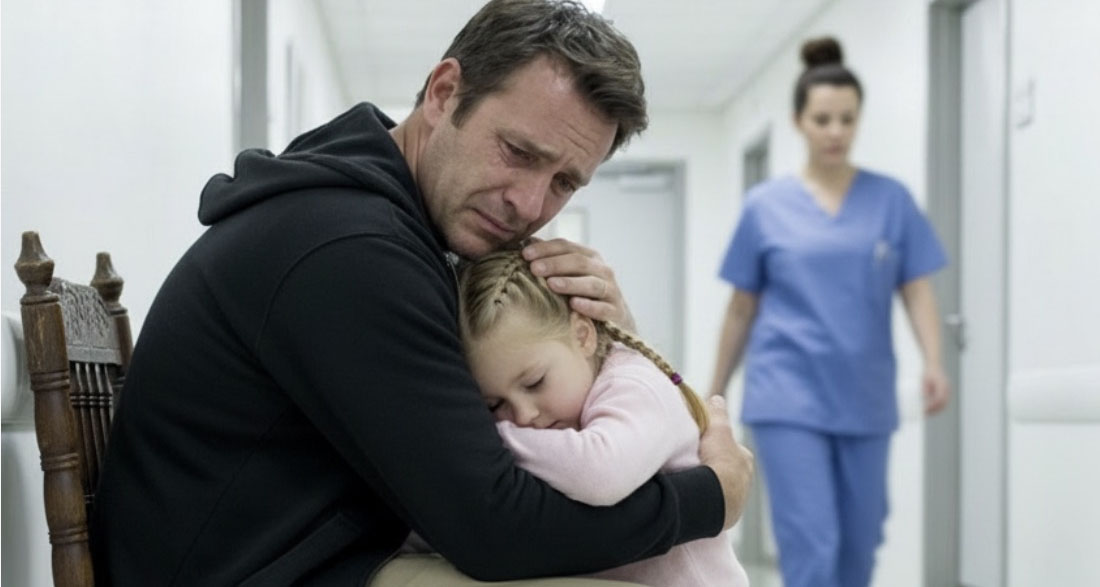
Hours passed. I sat in a plastic chair in the hallway, hands clasped so tightly my fingers went numb. The fluorescent lights hummed above me. A sound I had heard thousands of times at work, now a relentless reminder of how powerless I felt.
Six hours earlier, I had been saving strangers. Now, I couldn’t save my own child.
Finally, Dr. Lee came out, her expression softening.
“She’s stable,” she said. “It was close. Very close. But she’s responding.”
My knees nearly gave out.
A little while later, Emily’s eyes fluttered open. She looked around, confused, tired.
“Daddy?” she whispered.
I broke down, tears spilling uncontrollably. I held her hand and whispered, “You’re safe. I’m here. I’ve got you.”
Later, Dr. Lee pulled me aside.
“We’re required to report this,” she said gently. “This wasn’t an accident.”
I nodded. I already knew.
That night, after Emily had fallen asleep again, I went home to pack clothes and essentials. Carol and Jenna were on the couch, laughing and watching television like nothing had happened.
“She almost died,” I said, my voice cold.
Carol’s face went pale. Jenna rolled her eyes.
“You’re being dramatic,” Jenna said.
Something inside me snapped.
“You’re both leaving. Tonight,” I said.
They argued, yelled, tried to blame me. I didn’t raise my voice. I didn’t change my mind. I called my lawyer, filed a report, and handed over statements, evidence, everything.
The investigation moved fast. Medical records. Toxicology reports. Hospital staff statements. Even voicemails Jenna had left joking about how quiet the house had been.
Carol was charged with felony child endangerment. Jenna was charged for her part and for failing to report the incident.
The story spread. People were horrified. They should have been.
Emily recovered fully. Her body healed faster than her trust, but she healed. Slowly, we rebuilt our life. We moved into a new apartment, just the two of us. I cut back my hours, made pancakes in the mornings, and took her to the park. She started therapy. Gradually, she smiled more, laughed more.
Carol went to prison. Jenna lost her job, her friends, her reputation.
A year later, I saw Jenna in a grocery store. She looked smaller, tired, defeated. She didn’t meet my eyes.
Emily walked beside me, holding my hand, chatting about a drawing she’d made. Alive. Safe.
That was enough.
Justice wasn’t about revenge. It was about never letting silence hurt her again.
Some choices follow you forever.
And sometimes, a child survives because one adult refuses to look away.