

I never imagined Christmas could start with a silence so heavy it pressed against my chest. Not the kind you hear about in movies, but the kind you feel deep in your bones. The plane had just pierced through a wall of falling snow when I glanced at my phone.
There it was—the last picture Mark had sent me: our living room, empty except for the Christmas tree we had picked out together.
A quiet ache spread through me.
This was supposed to be our Christmas. Just the two of us. No rushing between relatives, no forced smiles, no airport goodbyes. Just quiet, just healing. After seven long years of infertility treatments, of hope and disappointment, we had finally let go of the pressure.
We weren’t chasing miracles anymore—we were just chasing peace. One more round of IVF? Adoption? We didn’t know. But this year, we wanted rest.
Then, two days before Christmas, my boss asked me to fly out for an emergency project. I said yes, and instantly regretted it.
“I’ll make us peppermint cocoa when you get back,” Mark had said, his attempt at comfort softening the blow. “We’ll open our gifts in pajamas. We’ll have the whole cozy cliché.”
“Will you be okay here alone?” I had asked.
“I’ll miss you, Talia, but I’ll survive,” he replied, shrugging.
But there was something in his voice—not sadness exactly, but distraction. Since I told him about the trip, his eyes never really met mine. His hugs were shorter than usual.
“You’ll just have to make it up to him,” I told myself in the bathroom mirror. “Work isn’t bad. It pays for the treatments anyway.”
The night before my flight, I walked into the kitchen and found him hunched over his phone. He jumped when I came in, shoving it into his pocket with a guilty wince.
“Everything okay, honey?” I asked.
“Yeah,” he said, smiling too quickly. “Just looking at some last-minute Christmas deals. You never know what’s out there…”
“Anything good?”
“Not really,” he paused. “Just some fuzzy socks. For you.”
I laughed, but something in my chest didn’t.
Because behind him, reflected in the microwave door, I’d seen a webpage full of baby carriers. I didn’t say anything. I told myself it was nothing—just nerves, holiday stress, fragile hearts.
In the days leading up to my trip, I noticed little things. He kept slipping outside for “calls,” even in freezing weather. He muttered, “Just work stuff, be in soon, Tals,” as he hurried out. But his office had been closed for the holidays. And he kept glancing out the windows, expectant, like he was waiting for someone.
I didn’t want to start a fight before leaving.
At the hotel, the silence between us became almost unbearable. I worked on spreadsheets, sending him a photo of the tiny hotel tree with a text:
“Miss you. Wish I was home, honey.”
No reply. Hours passed.
Then, a miracle. My boss called.
“We’ve wrapped up early, Talia,” he said. “Thank you for working through the spreadsheets so quickly. Great job. Now, head home and enjoy the festivities. Merry Christmas.”
Relief made me nearly cry. I packed in ten minutes and drove to the airport, humming old songs, imagining sneaking in quietly, wrapping my arms around Mark from behind.
But when I opened the front door, the world changed.
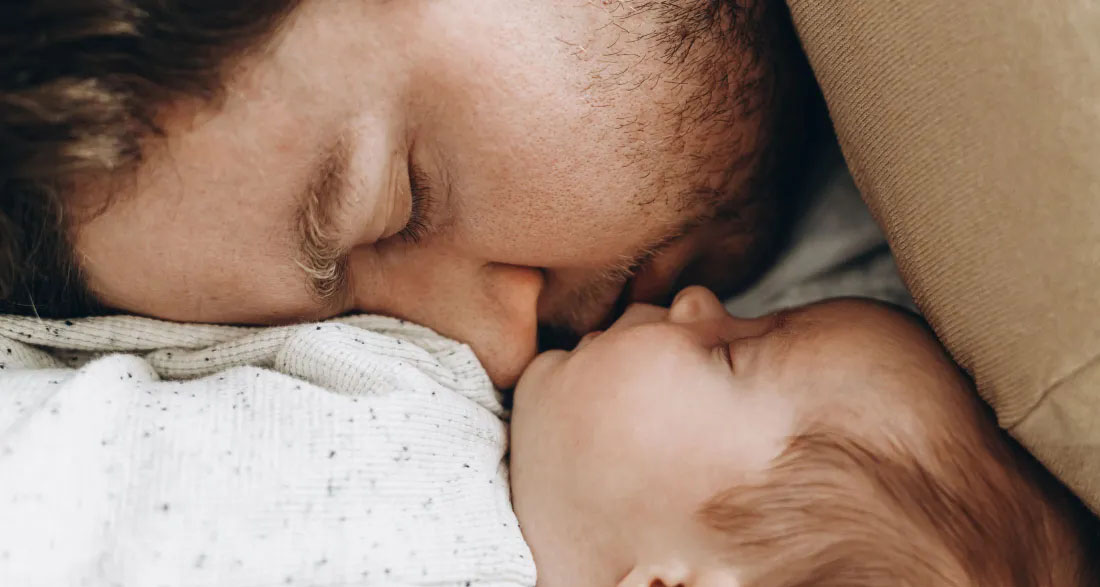
The house was warm, the lights on the tree blinking softly. Cinnamon and something sweet hung in the air. And there, on the couch, was Mark—with a newborn baby in his arms.
My coat dropped. My chest tightened.
The baby clung to him like she belonged there. Her tiny fists pressed against his sweatshirt. She couldn’t be more than a few days old.
Mark had cheated. He must have. It had to be his child. My mind raced—where was the mother? Why was she gone?
The baby whimpered.
Mark stirred, eyes slowly opening. The moment they met mine, panic replaced sleepiness.
“Talia,” he said. “Wait. I can explain.”
“Whose baby is that, Mark?” My voice was raw, shaky.
He looked at the baby like she was fragile glass.
“I… I found her,” he said. “This morning. On the porch… someone left her there.”
I froze. The blanket was perfect. Her hat matched her onesie. She looked loved, cared for.
I pulled out my phone and opened the security footage from that morning.
There she was. A woman, calm and deliberate, walked to our door, looked around, and handed the baby to Mark. He didn’t hesitate.
“You didn’t find her,” I said, holding up the phone. “You accepted her.”
“You’re right, Talia,” he admitted, looking down. “But not because I don’t trust you.”
“Then why?”
“It’s not mine,” he whispered. “And that’s exactly why I didn’t tell you. I was scared you’d think the worst.”
“Start from the beginning,” I said, my legs weak.
He nodded, voice trembling.
“A month ago, I saw a young woman near the gas station. She was pregnant, holding a sign asking for food. It was freezing. Something broke inside me.”
He rubbed his mouth nervously.
“I bought her dinner in the car. Her name was Ellen. She had no family, the father was gone, and shelters were full. She said she wanted to give her baby to us because she couldn’t keep her safe.”
I couldn’t breathe.
“I offered her Grandma’s old apartment—hot water iffy, cabinets falling apart—but it was safe. She rested there. That was all I meant to do.”
Mark’s voice shook.
“She went into early labor. Grace was born that night. Ellen kept her for two days, loving her, feeding her, rocking her. Yesterday, she called me. She said she wanted Grace to have a real family. She wanted me to bring her to you.”
I sat on the edge of the coffee table, stunned. He wasn’t guilty. He was someone who had seen desperation and done what had to be done. He had protected them both.
“I didn’t tell you,” he whispered, “because I didn’t want to give false hope. Not again. I wanted to be sure.”
“And now?” I asked quietly.
“She’s ours to care for while the adoption is finalized,” he said. “Ellen is involved. She’s doing this the right way.”
My eyes filled with tears.
“She wasn’t abandoned, Talia. She was given. Ellen wants her to be loved.”
The next morning, I met Ellen in a small coffee shop. She was younger than I expected, maybe 21, wearing an oversized sweatshirt, fingers twisting a napkin.
“You don’t have to say anything,” she said softly. “I know it’s strange, nothing about this is normal.”
“It’s not strange, honey,” I replied. “It’s brave. What you did for Grace… it takes strength.”
“I love her, Talia,” Ellen said, tears in her eyes. “I didn’t want to walk away, but I have to put her first.”
“I’ll make sure she knows, Ellen,” I said, softly but firmly.
“I’m enrolling in a recovery program,” she explained. “They’ll help me find work, housing… I can’t raise her yet.”
“You’re still part of her life,” I said. “You can visit. You’ll be family, too.”
“Maybe I’ll be the fun aunt,” she laughed through tears.
“Oh, honey, you’re so much more than that,” I said.
Over five months, the adoption process moved steadily. Ellen stayed involved, sending Grace tiny mittens she crocheted.
On Grace’s first birthday, a card arrived from Ellen:
“Thank you for loving her.”
Now, Grace is almost two. Loud, confident, full of life. Her laughter fills our home. Every inch of her is pure joy.
We tell her Ellen is our friend. Some families come together in unexpected ways, and love doesn’t always knock—it sometimes arrives quietly, on the coldest morning of the year.
Every Christmas, we hang a stocking with her name stitched in gold.
Because she was. Because she is. Because when life took everything from us, she was the gift waiting just beyond our door.
“Grace.”