

I defended a veteran everyone mocked at the grocery store. I got fined for it. The next day, a man in an expensive suit found me at work and said, “We need to talk about what you did.” What he revealed turned a simple Tuesday shift into the most defining moment of my life.
My name is Johnny. I’m 38. For the past six years, I’ve stood by the doors of a small grocery store, watching the world swirl by.
It’s not glamorous work. I see people argue over expired coupons, break up fights in the parking lot, and stop teenagers from sneaking beer. But it pays the bills, and that’s enough—for now.
My wife works from home as a freelance writer, juggling deadlines at the kitchen table. Our 11-year-old son, Stewart, is smart—always buried in a book, always asking questions. I want him to have options in life. I don’t want him to feel trapped by paychecks the way I sometimes do.
I don’t hate my life. But I want more for my boy. I’ve told him a thousand times that hard work matters, that character matters, and that treating people right is worth more than any paycheck. Still, I sometimes wonder if he believes me when he sees our small house, our old car, and my tired smile at the end of long shifts.
Most nights, I stand by the door, watching thousands of people walk through. They blur together, faces fading like static on a TV screen.
But one man… I’ll never forget.
It was a Tuesday evening. Slow shift. The kind where minutes crawl like hours. That’s when I noticed him: a man at the register, probably in his 40s or 50s.
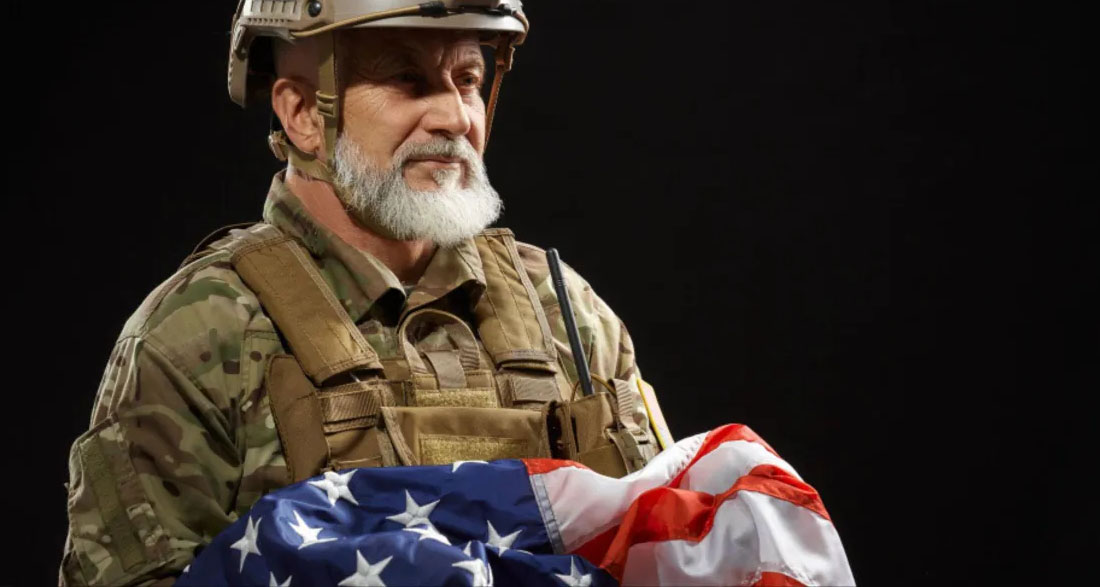
He wore a faded military field jacket with a stitched name patch and unit insignia on the shoulder. His boots were scuffed and worn, the kind that had marched through mud and dust. He was buying just one thing: a carton of milk.
As he counted out his coins slowly, a line formed behind him. People sighed, tapped their phones, rolled their eyes. One man, standing directly behind the veteran, looked particularly annoyed. He held the hand of a boy, maybe five or six.
“What a poor loser!” he muttered.
The veteran’s ears flushed red. His hands shook slightly. A few coins slipped through his fingers and clattered to the floor. He bent down to pick them up, and that’s when the little boy spoke.
“Dad, why is that man so poor?”
The father didn’t lower his voice. “Not everyone is smart, buddy. Watch people like this deadbeat so you know how not to end up like them.”
The veteran kept his head down, picking up coins one by one. I felt a twist in my chest, thinking about my own son. The lessons I’d tried to teach him—about decency, about kindness—felt suddenly fragile.
I walked over. “I’ve got it,” I said to the cashier.
The veteran looked up, startled. “You don’t have to…”
“Please. Let me do it.”
I thought about Stewart, about the values I wanted him to carry. I paid for the milk. Then I glanced at the items near the register and added a few without asking—coffee, mac and cheese, chicken tenders.
The cashier rang it all up silently. The veteran’s eyes filled with tears. He grabbed my hands tightly.
“Thank you. You have no idea what this means,” he said.
“Don’t thank me. It’s the least I can do for your service.”
Then I bent down to the little boy. “Remember something, kid. There’s no shame in honest work. Shame is in mocking people who are trying their best.”
The father looked away.
The veteran left with his groceries. I went back to my post. I hadn’t moved mountains, but I had made a difference—maybe a small one, but one that mattered.
Not everyone appreciated it. That night, my manager called me into his office.
“We received a complaint, Johnny,” he said.
“So this is what doing the right thing costs,” I thought.
“The man said you embarrassed him in front of his son. Interfered with a paying customer. Created a hostile environment.”
“I paid for someone’s groceries,” I said.
“Corporate is issuing a fine for professional misconduct. Fifty dollars will be deducted from your next paycheck.”
I swallowed. Fifty dollars. Groceries for a week, gas money, part of a utility bill. But I didn’t regret it.
“Understood, sir.”
That night, driving home, I rehearsed how I’d tell my wife. She’d understand. She always did. But still, I hated taking money away from my family. I parked in the driveway and sat for a few minutes, just breathing. Then I went inside. I slept fine that night.
The next day, midway through my shift, a sharply dressed man in an expensive suit walked in. His polished shoes clicked against the floor like a metronome, every step oozing confidence. He walked straight to me.
“Do we know each other, sir?” I asked.
“We need to talk about what you did to the veteran yesterday.”
“Am I in more trouble?”
“No. But I need you to come with me. I’ve already cleared it with your manager.”
I followed, nervous. He drove through neighborhoods I’d only glimpsed from a distance. Gated communities, landscaped lawns, houses that looked like hotels.
Finally, we arrived at a mansion with iron gates, a long stone driveway, and a sparkling fountain.
“What is this place?” I asked.
He smiled. “I’m Timothy. Come inside.”
Through massive double doors into a marble-floored foyer, and then—there he was. The same veteran from the grocery store, but completely different. Clean-shaven, groomed hair, tailored suit.
“I’m Simon,” he said, extending his hand.
I shook it, confused. “I don’t understand.”
“Sit down, please,” he said, guiding me into a living room bigger than my entire house.
Simon leaned forward. “I’m a decorated veteran. Served two tours overseas. When I came home, I started a logistics company from scratch. Built it myself.”
He paused. “Every year on my birthday, I do something unconventional. I dress plainly, go into the world, and see how people treat those they assume are struggling.”
“Why?” I asked.
“When I came back from service, I struggled. Not financially, but emotionally. I saw how easily people ignore someone they think has nothing.”
He looked me in the eye. “I do this to see if decency still exists. If people help without expecting anything in return.”
Timothy spoke up. “I’m Simon’s brother. I help run his foundation.”
Simon continued, “You weren’t trying to impress anyone. You didn’t know who I was. You just saw someone struggling and helped.”
“Anyone would’ve done the same,” I said.
“No. They wouldn’t. And they didn’t. You were the only one who stepped forward.”
Simon stood, walked to a desk, and pulled out an envelope. “I want to give you something. A financial reward for your kindness.”
I pictured Stewart, his school dreams, the debt we carried, and the $50 fine. I had always told my son that character matters more than comfort. Would taking this money change that?
“I can’t accept that,” I said.
Simon looked surprised. “Why not?”
“Because if I take money for doing the right thing, it changes what it was.”
Simon nodded slowly. “You don’t need anything?”
“I need things. I just don’t need a price on my character.”
Silence. Then he said, “I respect that.”
I stood. “If you want to help someone, help people who truly can’t help themselves. People who don’t have a choice.”
Simon smiled. “I’ll keep that in mind.”
As I turned to leave, he stopped me. “One more thing. What you did yesterday? Your son will remember that. Trust me.”
I just nodded.
A week later, life returned to routine. The $50 fine came out of my paycheck. My wife saw it and asked. I told her the story. She hugged me tightly. “I’m proud of you.”
Then one evening, I came home to find her crying. Stewart sat at the kitchen table, staring at a letter.
“What’s going on?” I asked.
She handed me an envelope. “Read it.”
Inside was a letter from a national foundation. My son had been awarded a full scholarship to a private academic program. Tuition, books, everything—covered.
“I applied months ago, Dad,” Stewart said. “I didn’t think I’d get it. The competition was huge.”
There was another envelope, a handwritten note from Simon:
“Johnny, you refused a reward because you believed decency shouldn’t be transactional. I respect that. This scholarship isn’t payment. It’s an investment in the kind of future you’re raising your son to build. The country needs more men like you. Let me help you raise one.”
I sat down. My wife put her hand on my shoulder.
“The country needs more men like you,” she whispered.
“What does it say?” I asked Stewart.
“It says your hard work paid off,” I told him.
He grinned. My wife wrapped her arms around me.
“You did this. Whatever you did last week, you did this.”
“I just helped someone who needed help.”
“And he helped us back.”
The next morning, I went back to work. Same uniform, same post, same routine. But something felt different. Not because I’d been rewarded. Because I was seen.
A customer struggled with bags—I helped her. Another couldn’t reach a high shelf—I grabbed it. Small things I had always done, but now they felt different.
Because my son was watching. Not literally. But in the way kids watch their parents—learning what matters, learning what’s worth fighting for.
I didn’t get rich or famous. But I got something better. I got to show my son that doing the right thing still matters. And sometimes, when you least expect it, the world notices.
I didn’t get rich or famous. But I got something better.