

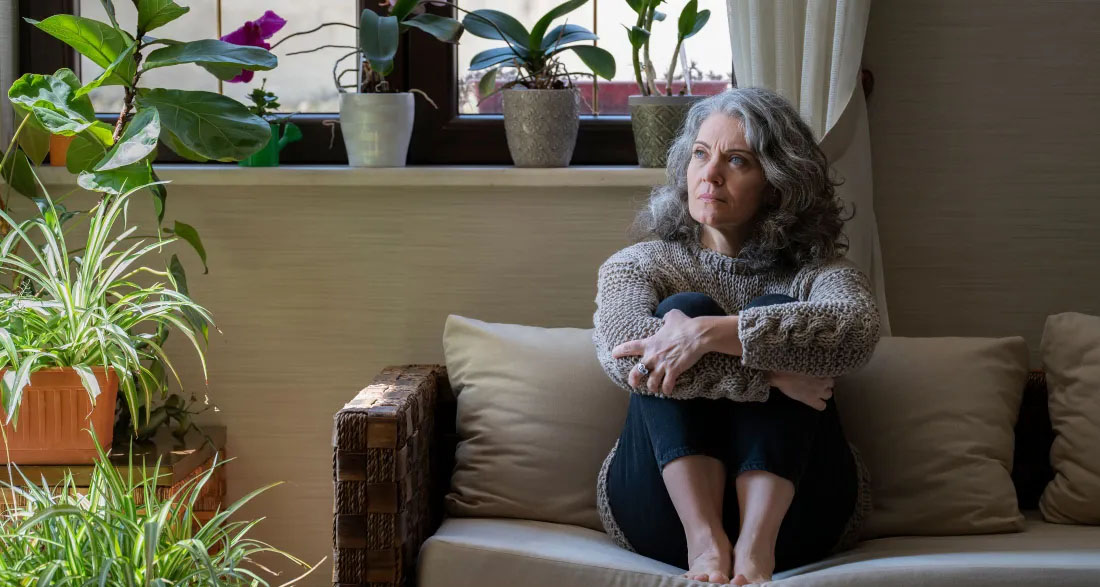
I spent 29 years caring for my disabled husband.
Twenty-nine years of lifting, adjusting, waiting, worrying.
Until one afternoon, I came home early and heard steady footsteps upstairs.
Not the slow shuffle I knew by heart.
Not the careful drag-pause-drag rhythm that had shaped my life.
Steady. Confident. Strong.
I watched Robert walk down the stairs without holding the railing, without a cane, without pain on his face. He was laughing.
Laughing.
And behind him was Celia from church.
In that moment, something inside me went silent.
Because I knew.
My whole life had been built on a lie.
I’m 57 years old. I used to believe loyalty was simple. A straight line.
You pick your person. You show up. You don’t keep score.
That was my rule.
I followed it for 29 years.
Robert did not.
I was 28 when everything changed.
Robert fell off a ladder while fixing a loose gutter on our garage roof. We had been married barely three years. We were young and hopeful, talking about babies and bigger apartments. We used to sit at the kitchen table dreaming in small, practical ways.
“I think we could make it work,” he had said, smiling.
“We will,” I told him. “We always do.”
Then the fall happened.
At the hospital, the doctor spoke slowly, using that careful voice they use when they’re about to rearrange your future.
“Cracked vertebra,” he said. “Nerve damage. Chronic pain.”
I squeezed Robert’s hand.
“Long recovery,” the doctor added. “Possibly permanent limitations.”
Possibly permanent limitations.
Those three words wrapped around our lives like chains.
I wasn’t happy. I wasn’t brave. I was scared.
But I was going to help.
So I became the strong one.
Because somebody had to.
After that, my life became schedules.
Pills. Physical therapy. Heat pads. Wheelchairs. Insurance forms. Appeals. Phone calls where you sit on hold so long you memorize the music.
Robert went from the man who carried groceries two bags at a time to the man who stared at the wall, jaw clenched like he was trying not to scream.
On bad nights, he’d whisper, “I hate this.”
I’d answer, “We’ll get through it.” Even when I didn’t know how.
His condition became “manageable.”
That’s the word people use when they don’t have to live with it every single day.
I worked full-time at an accounting office. I learned medical codes like a second language. I kept his appointment calendar color-coded. I steadied him when his balance failed. I lifted wheelchairs into the trunk until my elbows burned.
People called me devoted.
“You’re an angel,” someone once told me.
Family called me selfless.
I called it marriage.
We never had children. It didn’t feel fair to bring a baby into a life already built around pain.
Robert told me, “It’s fine. It’s just us.”
So I told myself love was enough.
Most days, he used a cane.
Bad days, a wheelchair.
We installed a stair lift. I researched brands for weeks. Fought with insurance. Cried in the kitchen when they denied coverage.
He complained about pain constantly.
I built my world around his limits.
Then last Thursday, I left work early.
A client canceled, and my coworker Nina leaned over my desk and said, “Go home. Surprise him. You’ve earned it.”
I laughed. “He’ll think something’s wrong.”
“Good,” she said. “Let him worry for once.”
So I stopped by the deli to pick up his favorite chicken salad. One of those small peace offerings you learn to bring when someone hurts.
When I pulled into the driveway, there was a silver sedan I didn’t recognize.
Clean. Shiny. Newer than ours.
Parked like it belonged there.
My stomach tightened.
I told myself it was a nurse. A delivery.
I walked inside quietly.
The house was too quiet.
No TV.
No groaning from the recliner.
No cane tapping against hardwood.
Then I heard it.
Upstairs.
Footsteps.
Not the uneven shuffle.
Not careful testing steps.
Footsteps.
Steady.
My whole body went cold.
I stepped back and slipped behind the half-open hallway closet door. My heart was pounding so hard I thought whoever was upstairs could hear it.
Then I saw him.
Robert.
Walking down the stairs like he’d never fallen off anything in his life.
No cane.
No railing.
No pain.
He moved easily.
He was laughing.
And behind him was a woman I knew far too well.
Celia.
She wasn’t a stranger.
She sat two rows behind me at church.
She once hosted a “Caregiver Appreciation Luncheon” and made me stand while everyone clapped.
“You are such a testimony,” she had said that day. “Your strength inspires us all.”
She also worked in insurance.
“Claims,” she’d told me proudly. “I help people navigate the system.”
Navigate the system.
I watched Robert reach the bottom step and turn toward her. He said something I couldn’t hear, and she laughed like she belonged in my house.
Then she touched his arm.
Not polite.
Familiar.
My throat went dry.
I wanted to throw the closet door open and scream.
But something inside me—older, tired, done—whispered:
Don’t give them the show.
I pulled out my phone and hit record.
Ten seconds.
Fifteen.
Enough to show his walk.
Enough to show there was no cane.
They headed toward the kitchen. I heard a cabinet open. A glass clink.
I slipped out the front door, got into my car, and drove two blocks before my hands started shaking.
I pulled over in front of my neighbor Dana’s house.
Dana is in her mid-60s. Loud laugh. Big opinions. The kind of woman who doesn’t pretend.
She was watering her plants when she saw me.
“Maya? What’s wrong?”
“I need to come in,” I said.
The moment her door closed, I started crying like I was 28 again in that hospital hallway.
I told her everything.
Dana’s face changed.
Not surprise.
Recognition.
“Oh, honey,” she said softly.
“What?” I whispered. “What do you know?”
She sighed. “I didn’t want to stir trouble. But I’ve seen him. Out back. Late afternoons. Walking.”
My chest tightened.
“How long?”
“A while,” she admitted. “Months. Maybe more. I assumed it was therapy. I assumed you knew.”
Months.
So this wasn’t a miracle good day.
This was a life he’d been living without me.
Caregiving teaches you how to handle emergencies without collapsing.
You just don’t expect the emergency to be your husband.
I called Nina from my car.
She listened quietly.
Then she asked, “Do you have evidence?”
“Yes.”
“Good,” she said. “Don’t confront him yet. Call a lawyer.”
When I went home, I acted normal.
Robert was in his recliner. The cane leaned against the armrest like a prop.
“You’re early,” he said, his voice strained.
“Canceled appointment,” I replied. “You okay?”
He sighed dramatically. “Pain’s bad today.”
I nodded. Kissed his forehead. Made him tea.
While he talked, I noticed everything.
A clean glass on the counter that wasn’t his.
Lemon slices in the trash.
Celia’s perfume in the kitchen.
That night, after he fell asleep, I opened our bank account.
At first, it looked normal.
Then I saw small transfers.
Two hundred here.
Three hundred there.
Always labeled “AUTO” or “MISC.”
I dug deeper.
They went back years.
Years.
I pulled our credit report.
There was a credit card in his name I’d never seen.
A line of credit opened two years ago.
I took screenshots. Emailed them to myself. Printed copies at work and slid them into a folder labeled “Taxes.”
By noon, Nina had sent me a name: Evan Hart, Family Law.
I left work early again and went straight to his office.
Evan watched the video.
Then he studied the bank statements.
“This is a pattern,” he said calmly.
“What kind?” I asked.
“Hidden marital assets,” he said. “And if he’s receiving disability benefits while able-bodied, there’s potential fraud.”
“He is,” I said. “I saw him.”
He nodded. “Then you have leverage. Not revenge—leverage. We protect you first.”
“Do you know the woman?” he asked.
“Celia. Church. Claims.”
His mouth tightened. “She may be advising him.”
Something inside my chest clicked into place.
I wasn’t going to scream.
I wasn’t going to beg.
I was going to end this clean.
Over the next week, I documented everything.
Dana wrote down what she’d seen.
Nina agreed to be there when I confronted him.
I copied statements. Took photos. Collected mail.
Then Sunday came.
After church, Celia floated over to me with that bright smile.
“Maya,” she said sweetly. “How are you holding up? How’s Robert?”
“He’s managing,” I replied. “We’re blessed.”
She squeezed my arm. “You’re such a testimony.”
A testimony.
Like my suffering was a sermon.
I smiled back. “Celia, could you come by tomorrow? Robert has questions about his coverage.”
Her smile widened. “Of course.”
Monday afternoon, I set the stage.
Coffee.
Cookies.
Calm face.
Robert sat in his recliner, cane nearby.
When Celia walked in, she sang, “Robert! How’s my favorite fighter?”
He smiled at her.
A real smile.
I poured three mugs of coffee.
Not four.
Celia noticed.
I gestured to the couch. “Dana and Nina are here too.”
Her smile flickered. “The more support, the better.”
Robert looked nervous. “Maya, what is this?”
“This,” I said quietly, “is me finally seeing my life clearly.”
I played the video.
Robert walking.
Robert laughing.
Robert coming down the stairs without pain.
The room went silent.
“That was a good moment,” he stammered. “You don’t understand—”
I slid the bank statements onto the table.
“I understand you’ve been moving money for years,” I said.
I added the credit report.
“And opening accounts without me.”
Celia stood. “Maya, this is inappropriate—”
“Sit down,” I said calmly.
She froze. Then sat.
“I went to a lawyer,” I told Robert. “Evan Hart.”
His eyes widened. “You went to a lawyer?”
“Yes. Because I’m done being confused.”
He leaned forward. “I didn’t want to burden you with hope—”
“With hope?” I asked quietly. “Or with the truth that you didn’t need me?”
He had no answer.
I placed the separation agreement on the table.
“I’m giving you two choices,” I said. “You sign this. Or I send everything—this video, the transfers, the hidden accounts—to the insurer’s fraud department.”
Celia inhaled sharply. “This is extortion.”
Nina looked at her. “No. It’s consequences.”
Dana added sharply, “You let her do all that for you?”
Robert stared at me. “You wouldn’t.”
I held his gaze. “Try me.”
Celia grabbed her purse. “This is unbelievable.”
Dana shot back, “I’m sure your pastor would love to hear how you ‘navigate the system.’”
Celia’s face turned red.
She walked out.
The door slammed.
Robert’s shoulders sagged.
Not from pain.
From defeat.
His hand shook as he signed.
That night, I stood upstairs beside the stair lift.
The machine I had fought to install.
The machine I believed he needed.
I ran my hand along the rail.
Then I switched it off.
Click.
I slept in the guest room.
The next morning, I opened my own bank account. Changed my direct deposit. Scheduled a full checkup for myself, because I couldn’t remember the last time my body mattered.
When Robert called out, “Maya,” like I was supposed to come running—
I didn’t.
I walked out the front door and got in my car.
For the first time in 29 years, I drove somewhere without calculating how fast I needed to get back.
I spent almost three decades believing love meant sacrifice.
Now I know love without truth is just unpaid labor.
And I’m done clocking in.