

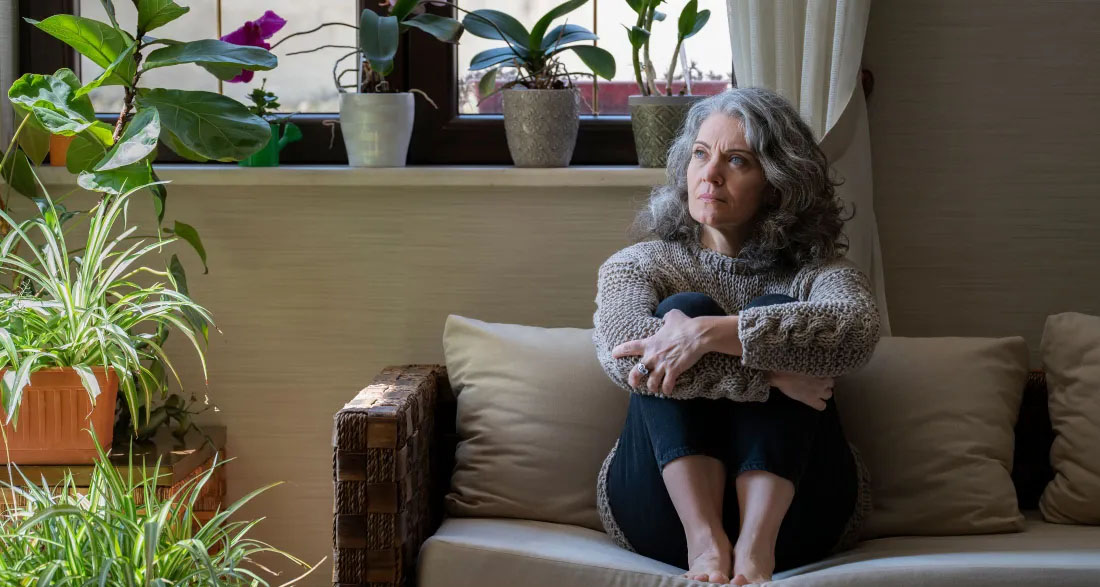
I spent 29 years caring for my disabled husband. Twenty-nine years of mornings and nights filled with pills, appointments, and careful routines. Until last Thursday.
Until I came home early and heard steady footsteps upstairs—footsteps that weren’t hesitant, that weren’t fragile. I watched Robert walk down the stairs unaided, smiling and laughing with Celia from church. No cane. No struggle. Nothing like the man I had devoted my life to.
In that moment, everything I believed about my life shattered.
I’m 57 now. I used to think loyalty was simple: pick your person, show up, never keep score. That was my rule. I followed it, every single day. And for 29 years, I believed it was enough.
But last Thursday, I learned the truth: my husband had been living a life completely different from the one I thought we shared.
I was 28 when it all changed.
Robert fell off a ladder while fixing a gutter on our garage roof. We’d been married barely three years. We were talking about starting a family, dreaming in small, practical ways—bigger apartments, weekends away, little things that made life ours.
At the hospital, the words hit me slow and heavy: cracked vertebra, nerve damage, chronic pain.
“Long recovery,” the doctor said. “Possibly permanent limitations.”
I wasn’t happy, but I was determined. I would help him. I became the strong one because somebody had to.
After that, my life became a schedule of care: pills, physical therapy, heat pads, wheelchairs, insurance appeals, calls on hold long enough to memorize the music. Robert went from carrying groceries two bags at a time to staring at the wall, jaw clenched, quiet as if pain alone could erase him.
We never had children. I worked full-time at an accounting office, learned medical codes, managed his appointments, steadied him when his balance failed, lifted a wheelchair into the car until my elbows screamed. People called me devoted; family called me selfless. I called it marriage.
I told myself love was enough. Robert used to say, “It’s fine. It’s just us.”
Years passed. His condition became “manageable,” the polite word for not having to live it constantly. Most days, he used a cane. Bad days, a wheelchair. We installed a stair lift. I built my world around his limits.
Then last Thursday, I left work early. A client canceled, and my coworker Nina nudged me.
“Go home. Surprise him. You’ve earned it.”
I drove, thinking I’d pick up his favorite chicken salad, a small peace offering I’d learned to prepare when someone hurts.
Then I noticed the car in our driveway. A silver sedan I didn’t recognize. Sleek. New. Parked like it belonged there. My stomach twisted, but I told myself it must be a nurse or a delivery.
The house was quiet—too quiet. No TV. No groaning from the recliner. No cane tapping the floor.
Then I heard it. Footsteps. Upstairs.
Not the uneven shuffle I knew. Steady, confident. My whole body froze. My heart pounded so hard I thought it would burst.
I slipped behind the half-open closet door in the hallway, holding my breath. And then I saw him.
Robert. Fully upright. Moving easily. Laughing. No cane. No hand on the railing. And right behind him was a woman I knew far too well: Celia.
Celia from church. The one who hosted the “Caregiver Appreciation Luncheon” where I had to stand while everyone clapped. The one who proudly said, “I help people navigate the system,” as if insurance claims were a superpower.
They moved down the stairs together. He whispered something I couldn’t hear. She laughed like she belonged there. She touched his arm—familiar, not polite.
I pulled out my phone and hit record, careful not to give them the show. Ten seconds. Fifteen. Enough to show his gait. Enough to show there was no cane.
Then I slipped out the front door and drove two blocks before letting my hands shake. I pulled over at my neighbor Dana’s house.
Dana is mid-60s, loud laugh, big opinions—the kind of woman who doesn’t bother hiding the truth. She was watering her plants.
“Maya? What’s wrong?” she asked.
“I need to come in,” I managed, voice tight.
Once the door closed, I cried like I was 28 again. I told her everything. Her face changed.
“Oh, honey,” she said.
“What?”
“I didn’t want to stir trouble,” Dana admitted. “But I’ve seen him. Out back. Late afternoons. Walking.”
I went cold. Months. This wasn’t a miracle “good day.” This was a life Robert had been living without me.
I went home like nothing had happened. Called Nina from the car.
“Do you have evidence?” she asked.
“Yes,” I said.
“Good. Don’t confront him yet. Call a lawyer.”
Back home, Robert was in his recliner. Cane leaned against the armrest like a prop. Face drawn, like he’d been suffering the whole time. Celia’s perfume lingered in the kitchen.
“You’re early,” he said, voice strained.
“Canceled appointment. You okay?”
“Pain’s bad,” he replied.
I nodded, kissed his forehead, poured him tea, listened as he complained, while my eyes picked up the details: a clean glass on the counter, lemon slices in the trash, transfers I didn’t recognize.
That night, I opened our bank account. At first, it looked normal. Then I saw transfers I hadn’t authorized. Small amounts. Two hundred here. Three hundred there. Always labeled blandly: AUTO or MISC. I dug deeper—credit reports, hidden lines of credit. Years of hidden accounts.
By noon, Nina had sent me an address: “Hidden marital assets,” she said.
Evan, the lawyer, was calm like he’d seen every betrayal imaginable. He watched the video. He looked at my screenshots.
“This is a pattern,” he said. “Hidden marital assets, potential fraud if he’s claiming disability benefits while able-bodied.”
I nodded. “I saw him walking. I know the woman—Celia from church.”
Evan’s mouth tightened. “Then you have leverage. Not revenge. Protection first.”
I documented everything. Dana wrote down sightings. Nina agreed to be a witness. I copied statements, photos, bills—anything unfamiliar.
Sunday came. Celia approached me after church, all perfect hair and pearl earrings.
“Maya,” she said, bright smile, “how are you holding up? How’s Robert?”
“He’s managing. We’re blessed,” I replied.
“You’re such a testimony,” she said, squeezing my arm. A testimony, like my suffering was a sermon.
Monday, I set the stage. Coffee. Cookies. Calm face. Robert in his recliner, cane nearby, performing pain.
When Celia arrived, she acted like she owned the room.
“Robert,” she sang. “How’s my favorite fighter?”
I poured four mugs. Celia noticed. My guests, Dana and Nina, were there too. Her smile faltered for a fraction, then returned.
I played the video. Robert walking. Laughing. No cane. I laid out the bank statements, credit reports.
“I understand you’ve been moving money for years,” I said.
Celia froze. Robert’s face drained of color.
“I went to a lawyer,” I added. “I’m done being confused.”
He tried to argue. I stopped him. “Just listen.”
I slid a separation agreement across the table. Asset freeze. Living arrangements. Temporary orders.
“You sign. Or I send everything to the insurer,” I said.
Celia gasped. Robert’s eyes widened.
“This is extortion,” they said.
“Try me,” I replied.
Dana cut in. “You let her do all that for you?”
Nina added, calm as ice. “This isn’t love. It’s exploitation.”
Celia’s face turned red. She grabbed her purse and left. Robert’s shoulders sagged—not with pain, but defeat. He signed.
That night, I stood by the stair lift. The machine I had fought to install. The machine I had used while he let me believe he couldn’t climb. Click. Off.
I slept in the guest room.
Next morning, I opened my own bank account, changed my direct deposit, scheduled a full checkup. I didn’t run back when Robert called.
For the first time in 29 years, I drove somewhere without thinking about getting back.
I had spent almost three decades believing love meant sacrifice. Now I know: love without truth is just unpaid labor. And I am done clocking in.
For the first time in 29 years, I drove somewhere without calculating how fast I needed to get back.