

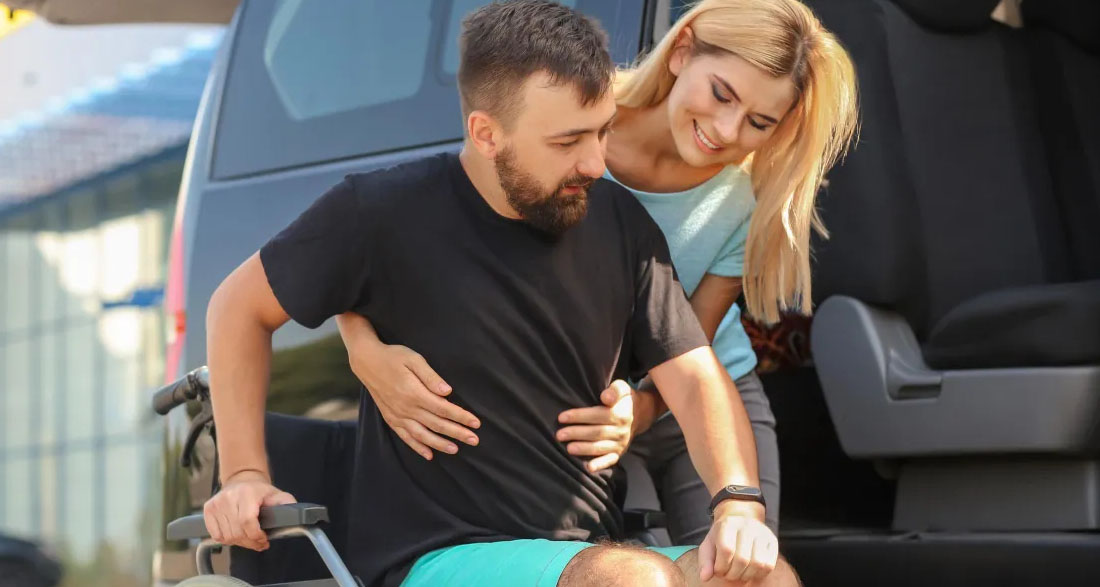
At 17, I made a choice that would change my life forever. I chose my high school boyfriend—paralyzed in a sudden accident—over my wealthy parents.
I thought love could conquer everything. Fifteen years later, that love, built on trust and survival, shattered in my own kitchen when my past came crashing back.
I met my husband in high school. He was my first love. The kind that makes you feel like nothing in the world could touch you. A week before Christmas, everything changed. Not with fireworks, not with a dramatic gesture—just with a quiet, steady feeling that felt like home.
We were seniors. We were in love. Untouchable, we thought. We dreamed of a bright future, of college, of life together. We had no idea what storms were coming.
The first storm came on a snowy night.
He was driving to his grandparents’ house—or so I thought for fifteen years. I was on my bedroom floor, wrapping presents, when the phone rang. His mom was screaming, her voice cracking. I caught bits and pieces:
“I’m not leaving.”
“Accident.”
“Truck.”
“He can’t feel his legs.”
I ran to the hospital. Harsh lights. The smell of antiseptic. The beeping of machines. There he was, lying in a hospital bed, rails and wires surrounding him, neck brace on, eyes wide open.
I grabbed his hand. “I’m here,” I whispered. “I’m not leaving.”
The doctor pulled us aside.
“Spinal cord injury,” he said. “Paralysis from the waist down. We don’t expect recovery.”
His mom sobbed. His dad stared at the floor. I felt numb.
Then I went home, where my parents were waiting at the kitchen table like they were lawyers negotiating a plea.
“Sit,” my mom said.
I sat.
“He was in an accident,” I said. “He can’t walk. I’m going to be at the hospital as much as—”
“This is not what you need,” she cut in.
“You can find someone healthy,” my dad said.
I blinked.
“What?”
“You’re seventeen,” my mom said. “You have a real future. Law school. A career. You cannot tie yourself to… this.”
“To what?” I snapped. “To my boyfriend who just got paralyzed?”
“I know he’d do it for me,” I said.
“You’re young,” my dad pressed. “You can find someone healthy. Successful. Don’t ruin your life.”
I laughed. They had to be joking.
“I love him,” I said. “I loved him before the accident. I’m not walking away because his legs don’t work.”
My mom’s eyes went cold.
“Love doesn’t pay the bills,” she said. “Love won’t lift him into a wheelchair. You have no idea what you’re signing up for.”
“My choice,” I said, voice shaking.
“Then this is your choice,” she said finally. “If you stay, you do it without our support. Financial or otherwise.”
The next day, my college fund was gone. My dad handed me my documents.
“If you’re an adult,” he said, “be one.”
I lasted two more days in that house. The silence was worse than their words. Then I packed a duffel bag. Clothes, a few books, my toothbrush. I stood in my childhood room for a long moment, staring at the life I was walking away from. Then I left.
His parents’ home was small, worn, smelling of onions and laundry. His mom opened the door and, without asking a word, took my bag inside.
“Come in, baby,” she said. “You’re family.”
I broke down on the threshold. That was the start of our new life. Out of nothing, we built something together.
Community college instead of my dream school. Part-time jobs in coffee shops and retail. Learning to transfer him out of bed, catheter care, dealing with insurance companies—things no teenager should know, but I learned them.
We went to prom together. He whispered, “They’ll stare.”
“Let them choke,” I said. “You’re coming.”
We rolled into the gym. People stared. A few friends rallied, moved chairs, made stupid jokes until he laughed. My best friend Jenna hugged me and leaned down to him.
“You clean up nice, wheelchair boy,” she said with a grin.
We danced, me standing between his knees, his hands on my hips, swaying under cheap lights. No one from my family came.
After graduation, we got married in his parents’ backyard. Fold-out chairs. Costco cake. My dress off a clearance rack. No one from my family came.
We had a baby a couple of years later. I sent a birth announcement to my parents’ office. No response. No card. No call. Nothing. Fifteen years of me scrolling past their numbers, pretending it didn’t hurt.
Life was hard. But we made it work. He got an IT degree online, a remote job, became patient and calm. We fought sometimes, over money, exhaustion, whose turn it was for which crisis—but we survived.
Then one random afternoon, everything changed again. I came home early from work, planning a surprise takeout dinner.
I opened the door. Voices in the kitchen. His voice. And another voice.
My mother’s.
Fifteen years. I hadn’t heard her voice in fifteen years, and suddenly it was like it hit me in the chest. Pain. Confusion. Shock.
She was red-faced, waving a stack of papers in his face. He sat there, pale.
“How could you do this to her?” she screamed. “How could you lie to my daughter for fifteen years?”
“Mom?” I whispered.
She whipped around. My hands shook as I took the papers. Emails. Messages. A police report. The accident date. The route. An address—not his grandparents’. Jenna’s name.
“Tell me she’s lying,” I said, voice shaking.
“No,” he whispered.
“My mom?” I asked, stunned.
“He wasn’t driving to his grandparents that night,” she said. “He was driving home from his mistress.”
I looked at him.
“I was young and selfish,” he said, voice cracking.
“Tell me she’s lying,” I demanded.
He didn’t. He just cried.
“Before the accident,” he said, “it was… a few months with Jenna. I thought I loved you both. I was stupid.”
“So the night of the accident,” I asked, “you were leaving her?”
He nodded. “I hit the ice. Spun out. Woke up in the hospital.”
“And the grandparents’ story?”
“I panicked. I knew if you knew, you might leave. I… I couldn’t risk losing you.”
“So you lied,” I said. “You let me burn my life down based on a lie.”
“I was scared. Then time passed. It felt too late.”
I turned to my mother.
“How do you know all this?”
“I ran into Jenna at the grocery store. She told me everything. Miscarriages, guilt… she thought God was punishing her. I asked why, and she told me.”
My world tilted. Fifteen years of life built on a lie.
“We were wrong too,” my mother said softly. “For cutting you off. For not reaching out. We thought we were protecting you. I’m sorry.”
I looked at him. Hands shaking, I set the papers on the table.
“I need you to leave,” I said.
“Where am I supposed to go?” he whispered.
I laughed once, sharp. “That’s what I had to figure out at seventeen. You’ll manage.”
I packed for myself and our son, pulling out clothes, important papers, and his favorite stuffed dinosaur. Our son was at a friend’s place.
When I came back out with the suitcase, my husband looked broken. My mother stood silent, tears on her face.
“I loved you,” I said. “More than was healthy. I gave up my family, my future, my education. I never regretted it—not once. But I thought you were honest with me.”
He choked out, “I love you.”
“Love without truth is nothing,” I said, and walked out.
I picked up our son. “We’re going on a sleepover at Grandma and Grandpa’s,” I told him, practicing what I’d say. He didn’t know them yet.
My parents opened the door. Saw him. Broke. My mom sobbing. My dad holding the doorframe.
They apologized. For cutting me off. For never meeting their grandson.
We worked out custody, finances, schedules. Divorce was messy, but necessary.
I still cry sometimes. I miss the life I thought I had. I don’t regret loving him. But I regret that he couldn’t trust me with the truth.
Lesson learned: Choosing love is brave. But choosing truth? That’s how you survive.