

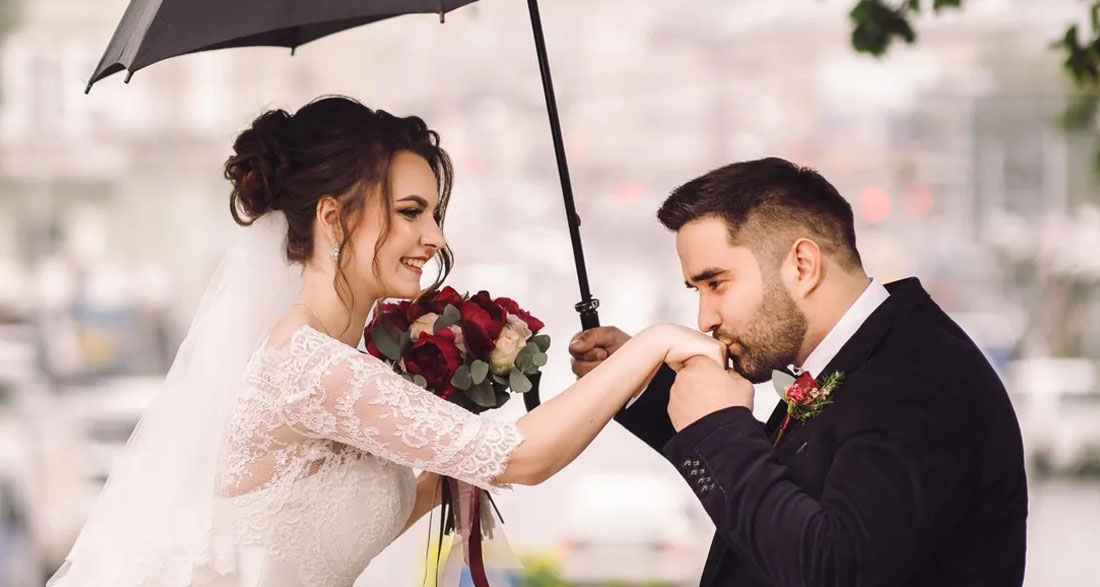
I married the guy I grew up with in an orphanage. The morning after our wedding, a stranger knocked on our door, and he told me there was something I didn’t know about my husband.
I’m Claire, 28, American, and I grew up in the system.
By the time I was eight, I’d been through more foster homes than birthdays. I had one rule for myself: don’t get attached. People like to say kids are “resilient,” but really, we just learn how to pack fast and not ask questions.
When they dropped me at the last orphanage, I had one rule: don’t get attached.
Then I met Noah.
He was nine, thin, a little too serious for a kid, with dark hair that stuck up in the back and a wheelchair that made everyone around him act weird.
“If you’re going to guard the window, you have to share the view,” I said the first time I sat near him.
Other kids weren’t cruel exactly; they just didn’t know what to do with him. They shouted “hey” across the room and ran off to play tag where he couldn’t follow. The staff talked about him right in front of him, like, “make sure you help Noah,” as if he was a chore chart, not a person.
But I didn’t care. One afternoon during free time, I dropped to the floor by his chair with my book.
“If you’re going to guard the window, you have to share the view,” I repeated.
He looked at me, raised an eyebrow.
“You’re new,” he said.
“More like returned,” I replied. “Claire.”
He nodded once. “Noah.”
That was it. From that moment, we were in each other’s lives.
We grew up together, and that meant we saw every version of each other.
“I get your hoodie,” we’d say during our little rituals when other kids left with their suitcases or trash bags.
“If you get adopted,” I’d say, “I get your hoodie.”
We clung to each other instead. We said it like a joke, but we both knew: no one was coming for the quiet girl with “failed placement” stamped on her file, or the boy in the chair.
We aged out almost at the same time. At eighteen, they called us into an office, slid some papers across the desk, and said, “Sign here. You’re adults now.”
We walked out together with our belongings in plastic bags. No party, no cake, no “we’re proud of you.” Just a folder, a bus pass, and the weight of “good luck out there.”
On the sidewalk, Noah spun one wheel lazily.
“Well, at least nobody can tell us where to go anymore.”
“Unless it’s jail,” I said.
He snorted. “Then we better not get caught doing anything illegal.”
We enrolled in community college, found a tiny apartment above a laundromat that smelled like hot soap and burnt lint. The stairs were awful, but rent was low, and the landlord didn’t ask questions.
We took it.
We split a used laptop, took any job we could get: him doing remote IT support and tutoring, me at a coffee shop and stocking shelves at night.
We furnished the apartment with whatever we could find on the curb or in thrift stores. Three plates. One decent pan. A couch that tried to stab you with springs.
It was the first place that felt like ours.
Somewhere in that grind, our friendship shifted. There was no dramatic first kiss in the rain, no big confession. It was little things.
He started texting, “Message me when you get there,” every time I walked somewhere after dark.
We’d put on a movie “just for background,” then fall asleep with my head on his shoulder, his hand resting on my knee like it was the most natural thing in the world.
“We’re kind of already together, aren’t we?” I said one night, half-dead from studying.
“Oh good,” he said, not even looking away from the screen. “Thought that was just me.”
That was our big moment. We started saying boyfriend and girlfriend, but everything that mattered had been there for years.
“Two orphans with paperwork,” Noah said when our diplomas finally arrived.
A year later, he proposed—not at a restaurant, not in front of a crowd.
I laughed, then cried, and said yes before he could take it back.
He rolled into the kitchen while I was making pasta, set a tiny ring box next to the sauce, and said, “So, do you want to keep doing this with me? Legally, I mean.”
Our wedding was small and perfect. Friends from college, two staff members who had cared, fold-out chairs, a Bluetooth speaker, too many cupcakes.
The next morning, the knock came.
Firm, calm, deliberate.
Noah was still asleep, hair sticking up, one arm over his eyes. I pulled on a hoodie and opened the door.
A man in a dark coat, maybe late forties or early fifties, with neat hair and calm eyes. He looked like he belonged behind a desk, not at our chipped doorway.
“I’ve been trying to find your husband for a long time,” he said. “Good morning. Are you Claire?”
I nodded slowly. Every foster-care alarm bell in my body went off.
“My name is Thomas,” he said. “I know we don’t know each other, but I’ve been trying to find your husband for a long time. There’s something you don’t know about your husband. You need to read the letter in this envelope.”
He held out a thick envelope. Behind me, I heard the soft sound of wheels.
“I’m here because of a man named Harold Peters,” Thomas said.
“Claire?” Noah mumbled, rolling up beside me. Hair messy, t-shirt wrinkled, wedding ring shiny and new.
Thomas’s face softened. “Hello, Noah. You probably don’t remember me. But I’m here because of a man named Harold Peters.”
“I don’t know any Harold,” Noah said, frowning.
We let Thomas in. He set the envelope on the coffee table like it might explode.
“I’m an attorney,” he said. “I represented Mr. Peters. Before he died, he gave me very clear instructions about you.”
Noah opened the envelope with shaking hands.
“But I don’t know him,” he said.
“That’s why he wrote this,” Thomas said. “He knew you wouldn’t remember.”
Noah unfolded the letter and began to read aloud.
“Dear Noah,” he read, voice trembling. “You probably don’t remember me. That’s all right. I remember you.”
Years ago, outside a small grocery store, Harold had slipped on a curb, dropped his bag, and Noah had stopped to help him. Not rushed, not awkward. Just stayed.
Harold never married, had no close family, but had a house, savings, and a lifetime of belongings. He wanted to leave them to someone who understood being overlooked—but chose kindness anyway. And he chose Noah.
“I hope this does not feel like a burden. I hope it feels like what it is: a thank you, for seeing me,” Noah read, voice shaking.
Thomas explained it all: house, savings, trust, enough to finally breathe without fear. The key was in a smaller envelope.
Noah stared at it like it might disappear.
“My whole life,” he said slowly, “people in suits showed up to move me or tell me I’d lost something. You’re really here to tell me I gained something?”
Thomas smiled faintly. “Yes.”
The door clicked shut, and the apartment fell quiet.
For years, our lives had been built around the idea that nothing good stayed. This felt like a glitch in the universe.
“I helped him pick up groceries,” Noah said finally. “That’s it.”
A few weeks later, we went to see the house.
Inside, it smelled like dust and old coffee. Small, solid, ramp up to the door, scraggly tree in the yard. Photos on walls, books on shelves, dishes in cabinets—a real home.
Noah rolled in slowly, looking around.
“Growing up, nobody chose us,” he admitted. “I don’t know how to live in a place that can’t just… disappear on me.”
I put my hand on his shoulder. “We’ll learn. We’ve learned harder things.”
Nobody chose us growing up. But someone we barely remembered saw who Noah was—and decided that kindness was worth rewarding. Finally.