

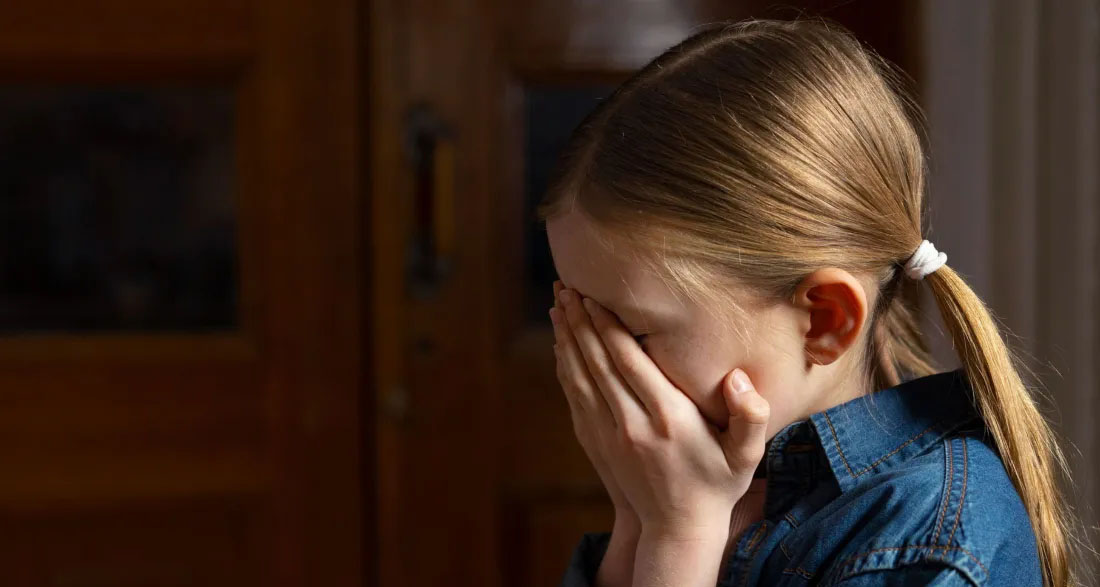
When Lily started hiding her toys and crying alone in her room, I knew something was very wrong. My stepdaughters, Ava and Sophie, always acted sweet around us, but Lily’s fear told a different story. There was a heaviness in her little eyes that I couldn’t ignore. I decided I needed to find out exactly what was happening in our home.
I’m 38, though some days it feels like I’ve lived twice that long.
My first husband died suddenly when Lily was just three. That loss tore our little world apart. I spent years moving through life on autopilot—working, parenting, and hiding my grief so Lily wouldn’t see how broken I was inside.
Dating felt impossible. I couldn’t imagine letting anyone new into a home that still carried the weight of our lost family.
But time, quietly and slowly, softened some of the edges of my grief. And that’s when I met Daniel.
Daniel was gentle, the kind of man whose calm didn’t feel forced. He understood what it meant to carry pain. He had gone through a messy divorce not long before and had two daughters: Ava, 14, and Sophie, 12. They lived with him full-time after their mother moved overseas.
Blending families is never easy, but at first, things seemed manageable. The older girls were polite, even helpful, and I thought we were on track to building a stable, happy household.
Then I noticed Lily changing.
At first, it was subtle. She stopped bringing her toys into the living room. No more crayons scattered on the floor or forts in every corner. Instead, she retreated to her bedroom, hiding her stuffed animals, growing quieter, more hesitant. Some days, I’d catch her with red, tear-stained cheeks, insisting she was just “tired.”
When I asked if Ava and Sophie were bothering her, she shook her head.
“They’re nice,” she whispered too quickly. “They’re just older, Mommy. I’m fine.”
But I knew she wasn’t fine.
Around Daniel, the girls were always sweet and helpful, offering to carry groceries or ask if Lily needed help with homework. But when they were alone with Lily and me, something felt off—like a tension I couldn’t put my finger on.
One night, I asked Daniel directly. “Do you think the girls and Lily are truly getting along? She seems… tense. Different.”
He smiled, trying to reassure me. “They’re still adjusting, honey. Blended families take time. Lily’s used to being an only child.”
I wanted to believe him, but my instincts screamed that this was bigger than adjustment.
The turning point came one evening when I found Lily curled up on my bed, hugging her stuffed bunny, while Ava and Sophie laughed in the next room.
“Sweetheart… are Ava and Sophie being unkind to you?” I asked softly.
“I don’t want them to get mad,” Lily whispered. “And I don’t want Daddy to think I’m lying.”
My heart sank. She felt intimidated. She didn’t feel safe telling the truth.
The next morning, after Lily went to school, I grabbed an old voice recorder. It was small, simple, and discreet. I hid it under a basket of books in her bedroom and said nothing to anyone.
The following day, once the kids were gone, I retrieved the recorder, closed Lily’s door, and pressed play.
What I heard made my stomach drop.
At first, just soft noises: footsteps, a creaking bed, a drawer opening. Then Ava’s voice, sharp and commanding:
“You’re going to clean my room!”
“And don’t forget you’re washing my dishes,” Sophie added, laughing.
Lily protested. “But… those are your chores…”
Sophie snapped. “Just do it. Stop asking questions, Lily.”
Ava’s voice hardened, too forceful for a fourteen-year-old: “And if you tell our parents, I’ll rip up all your toys and say you were mean to me!”
Lily started crying quietly, but the older girls didn’t stop.
“Oh, stop whining! You’re such a baby!” Sophie snapped.
“And hurry,” Ava added. “We want our chores done before Dad gets home.”
Lily whispered a tiny, resigned, “Okay…”
That little word broke me more than anything else. My little girl was already giving up. Accepting the role of victim.
It wasn’t about Ava and Sophie being “evil.” They were just teenagers pushing boundaries, using power they didn’t fully understand. But it had created a toxic, hurtful environment that none of the adults had noticed. Until now.
I went downstairs to Daniel, who was making tea.
“Daniel, I need to talk to you right now,” I said.
Before I could play the recording, he brushed it off. “This sounds like kids being kids, Melissa. Lily is the youngest, and Sophie and Ava are just being bossy. Typical sibling dynamics, right?”
He smiled, as if that explained everything. “Lily’s only taking it hard because she’s never had sisters. She just needs to stand up for herself.”
And then he walked out. I was boiling with anger. He had dismissed Lily’s fear. He had already chosen to believe this was “normal.”
I knew I needed to show him the truth. I needed him to hear it for himself.
That afternoon, before Ava and Sophie came home, I moved the recorder to the living room shelf and hid it behind old magazines. I asked Lily to set up her coloring books at the coffee table, just like she used to.
She hesitated, glancing at the door.
“I’ll be right here in the kitchen,” I said. “You’ll be fine. Promise.”
She nodded and went.
When the girls arrived, Daniel was in the kitchen, scrolling on his phone. I pretended to sort mail, listening closely.
At first, everything seemed normal. Then Sophie saw Lily coloring.
“Oh, you’re in here,” she said, her tone changing immediately.
I nudged Daniel, gesturing for him to pay attention. He frowned but lowered his phone.
“I was just drawing…” Lily whispered.
Ava pushed her crayons across the floor. “We use the living room after school. Go draw somewhere else.”
Sophie piled on. “And don’t forget our chores, Lily. Dad hates messes, and we’ll make sure you get yelled at if our chores aren’t done.”
“Dad will believe anything we say,” Ava added. “So don’t tell him or Mom. Just do as you’re told.”
Daniel stiffened. His eyes widened.
Lily quietly started gathering her crayons, giving up her space without question.
I stepped out of the kitchen, Daniel right behind me.
“No,” I said firmly. “Lily can stay right where she is. You two will wait.”
Ava’s confident act crumbled. “We just wanted—”
“I know what you wanted,” I interrupted. “Sit down. All of you.”
I retrieved the recorder and pressed play. The room filled with the voices from the day before.
Ava turned white, Sophie fidgeted, avoiding eye contact, and Daniel looked sick.
Finally, he whispered, “Girls… is this… how you’ve been talking to Lily?”
They didn’t answer. That silence said it all.
I didn’t scold them. I simply stated the new rule.
“This isn’t how we treat each other in this house. No more bossing, no more forcing Lily to do your chores, no more threats.”
Daniel didn’t defend them. Instead, he walked over to Lily, pulled her close, and said, “I’m so sorry, sweetie. I should have seen this. I should have listened to your mom.”
Ava and Sophie apologized, awkwardly, quietly, like teenagers caught off guard.
It wasn’t a perfect fix, but it was a start. That night, we set boundaries together as a family. It wasn’t about punishment—it was about rebuilding trust.
Lily slept with her door open that night, and for the first time in weeks, she smiled before drifting off.