

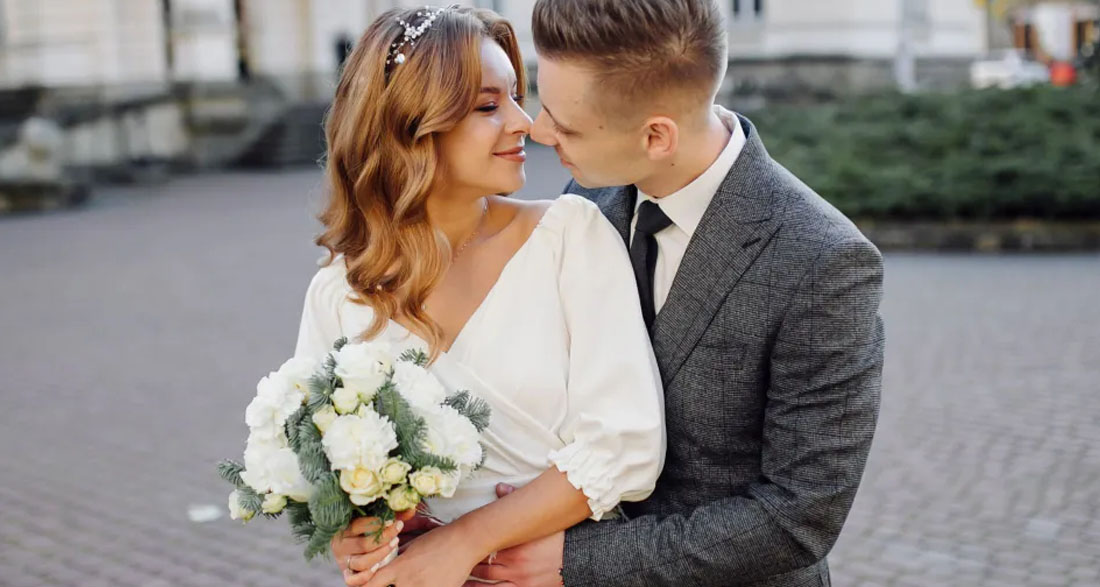
I thought I married a man shaped by grief—someone careful, gentle, and healing. But the truth? It was nothing like I imagined. It started the moment I posted our wedding photos for the first time.
A stranger messaged me, a warning so sharp it cut through my perfect little bubble, and I realized that some love stories aren’t tragic—they’re manufactured. I had never known the real story.
If I hadn’t posted those photos, maybe none of this would’ve happened.
Ben and I had been married for 17 days.
Seventeen days. Just over two weeks, but it felt like forever and yet like a blink. We were still living in that magical afterglow: our toothbrushes side by side, leftover cake in the fridge, the phone ringing with compliments and congratulations.
I’d never been someone who needed a big moment. But our wedding day… that day felt sacred. Not just because we were married, but because of who Ben was to me: careful, grounded, and observant in a way that made me feel seen, really seen.
“I see you, Ella,” he whispered one evening, brushing a strand of hair from my face. “And because of that… I know we’d be powerful together.”
Kayla, my best friend, had rolled her eyes. “Ella, he’s way too careful. Like he’s rehearsing feelings instead of actually feeling them,” she said.
Ben never spoke about Rachel, his first wife, in more than half-sentences.
“She loved red wine.”
“She couldn’t stand the cold.”
Once, when I asked how they met, he just said, “At the wrong time,” and kissed the back of my hand like that made it noble. I didn’t push. The woman was dead, so I thought leaving the past alone was the respectful thing to do.
The only photo of Rachel I’d ever seen was a faded snapshot tucked in a drawer. She was smiling but looking away from the camera, hair pulled back.
“You were beautiful, Rachel,” I murmured, placing the photo back as I continued hunting for batteries.
Ben was seven years older than me. He liked quiet mornings, black coffee, old soul records on Sundays. He’d often call me his “second chance.” I thought it was romantic.
The morning I posted our wedding photos, everything had felt ordinary. I’d been folding towels in the sunlit kitchen when I decided to share them for the first time. I tagged Ben and wrote:
“Happiest day of my life. Here’s to forever, my love.”
Ten minutes later, my phone buzzed. A message request.
The sender: Alison C.
“Run from him!”
I blinked. One message. No profile picture, no posts, no mutual friends. I almost deleted it—but then another arrived.
“Don’t say anything to Ben. Act normal. You have no idea what he did. You need to know the truth!!”
My hands tightened around the phone.
“Run from him!”
Seconds later, a third:
“He tells the story like it happened to him. But… it happened because of him.”
The kitchen felt colder somehow. I moved to the bedroom, yanked the suitcase from under the bed, and started packing. Jeans, toiletries, the oversized sweater I always stole from Ben. I didn’t know where I was going—I just knew I couldn’t stay if any of this was true.
“Get it together, Ella,” I muttered aloud. “You have no idea what’s going on here. Calm down.”
Another message arrived as I zipped the suitcase:
“Please, meet me. I’m Rachel’s sister.”
Rachel’s sister?
I sat on the bed, staring at my phone, finally typing: “Why should I believe you?”
Instant reply:
“Because you just posted the first photo of Ben I’ve seen in years. Look up his name + accident + license suspension. That should do it. I’ll meet when you’re done with your homework.”
I opened a browser. Typed Ben’s full name, “accident,” “license suspension.”
A small local news piece appeared, dated seven years ago:
“Driver in critical condition after single-vehicle crash kills passenger.”
No mugshot. No direct mention of Rachel, but comments spelled the truth.
One line burned into my memory:
“People said he’d been drinking. Everyone knew it… for goodness’ sake! She begged him not to get in the car.”
“Rest in peace, lovely girl.”
“Shame on him. A family has lost their daughter because of this man…”
I met Alison at a diner off the highway. Older than me by at least a decade, kind eyes, no makeup. She didn’t hug me. Didn’t shake my hand. She slid a folder across the table.
“It’s all public record, hon,” she said. “I didn’t hack anything. Most people just don’t know how to look.”
Inside: accident reports, license suspension records, Rachel’s obituary. The crash summary listed only “female passenger.”
“She wasn’t just a passenger, Ella,” Alison said. “She was his wife… and my sister. And she hated driving at night. She only got in the car because he insisted.”
I whispered, more to myself than her, “He said she lost control.”
Alison laughed, exhausted, not mean. “Of course he did. Ben’s always had a gift for erasing the parts of the story that make him look bad.”
“Why didn’t anyone say anything sooner?”
“Because grief is a shield,” she said softly. “People are scared to poke holes in it.”
That weekend, we went to Ben’s mom’s house for lunch. Lemon chicken pasta. Garlic bread. Rosemary in the air.
While clearing plates, his Aunt Mae smiled softly at me.
“Has Ben told you about Rachel, sweetheart? I never quite believed that story,” she said, sipping lemonade.
Ben’s mother said nothing, wiping plates in silence.
“What story?” I asked.
Ben glanced up. “That she was driving? Your license got pulled right after, didn’t it?”
Silence.
Aunt Mae set her glass down. “I’m done covering for you, Benjamin. The truth needs to come out.”
Ben’s face went pale. “That’s old news. No reason to dig it up now. Let Rachel rest in peace.”
I excused myself to the bathroom, locked the door, stared at my reflection. My husband had let the world believe a lie to protect himself.
Monday. I walked into his office, closed the door. The one place he couldn’t run.
“I need to ask you something,” I said.
“Okay. But it better be good, babe. I’m in the middle of something,” he said, eyes cautious.
“Were you driving when Rachel died?”
His mouth opened, then closed. Blinked. “Ella, we’ve talked about this.”
“No. Not really. I’ve asked questions. You avoid them. You talk about that time… but you never tell the truth.”
He stood slowly. “You need to let this go. Do you know what that would do to me?”
“I know you let people think Rachel was responsible for her own death.”
“I didn’t—”
“You told me she lost control!”
His eyes flared. Not anger. Not guilt. Something else. Nervousness. Panic, almost.
“I’ve lived with that night every day,” he said. “You don’t get to judge me.”
“You made her the villain in her own ending.”
I packed properly that time, calm, clear. No tears. Our framed wedding photo went face down on the dresser. My ring sat on the sink.
I drove without music past our grocery store, favorite coffee shop, the house with the red door he loved. At a red light, I opened my phone and typed her name: Alison.
She answered immediately. I felt the tears forming.
“Ella?”
“Can I come over? Please?”
“Of course. You don’t need to ask.”
Her house was small, yellow, peeling paint. Smelled of cinnamon and chamomile. She hugged me until my shoulders dropped. Tea steamed between us as we sat on the floor.
“I packed everything. Left the ring behind. He won’t stop calling,” I said.
“You didn’t fail,” Alison said. “You saw the truth and acted. That’s more than most.”
“But it feels like I walked away too fast. Maybe he’s embarrassed about that night,” I whispered.
“He’s good at that,” she said. “Making doubt feel like guilt, silence feel like sorrow. But my sister? She lost her life to him.”
I stared into my mug.
“What now?”
“You start again. Without him. Without someone made of excuses and half-truths. You start with the lights on.”
Later, at Kayla’s, I poured wine, notifications from my wedding post blinking on my phone.
“Wait… this is Rachel’s Ben?”
“You start again. Without him,” Kayla said, calm, safe.
Even one of his old coworkers messaged me:
“I didn’t know he was seeing anyone. I’m so sorry.”
Ben called again. I let it ring. Then a text:
“We can fix this. I love you.”
I replied:
“Go public. Set the record straight, and then we’ll see.”
He never responded.
The next morning, Alison’s final message stayed with me:
“You didn’t marry a widower, hon. You married a man who survived his own choices, and let someone else carry the cost.”
I tell people now: I didn’t lose a husband—I lost a lie.
I filed for annulment before the 90-day mark. Court became the place where the truth wasn’t mine alone. I didn’t lose love. I uncovered it.