

At 92 years old, I was a widowed department store owner with more money than family—and no idea who truly deserved any of it. Everyone I loved was gone. What I had left was money. And a question that wouldn’t let me sleep at night.
I never thought I’d live this long.
By the time I turned 92, my world had gone quiet.
My husband was gone.
My children were gone.
My sisters and brothers were gone too.
Cancer took some. Accidents took others. Time finished the rest.
What stayed behind was silence… and money.
A lot of it.
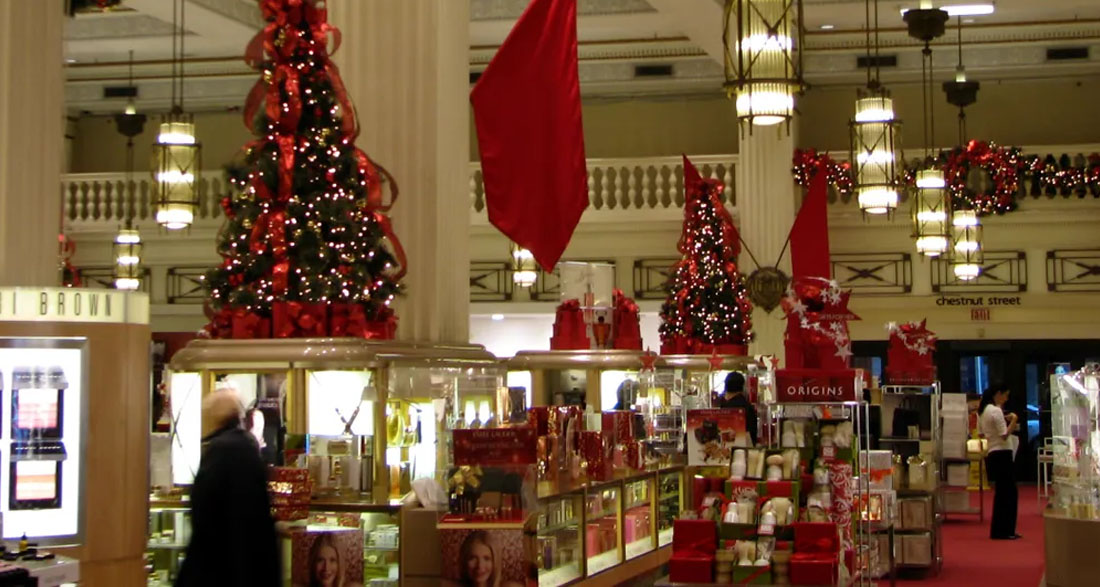
And the department store I built from nothing when I was 42.
Four floors.
A cozy café.
Perfume counters that smelled like luxury.
Designer brands I still couldn’t pronounce.
My name was carved into the building.
My blood, my sweat, my whole life were in those walls.
But I had no heir.
No one I trusted.
No one whose heart I believed in.
I didn’t want my fortune handed to lawyers or distant relatives who smiled only when money was mentioned. I didn’t want vultures circling my legacy.
So I decided to do something strange.
Something risky.
I would pretend to be homeless… in my own store.
If people believed I was nothing, how would they treat me?
That, I decided, was the truth I needed.
Early one cold morning, I opened my old cedar trunk and began building my disguise.
In the mirror, I barely recognized myself.
I found an ancient coat, tore one sleeve, stitched on crooked patches, and rubbed it in dirt. I chose shoes with worn soles and a hole in one toe. I smeared ash on my cheeks, tangled my white hair, and—for the first time in seventy years—skipped my lipstick.
I stared at my reflection.
“Old fool,” I muttered. “Let’s see how they act when they can’t smell your money.”
I grabbed my cane and headed out.
The sliding doors opened with their usual soft whoosh.
Warm air rushed over me, mixed with coffee and expensive perfume.
I shuffled in, hunched and slow.
Heads turned immediately.
“Does she belong in here?”
A woman in a designer coat wrinkled her nose and pulled her handbag closer like I might steal it.
“Ugh! Get this filthy thing out of here.”
Thing.
I kept walking.
A man stepped dramatically aside.
“We got a street zombie.”
A teenager pointed his phone at me and laughed.
“Look at this. We got a street zombie.”
I pretended to examine a scarf display, my hands shaking.
It hurt more than I expected.
Two employees whispered behind a jewelry counter.
“Should we call security?” one asked. “She looks… unstable.”
“We can’t have her near the glass,” the other hissed. “She’ll scare customers.”
My chest tightened.
Worthless.
Dirty.
Beggar.
No one said the words, but I felt them all the same.
I shuffled toward the escalator, hugging my coat tighter.
A woman in furs snapped, “Why is this thing allowed in here? She should be on the street, not next to the handbags.”
Her friend laughed.
“Pathetic,” a man added casually.
I had never felt so small in a place that belonged to me.
A floor manager approached, hand already on his radio.
“All right, ma’am,” he said stiffly. “I’m going to have to ask you to—”
He never finished.
Out of nowhere, someone slammed into me from behind.
My cane clattered across the floor.
Small arms wrapped tightly around my shoulders, nearly knocking me over.
I screamed.
“Stop! Let go!”
My heart pounded painfully.
“Mrs!” a small voice gasped against my neck. “Mrs, it’s you!”
That voice.
I knew that voice.
I turned, shaking.
A little boy stared up at me—seven or eight years old, brown hair, tear-streaked face, smiling like he’d found treasure.
“I told you it was her, Mom!” he cried. “I knew it!”
Behind him stood a thin woman with tired eyes and a coat too light for winter.
Her hands trembled on a worn bag strap.
Her eyes met mine.
“Oh my God,” she whispered. “It’s you.”
And suddenly, I was back in the snow.
Years earlier, I had been walking home from a board meeting on a winter night. Snow fell thick and silent.
I saw a man on his porch screaming at a woman holding a small boy.
“You want to leave?” he shouted. “Then leave! Freeze out there for all I care!”
He shoved them into the snow and slammed the door.
The boy cried, “Daddy!”
The porch light went out.
I stood there for one long second… then marched over.
“Come with me,” I said.
They followed me home like ghosts.
I fed them soup. Wrapped them in blankets. Gave the boy a warm bath because he wouldn’t stop shivering.
They slept on my couch that night.
In the morning, I offered a lawyer, rent money, even a spare room.
The woman—Elena—refused most of it.
“I don’t want to owe too much,” she said softly.
She accepted enough for a small room and food.
The boy hugged me hard.
“Thank you, Mrs,” he said. “Thank you for not leaving us in the snow.”
I never saw them again.
Until now.
“Tommy?” I whispered. “Is that really you?”
“It’s me!” he laughed through tears. “I told Mom it was you, but she said no because—”
He gestured at my dirty coat.
The floor manager cleared his throat.
“Ma’am, is this woman bothering you?” he asked Elena.
I straightened up and pushed back my hood.
“No,” I said calmly. “In fact, she’s my guest.”
The manager stared.
“Mrs… Mrs. Carson?” he choked. “Is that you?”
Gasps spread through the store.
“That’s the owner?” someone whispered.
“Like someone you were happy to throw out five minutes ago?” I said quietly.
Silence fell.
I picked up my cane.
“Frank,” I said to the security guard, “no one touches them. I’m taking them to my office.”
“Yes, ma’am,” he said instantly.
I turned to Elena and Tommy.
“Come with me,” I said. “Again.”
In my office, I removed the filthy coat. Underneath were my wool dress and pearls.
Tommy’s eyes widened.
“Whoa,” he whispered. “You’re like a superhero. Disguise and all.”
Elena sank onto the couch.
“You own this place?” she asked.
“Yes,” I said. “All of it.”
Over tea—and hot chocolate for Tommy—I told them the truth.
“I’m old and alone,” I said. “I have money. And no one to leave it to.”
Tommy frowned.
“You don’t have kids?”
“I did,” I said softly. “They’re gone.”
“I’m sorry,” he said.
“So I needed to see who people really are,” I continued. “When they think you’re beneath them.”
Tommy nodded.
“Well,” he said, “most of them flunked.”
That made me laugh.
They told me their story.
Shelters. Cleaning jobs. Waitressing. A tiny apartment. Then the rent doubled. A motel by the highway.
“I always told Mom about you,” Tommy said. “I knew we’d meet again.”
Something clicked inside me.
“Elena,” I said, leaning forward, “this may sound crazy.”
She smiled weakly.
“After today? I’m prepared.”
“I want you and Tommy to be my heirs.”
Silence.
“My store. My estate. Not for luxury—but to help people like you.”
Tommy whispered, “We’d… be rich?”
“You’d be responsible,” I said gently.
Elena cried.
“I don’t deserve this.”
“It’s not about deserve,” I said. “It’s about heart.”
Tommy asked quietly, “Can we make sure no one gets thrown out in the snow again?”
I put my arm around him.
“That,” I said, “will be our first rule.”
In the weeks that followed, we made it official.
They took very little for themselves.
“We just want a normal life,” Elena said. “And a way to help.”
The rest went to shelters. Food programs. Emergency housing.
The store stayed open.
But now, when someone mistreated staff, a boy in an oversized blazer would step in.
“Sir,” Tommy would say firmly, “we don’t talk to people like that here.”
And I would watch from my office, cane across my lap, heart full.
I went into my store dressed as someone the world ignored.
I came out with an heir.
Not by blood.
By heart.
At 92, it was more than I ever hoped to find.