

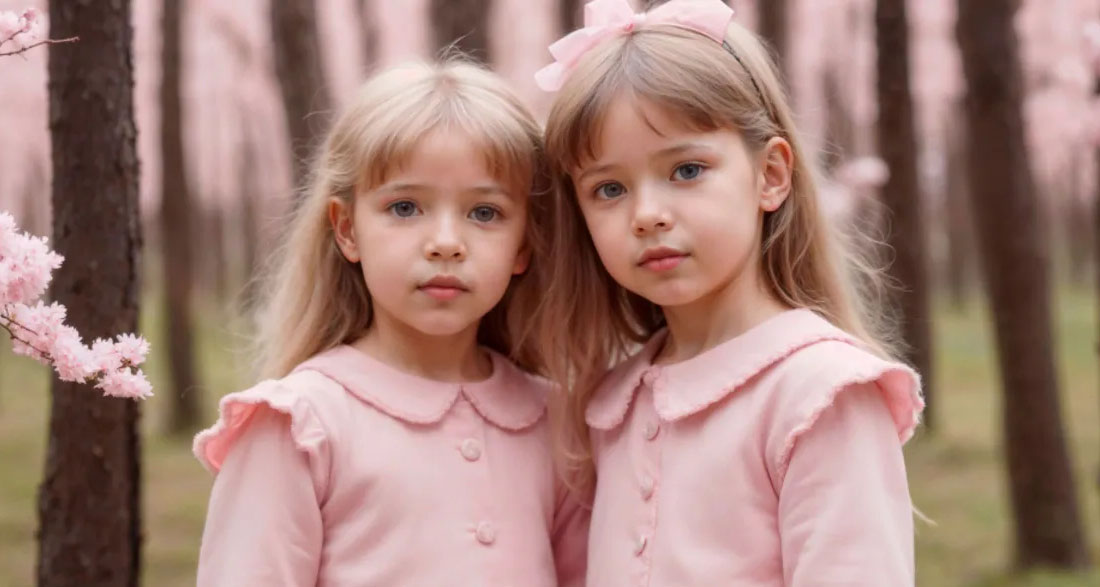
I gave 20 years of my life to two little girls after I made a promise to their dying mother. I promised I would protect them, love them, and raise them as my own. I never imagined that one day, those same girls would use that promise as a reason to push me out of their lives.
The evening it happened, there was a moving truck parked in the driveway.
And my name was written on every single box being carried into it.
Last year, when the girls bought their first house together, they were so proud. They stood in the empty living room, holding hands, and Nika said, “Mom, this is our first real home.”
Angela smiled and added, “And you’re moving in with us. No arguments.”
They insisted I move in with them.
I locked up the old house where I had raised them. I kept the key, just in case. Then I packed my clothes, my photo albums, and twenty years of memories into their guest room. I told myself it was their turn to take care of me.
But now, I was standing at the end of their front path in the early evening drizzle, still wearing my hospital coat after a 12-hour shift, staring at strangers loading my life into a truck.
Nika was near the door, sealing a box with tape. Angela was handing bags to the driver like she had planned everything.
“What is going on?” I asked. My voice shook.
Neither of them answered.
I walked forward and stood in the middle of the walkway, blocking them both. My heart was pounding so hard it hurt.
Angela finally held out her phone. She wouldn’t look at me. Her eyes were red, but dry — like she had already cried before I got home.
“We can’t live with someone who lied to us our whole lives,” Nika said. She stared past me, not at me.
“What lie? Sweetie, what are you talking about?” I asked, looking from one to the other.
That’s when Angela turned the phone toward me.
And I felt the blood drain from my face.
On the screen was a photo of a handwritten letter. Slanted, careful writing. My name at the top.
From a man named John.
I knew that handwriting before I even finished the first sentence.
My fingers trembled as I grabbed the phone and zoomed in.
In the letter, he introduced himself as the twins’ biological father.
He wrote that he had been deployed overseas while their mother was pregnant. When he returned months later, he found out she had died during childbirth. He learned that his daughters had been adopted by the midwife who delivered them.
By me.
He said he had written asking for a chance to meet his daughters.
He had wanted his kids.
And for 20 years, all I ever told the girls was that they were adopted. I never told them the rest.
“Where did you find this?” I asked, my voice barely steady.
“In the attic,” Angela said flatly. “We were looking for old photo albums. We found an envelope addressed to you. We thought maybe it was something we should know.” She took the phone back. “Turns out we were right.”
“Angela… Nika…”
“Don’t,” Nika warned. “Just don’t.”
The boxes kept moving. The truck kept filling.
And I stood there in the rain, trying to find words for something I had buried two decades ago.
To understand why they were packing my life away, you have to go back 20 years. Back to the night I met their mother.
I was a young midwife on my first solo delivery. I was nervous. Terrified, actually. I kept telling myself, “Steady hands. Just steady hands.”
Their mother was barely more than a child herself. Maybe 17 or 18. She labored for hours. She grew weaker and weaker. In the middle of the night, she grabbed my wrist so tightly that even now, I can still remember the pressure of her fingers.
“I can’t raise them alone,” she whispered. Her voice was thin and scared. “And if something happens to me… promise me you’ll take care of them. Please.”
What could I say?
I nodded.
“I promise,” I told her.
She smiled, like a heavy weight had been lifted from her chest.
An hour later, she gave birth to two tiny girls — Nika and Angela.
By morning, she was gone.
My coworkers told me the babies would go to the state.
I went home that night and sat at my kitchen table for hours. I kept seeing her face. Hearing her voice.
“Promise me you’ll take care of them. Please.”
Two weeks later, I started the adoption paperwork.
It wasn’t easy. There were forms, interviews, background checks. There were nights I cried from exhaustion. There were moments I wondered if I was strong enough.
But it was the best thing I ever did.
I never built another family. I never got married. The girls were the only family I ever chose.
“I was scared,” I told them now, standing in the rain outside the house they bought — the house they had invited me into.
“Scared?” Nika let out a sharp laugh. “You let us grow up believing our father never wanted us.”
“I didn’t even know he existed until that letter arrived,” I said quickly. “Your mother never told me about him. She was dying. All she asked me was to take care of you.”
“But you got the letter, Jessie,” Angela said.
Jessie.
Not Mom.
“And you said nothing.”
“I know,” I whispered. “I know I should’ve told you.”
“She lied to us, Nika,” Angela said, turning to her sister like I wasn’t even there. Then she called to the driver, “Take everything to the old address — she knows it.”
“Girls, please…”
The front door closed.
The lock turned.
The sound hit my chest like something breaking.
The driver avoided my eyes as he climbed into the truck. The engine started. The truck rolled away as the rain came down harder.
I stood there alone until my legs finally carried me to my car.
My old house smelled like dust and old memories.
I turned on the kitchen light and stood in the middle of the room where I had helped them with homework, baked birthday cakes from scratch, and waited up past midnight to hear the front door open after their first college parties.
Every corner held a memory.
The silence was the loneliest sound I had ever heard.
I sat at the table and let myself cry. I didn’t try to stop it.
I should have told them when they were old enough to understand. I had years of chances.
But every time, I chose silence.
I called it protection.
It wasn’t protection.
It was fear wearing a kinder name.
I couldn’t undo the past.
But I could do one thing.
I got back in my car.
I had spent 20 years hiding a name.
It was time to face it.
I drove into the city to the address I had memorized years ago without meaning to.
A teenage girl answered the door. She looked at me with curiosity, then turned back inside.
“Dad, there’s someone to see you,” she called.
John appeared a moment later.
Older. Gray at the temples.
But I recognized him instantly.
He recognized me too.
“They found the letter,” I said. “They hate me now.”
“How bad?” he asked quietly.
“They packed my things into a moving truck. They locked me out.”
He exhaled slowly. Then he reached for his keys.
“Then it’s time,” he said. “Let’s go.”
He followed me back.
When we pulled up, Angela opened the door. She looked from him to me, confusion flashing across her face before anger settled in.
“Sweetheart,” I said softly, “he’s… he’s your father.”
“Our father?” Nika stepped forward.
“Please,” I begged. “Just hear him out.”
John stepped forward calmly.
“Before you say anything else to her,” he said, “you need to know what really happened.”
He told them that when he found the adoption records and wrote to me, I had written back.
He said I had brought them — two tiny babies — to his living room one Wednesday afternoon.
“I knew what you smelled like,” he said softly. “I knew what your hair felt like. I held both of you.”
Angela’s hand flew to her mouth. Nika stood frozen.
“And then,” John continued, his voice heavy, “I handed you back.”
Silence fell.
“Because I was getting married,” he said. “My fiancée hadn’t signed up for two newborns. I told Jessie I wasn’t ready.”
“You didn’t want us?” Angela asked, her voice shaking.
“I had reasons,” he said. “None of them were good enough. I was a coward. Jessie wasn’t. She gave you everything I was too afraid to stay and give.”
The quiet after that felt different. Heavy. Shifting.
“You held us,” Nika whispered. “And you chose to give us back.”
“Yes,” he said. He didn’t look away. “And I’ve regretted it every day.”
He pulled out his phone and showed them a photo.
“This is Claire, my wife,” he said. “And this is Milly, my daughter. Claire has known about you since before we married. She always told me to reach out. I kept saying it wasn’t the right time.”
Angela looked at the photo. Then she looked at me.
For the first time that night, there was no anger in her eyes.
She stepped forward and wrapped her arms around me.
Nika followed.
The three of us stood there on the porch in the damp night air, shaking.
“We’re sorry,” Nika whispered. “We’re so sorry, Mom.”
Mom.
Not Jessie.
I held them the way I always had — through every fever, heartbreak, and fear.
John stood quietly to the side.
After a moment, Nika looked at him. “Can we still call you Dad? Even after everything?”
He swallowed. “If you’ll let me earn it.”
He left after that.
The girls asked me to come back inside. To let them bring my boxes home. To pretend none of it had happened.
I looked at their faces — soft now, regretful.
“I forgave you the moment that door closed,” I told them honestly. “But forgiveness and trust aren’t the same. I can’t pretend tonight didn’t happen. I need a little time.”
“How much?” Nika asked.
“Not long,” I said. “I promise.”
Three days later, they came to my old house with groceries and two containers of the soup I had taught them to make when they were 12.
We sat at the old kitchen table and ate in silence.
It wasn’t the same as before.
But maybe it didn’t need to be.
I raised my daughters to tell the truth and stand up for themselves.
I just never imagined I would be the one they’d stand against.
Or that in some ways, they would be right to.