

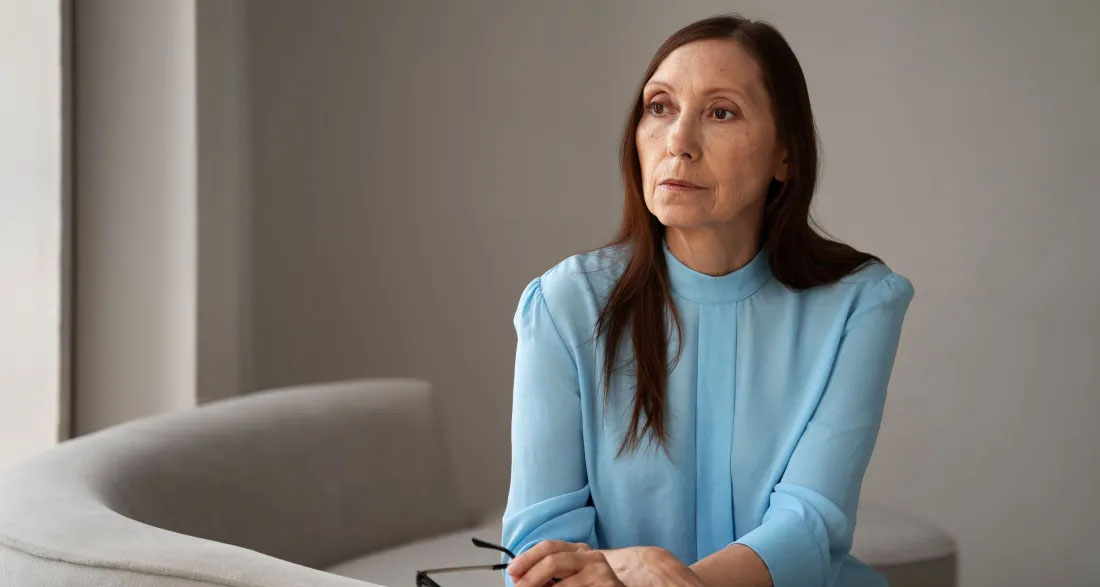
For seven long years, I lived with silence. No answers. No clues. Just the raw, aching emptiness of not knowing what had happened to my daughter. Then, one ordinary day in a crowded coffee shop far from home, something stopped me cold—a bracelet that made my heart nearly leap out of my chest.
I was 45 when Christmas stopped being a holiday I looked forward to. It became a season I dreaded, something I had to survive. I used to love it. I loved the way snow fell softly on the streets, muffling the noise of the world.
I loved the smell of cinnamon drifting from the stovetop. And I loved hearing Hannah sing Christmas songs off-key, her voice cracking in all the wrong places, just to make me laugh.
I loved everything about it.
I am 52 now.
Hannah disappeared seven years ago, when she was 19. One ordinary evening, she told me she was going out to meet a friend. She never came back. She left no note, never called. The police never found a body. I was left with nothing but questions. My daughter had vanished without a trace.
For months, I barely slept. Two hours here, one hour there. I kept her room exactly as it had been. Her favorite hoodie still hung on the chair. Her lemony perfume lingered in the closet long after it should have faded.
I clung to the hope that maybe, just maybe, she would walk in and complain about something I had moved. I lived in limbo, caught between grief and denial.
That morning, I was on my way home from visiting my sister, Margaret.
My layover in a city I didn’t know was long, so I wandered into a small coffee shop near the train station. The place was warm, bustling, the kind of cozy that should have felt comforting—but it only made the emptiness inside me feel sharper.
Mariah Carey’s voice bounced off the walls, her Christmas songs playing too loudly.
A couple laughed at a corner table. Someone spilled cocoa and laughed about it. I ordered a latte I didn’t even want and stood by the counter, killing time. I stared at the twinkling Christmas lights in the window, barely noticing the people around me.
And then I saw it.
A thick, hand-braided bracelet in faded blue and gray threads, tied with a tiny knot instead of a clasp. It was on his wrist. My chest stopped. I recognized it instantly. It was the bracelet Hannah and I had made together when she was 11.
I remembered that snowy winter afternoon clearly, sitting at the kitchen table. She insisted on making it. The knot had come out crooked, but she laughed and said it made the bracelet special. She wore it every day after that—even the night she vanished.
I froze. My hands trembled, almost letting the cup slip.
“Excuse me,” I whispered, barely audible over the music and clinking mugs. “That bracelet… where did you get it?”
He blinked, confused. “Sorry?”
I pointed. “The blue and gray one. Where did you get that bracelet?” I forced my voice to stay calm, though it shook.
He looked down at his wrist, then back at me. Something in his expression flickered—a small, uneasy shift.
“Sorry?” he repeated.
“It’s mine,” he said too quickly. “Just… something I’ve had for a while. Personal.” And then he tugged his sleeve down over it, like hiding it could erase what I’d seen.
I knew he was lying.
“My daughter and I made that,” I said softly, pressing my palm against the counter to steady myself.
He swallowed hard, glanced away. “Look, I don’t know anything about that. I really can’t help you.”
I could feel my heart pounding so loud I thought he could hear it. “With my daughter,” I repeated, my voice trembling.
He moved off quickly, pretending the conversation never happened. But I couldn’t leave. I couldn’t stop staring at him. For the first time in years, I felt something dangerous—hope. Fragile, terrifying hope.
I found a corner booth and sat down. Hours passed. I didn’t touch the coffee. I just watched. He kept glancing at me like I might make a scene. I didn’t. I waited until the shop emptied and the sun dipped low.
When his shift ended, he grabbed his coat. I stood, blocking his way.
“Please,” I said, voice shaking but steady. “Just listen. My daughter’s name is Hannah.”
The color drained from his face. He tried to step around me, but I broke. I sobbed there in the middle of the shop, loud and messy, catching every eye in the nearly empty room. I hadn’t cried like that since the second anniversary of her disappearance, when I realized no one else still held out hope.
“She vanished seven years ago,” I gasped. “I just want to know if she’s alive.”
He froze. His hand clenched around his coat strap. Then, finally, he exhaled.
“I didn’t steal the bracelet,” he said quietly, letting his guard down. “She gave it to me.”
Everything inside me stilled.
“You know her?” I asked. “Is she… is she okay? Where is she?”
He hesitated, looked down at the floor, then pulled out his phone. “Give me your number. I’ll call you.”
That night, I didn’t sleep. I sat in my hotel room, staring at the phone. Every buzz made my heart leap. But nothing came. I stayed in the city. This was the biggest lead I had in seven years. I refused to go home.
Two days later, my phone rang.
“I talked to her,” said the voice on the line. “Hannah doesn’t want to talk to you. I’m sorry.”
I couldn’t speak. Tears filled my eyes.
“Why?” I finally asked.
There was a pause. “She said she couldn’t take the lectures anymore. You were always on her case. She felt like she was drowning under your expectations.”
I felt like someone had punched me in the gut.
“She was pregnant,” he said gently. “She thought if she came home, you’d never forgive her. That’s what she said.”
I sank onto the edge of the bed, hand over my mouth, trying not to sob.
“She wanted a clean slate,” he continued. “She ran, changed her name, got a job. We met at a diner three months later.”
“Who are you?” I asked.
“My name’s Luke,” he said. “We’ve been married for three years. We have two kids. One from when she left… and one together.”
My breath caught. “She’s alive,” I whispered to myself.
“She’s okay,” he said. “Strong, a good mom.”
“I don’t want to interfere,” I said, voice shaking. “I just want to see her. I’m happy she’s alive. That’s all.”
A week passed before I heard anything. I didn’t call Luke, though I saved his number. I left my phone on loud, just in case.
Then one evening, I woke to a ring from an unknown number. I froze. A voicemail started:
“Hi… It’s me. It’s Hannah.”
I dropped the phone, sobbing. Seven years of prayers, of begging the universe, of bargaining with God, all poured into that single sentence.
I called back instantly, hands shaking. She answered on the second ring.
“Hi, Mom,” she said.
I couldn’t find words. I whispered the only thing I’d rehearsed for years: “I’m so sorry.”
“I’m sorry too,” she said, her voice thick with emotion.
We didn’t dive into the past. We spoke slowly, carefully, like walking through a minefield.
She told me about her daughters, Emily, six, and Zoey, two. About her job at a community center, running art classes for kids. About Luke, who worked two jobs and still managed school pickups and piano lessons. She told me she never stopped thinking about me.
“I just didn’t know how to fix it,” she said.
“You didn’t have to fix anything,” I replied. “You just had to come home.”
“I wasn’t sure you’d want me back.”
“I never stopped wanting you,” I said.
She invited me to meet her in a park near her home on a cold but sunny Saturday morning. I barely slept the night before. I arrived an hour early, gripping my bag like it held my entire life.
When I saw her walking toward me, pushing a stroller and holding a little girl’s hand, I forgot how to breathe. She looked different—thinner, older, her once-long hair short and tousled, the weight of life in her shoulders. But she was still Hannah. My Hannah.
She chose for me. She dropped the stroller handle and stepped into my arms.
“Hi, Mom,” she whispered against my shoulder.
We sat on a bench together, watching the girls play. She introduced me to Emily and Zoey. Later, she untied the bracelet from her wrist—the same one I had made with her years ago.
“I want that too,” I whispered.
“I remember the day we made it,” I said. “The crooked knot made it special.”
She laughed softly. “It still does.”
There was no grand reunion, no perfect ending. But there was understanding. Forgiveness. Love.
The weeks that followed felt surreal. I visited often, sharing coffee, park walks, and watching Emily dance. I brought old photos; she showed me scrapbooks of birthdays, milestones, little moments. Luke and I finally shared a quiet coffee together.
“I know I’m not what you imagined,” he said.
“I didn’t imagine anything,” I replied.
He nodded. “She’s come a long way. We both have.”
One afternoon, Emily ran into the living room wearing the bracelet, too loose on her tiny wrist.
“Look what Mommy gave me!” she squealed.
“It’s magic,” I whispered.
That Christmas, I sat in Hannah’s living room as the girls tore into presents. Luke hummed in the kitchen. Hannah rested her head on my shoulder.
“Thank you for waiting,” she said.
“I never stopped,” I whispered.
Outside, snow fell, dusting the windowsill. Inside, laughter echoed. Cinnamon scented the air. For the first time in years, Christmas felt warm again.
Inside, laughter echoed.