

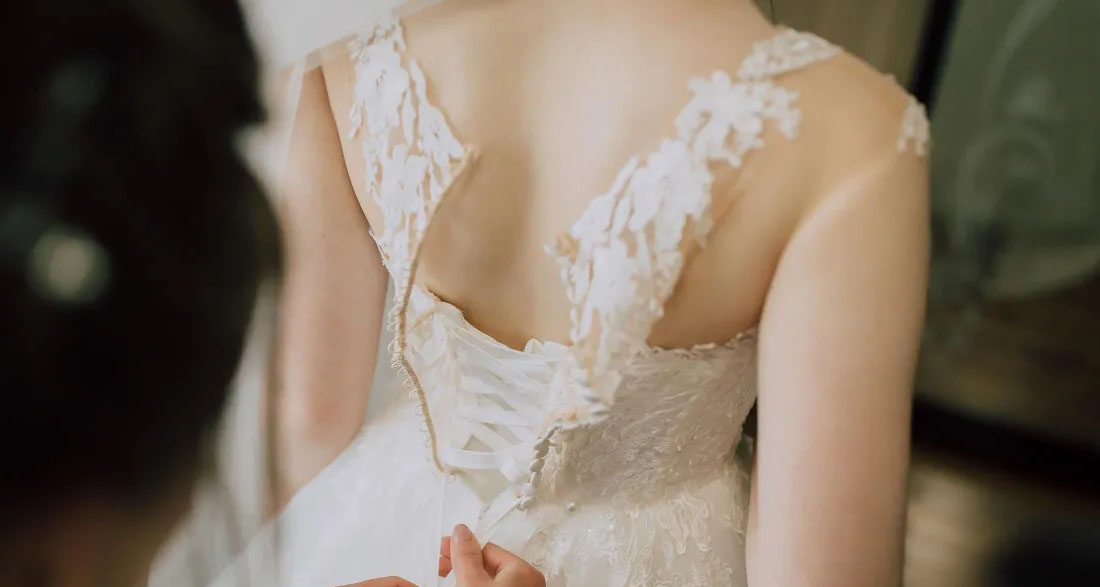
I used to think the hardest part of sewing wedding dresses was dealing with exploding tulle, missing buttons, and brides who decided five minutes before the ceremony that they hated the color of the lining.
Turns out, the real nightmare isn’t fabric or fittings—it’s when the bride is your best friend… and everything else that could possibly go wrong does.
My name is Claire, and this disaster all started with a wedding dress.
I’m 31, American, and I sew for a living. Not in a cute Pinterest-hobby way either—I mean full-time, professional, “I wake up sore from holding pins all night” kind of sewing.
I work in a bridal salon all day, and when I get home, I pick up private commissions until my eyes blur and my back screams. It’s not glamorous, but it pays the bills… and keeps my mom’s prescriptions filled.
My dad passed away years ago, so it’s just been my mom and me. She’s not in great health, and a chunk of my paycheck disappears into co-pays and pills with names I can barely pronounce.
Some months, I’m doing mental gymnastics just to cover rent, groceries, and her meds. That’s why side jobs matter—they’re not just extra cash, they’re survival.
And for most of my adult life, Sophie was my person.
We met in college, bonding over terrible cafeteria coffee and even worse boyfriends. Somehow, we stuck together after graduation. She was always shiny—designer knockoff bags, big plans, bigger stories.
I was quieter, hunched over a sewing machine or picking up extra shifts. She dreamed out loud; I tried to survive the life I had. But she was there when my dad died, sitting with me in my dorm while I ugly-cried into a hoodie that smelled like hospital air.
She showed up with takeout, dry shampoo, and memes that made me laugh through tears. I decided then that, flaws and all, Sophie was family.
I learned to live with the little digs, the bragging, the way she sometimes talked about money as if anyone who didn’t have it was lazy. You accept the whole package, right?
When Sophie got engaged, I was honestly thrilled. I knew she’d been planning her wedding in her head since we were twenty, and I wanted to see it finally happen. I assumed I’d be part of it—helping plan, maybe standing up with her, at least crying in the audience like everyone else.
A couple of weeks later, Sophie bounced into my apartment like she’d swallowed three energy drinks. She flopped onto my couch and shoved her phone in my face.
“Claire, look!” she said, eyes sparkling. “This is the dress I want.”
On the screen was a gown straight out of a couture magazine—ivory silk, fitted bodice, delicate lace, and a dramatic train that would have swallowed a small child.
“Can you sew it for me?” she asked, all hopeful.
I studied the picture. Gorgeous… and complicated.
“That’s not a simple dress, Soph.”
“I know,” she said fast. “That’s why I want you. I trust you more than any salon. You’re amazing.”
I hesitated. The wedding was in two months, and my schedule was already brutal. But she was my best friend.
“Okay,” I said finally.
Her face lit up. “Thank you! You’re saving me so much money. I’ll pay you for everything, I promise. I just can’t right now because of deposits and stuff. But once the dress is ready, I’ll pay in full.”
I believed her.
That night, after work and checking on Mom, I spread muslin across my tiny kitchen table and started drafting patterns. I bought fabric, lace, boning, zippers—everything—charging more than I was comfortable with on my nearly maxed-out card. “It’s fine,” I told myself. “She’ll pay me back when it’s done.”
For the next month, my life became a loop of work, Mom, wedding dress, sleep, repeat. I’d finish my shift at the salon, smile at brides who’d never remember my name, and then drag myself home to pin lace until my fingers ached. Sophie would text, “How’s my baby?” with heart emojis, or send TikToks of dramatic veil flips.
Every fitting, she gushed. “Oh my God, Claire, this is perfect!” She took selfies, sent them to her bridesmaids’ chat, even cried a little.
So, when she came for the final fitting, I wasn’t expecting trouble. She stepped into the gown, did the slow bride-spin in front of the mirror. At first, a smile. Then, the shift. Her mouth twisted.
“Hmm… I don’t know. It’s not exactly like the photo.”
I felt my stomach drop.
“What do you mean? You loved it last time.”
She shrugged. “Yeah, but now that it’s finished, I see little things. Like the lace is kind of… different? And the skirt feels heavier than I imagined.”
It was literally the same lace she picked. Same skirt she twirled in and called a dream.
“If there’s anything specific you want adjusted, tell me. I’ll fix it,” I said, trying to stay calm.
“No, it’s fine. It’s good enough. I’ll wear it.”
She stepped off the stool, folding it carefully into the garment bag. I cleared my throat.
“Okay, so… when do you want to settle up? I can text you the total for fabric and labor.”
Sophie froze, then laughed nervously.
“Claire… do we really need to do that?”
“Do what?”
“Pay. I mean… you were going to get me a wedding present anyway. This is way more meaningful than a toaster. Let’s just call it your gift.”
My hands shook. “I never said this would be free. You said you’d pay in full.”
Her expression hardened. “Why are you making this a thing? We’re best friends. You know I don’t have extra money right now.”
“Sophie, this is my job. I paid for materials. I’ve been working overtime. I can’t just pretend it’s nothing.”
She rolled her eyes. “God, Claire, don’t make it weird. It’s my wedding.”
That was it. In her mind, my boundaries were the problem. Not the fact she’d just decided my work was free.
She left. No payment. No plan. Just a smile and a “Love you, babe, text me later!”
I tried to tell myself she was stressed. Brides go a little nuts, right? I texted her about the bill. She dodged every message. I even called. “Can we talk later? I’m at the venue,” or “I’ll call tomorrow,” she’d say. Tomorrow never came.
Then I realized something obvious and stupid—I still hadn’t gotten a wedding invitation.
A week before the wedding, I called.
“Hey… I never got an invite. Did something happen with the mail?”
She paused. “Oh… yeah. About that.”
I waited. She didn’t finish.
“Claire, you know how it is. Ethan’s parents are… particular. They’re inviting a lot of business people, important guests. It’s… a certain kind of crowd.”
I expected her to say, “Of course you’re coming.” She didn’t.
“It’s not a huge wedding. We had to be selective.”
“So… I’m not invited?”
She sighed. “Claire, don’t take it personally. You know I love you. It’s just… you’re a seamstress. You don’t really know Ethan’s world.”
I didn’t yell. I didn’t beg. I just said, “Okay. I understand.” And I did. Finally.
She didn’t see me as family. She saw me as help.
I stayed home that day, checked on Mom, did laundry, and tried not to imagine the dress I’d made walking down an aisle without me in the room.
Then, a few hours into the reception, my phone rang. Nina, a friend who sometimes waits tables at events, whispered into the phone:
“Claire, you are not going to believe what just happened.”
“What happened?”
“Karma did a full backflip. During the toasts, one of Ethan’s drunk groomsmen knocked a glass of red wine all over Sophie’s skirt.”
I winced. Hours of work… ruined.
“She freaked out, sprinted to the bathroom with two bridesmaids. I followed with club soda and towels,” Nina said.
“They’re blotting the dress when a bridesmaid starts digging around the seams like CSI: Couture Edition. Then she goes, ‘Wait, where’s the label?’ Another says, ‘Luxury gowns always have something—label, stamp… there’s nothing!’”
“Then someone says, ‘Your friend made this? Claire? Why isn’t she here?’”
I gripped the phone.
“She tried to play it off. ‘It’s a custom designer piece, okay? Cost a fortune.’ But the bridesmaids weren’t dumb. One laughed. The whole table whispered about how she stiffed the friend who made the dress. Ethan’s mom heard. She did not look impressed.”
I wasn’t gloating. I just… felt done.
The next morning, I opened my laptop and typed an invoice. Materials, hours, rush work fee. Not a huge sum—just fair. I sent it with a short message:
“This is the balance for your gown. Payment due in 30 days.”
No emojis. No apologies.
Sophie replied, furious: “Wow! After everything, you’re really going to shake me down? I had the worst night of my life, and you’re thinking about money?”
I typed back, calm: “Yes. This is my work. You promised to pay. Getting married doesn’t cancel that.” Then one more line: “I’m glad you liked the dress enough to lie about what it cost.”
I hit send and closed the laptop.
A week later, Nina said she’d heard Ethan’s family wasn’t thrilled with the wedding. Word had spread about the “designer dress” and the unpaid seamstress.
I just made coffee, sat at my sewing machine, and started a new client’s dress—this one came with a deposit. Mom shuffled in, leaning on her cane.
“You’re up early,” she said.
“Got dresses to fix,” I replied.
She nodded, like it was the most normal, solid thing in the world.
Later that day, I updated my business page: fifty percent deposit up front. No exceptions. Friends, family, strangers—everyone gets the same paperwork now.
I learned something from sewing Sophie’s dress: if someone happily takes your time, skill, and labor, and then guilt-trips you for wanting to be paid, they were never really a friend. They just wanted you as an unpaid extra in the story they tell about themselves.
I don’t play that role anymore. I stepped off her stage, picked up my needle and thread, and started rewriting my own story.
If karma wants a supporting role, that’s between her and the universe. I’ve got hems to finish and a life to live.
And next time someone smiles and says, “You’re so talented, could you just whip something up?” I’ll smile back, hand them a quote, and see if they still think my work is just a favor dressed as friendship.