

My name is Mark, and I’m 42. I’m a firefighter—funny, right? I spend my days running toward fire and chaos, but I didn’t notice the fire quietly burning under my own roof.
For the last few years, it’s been just me and my daughter, Emily. My wife passed away, and the house went silent. Full of memories, full of pain, and full of things I didn’t want to face.
So, like a lot of people who are hurting, I ran.
I buried myself in extra shifts at the firehouse, practically living at the station. I convinced myself it was easier to charge into a burning building, wrestling smoke and flames, than sit on the couch wrestling silence.
“I’m doing the right thing,” I told myself. “I’m being a good dad.”
I wanted to believe it, and for a while, I did.
Life at home looked normal at first. I’d stumble in after midnight, exhausted, and Emily would be waiting at the kitchen table with two plates of food.
“How was your day, Dad?” she’d ask, smiling as if she hadn’t noticed I was barely awake.
I’d kiss the top of her head, and we’d exchange small stories about our day. I always promised, “Next week, I’ll be home earlier,” but that week never came.
Before I knew it, the kitchen grew dark, and Emily left me a plate wrapped in foil in the fridge. Her bedroom door, once wide open with her indie music spilling into the hall, stayed shut.
I’d knock, hear her quick, clipped, “Hi Dad! Everything’s fine!” from the other side, and convince myself that was enough.
“She’s a teenager. She needs space,” I reasoned. Guilt slid off my shoulders, replaced by a shiny badge of “Good Parenting.”
But in the small moments, I noticed the cracks: the quick smile before school, the shoulder-only hug, the exhaustion in her eyes. It was a faint, unsettling feeling, like stepping on ice and hearing it crack beneath your foot.
I should have sat her down, talked to her, asked what was wrong. But there was never enough time—or so I told myself.
I kept my head down, kept working, kept pretending a closed door meant everything was fine.
Then came the Saturday that changed everything. I was hunting for a spare blanket because the evening air had turned chilly. Emily’s closet was the only one with room. I opened the door—and froze.
The world went silent for three long seconds.
In my hands was an impossibly small, pale blue flannel onesie, covered in tiny yellow moons. My brain struggled to catch up. What the hell…?
I dug a little deeper. A trash bag. Full. Onesies, baby blankets, diapers. Everything a newborn would need.
And then Emily walked in.
Her face crumbled the second our eyes met, a gut-wrenching devastation I had never seen before. My chest tightened. I realized I didn’t know my daughter at all.
“Dad—” she whispered, voice cracking, tears spilling over. “IT’S NOT WHAT YOU THINK!”
I stared at the tiny clothes. “Em… are you…?”
“No!” she shook her head violently, hair sticking to wet cheeks. “Those… they aren’t mine. I swear!”
Everything about her reaction screamed “lie,” but I had to stay calm. “Then who do they belong to, Em?”
She lowered her head. “I can’t tell you. But they’re not mine. I swear.”
I set the onesie on her bed, taking a slow, steadying breath. “Emily, I’m not angry. I just need to understand. Please… talk to me.”
She shook her head. “I can’t. Please… just leave it alone.”
My stomach dropped. That moment hit me like a punch: all those shifts, all the late nights, all the “good parenting” I thought I was doing—it had cost me her trust.
I could see it now: the closed-door sighs, the “study group” that kept her late, the missing $20 bills, the tired look in her eyes. Something was wrong, but not in the way I had feared.
I didn’t push her. I just sat beside her. “I’m here when you’re ready,” I said softly.
Days later, I spotted her leaving the house, clutching the bag of baby clothes. My heart raced. I followed.
Emily walked across town, through a neighborhood I hadn’t seen in years. Old duplexes, peeling paint, sagging porches. She stopped in front of a rundown house, glanced around nervously, then slipped inside.
I waited, then stepped closer to the door. Inside, I heard a baby whimpering. Emily’s soft voice cooing. And then I realized—I’d been wrong. She couldn’t have hidden a pregnancy. The clothes weren’t hers. Relief washed over me, but confusion remained.
I knocked. A scramble. The door cracked open.
“Dad? What are you doing here?” Emily’s eyes widened in panic.
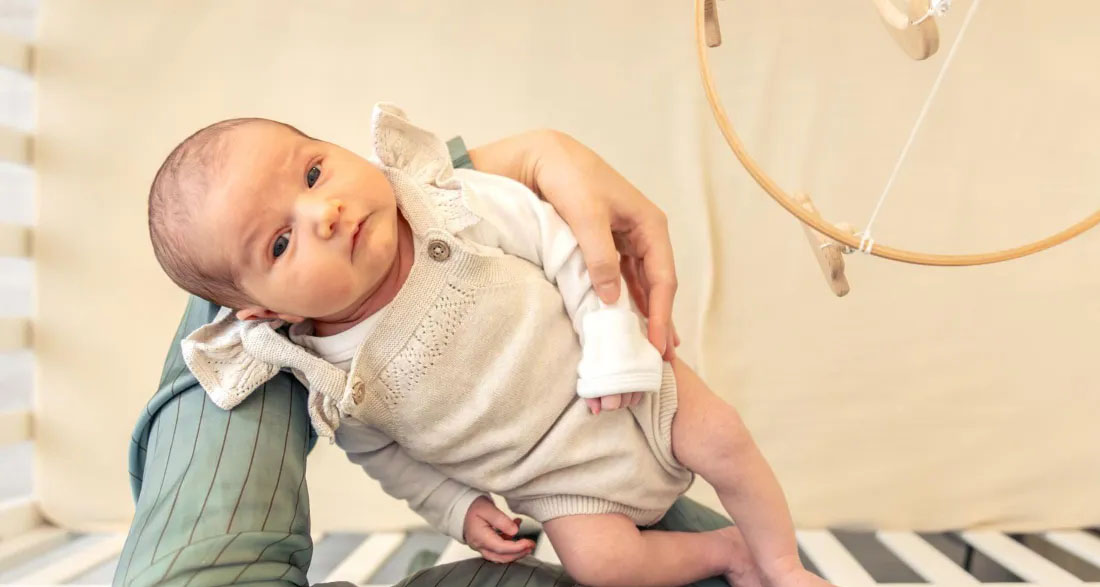
I looked past her. Mia. My daughter’s classmate. Thinner than I remembered, cradling a toddler, a newborn asleep in a carrier.
So that’s who the clothes were for.
Emily stepped aside, guiding me in. “They didn’t have anything for the baby, Dad. No wipes, no clean clothes. I couldn’t just walk away.”
Mia’s eyes shone with exhaustion and fear. “I’m sorry it’s such a mess. My little brother was up all night. Mom’s working a double. She won’t be home until late.”
It clicked. Emily had been helping a friend, not hiding a secret of her own. And she hadn’t told me because she thought I’d call child services, thinking they were in danger. I knew that wasn’t legally required—but morally, I understood.
“I used my money,” Emily admitted. “And… some of yours. I’m sorry. But they needed help.”
I squeezed her hand. “They do need help. But you shouldn’t have to do it alone. It’s my turn now.”
Turning to Mia, I added, “We’re going to figure this out. Tonight.”
“Does your mom know how bad things are?” I asked.
“She’s doing her best,” Mia said quietly. “But we can’t keep up.”
I made some calls. Not to report, but to connect them with resources—food boxes, social workers, temporary support. By the time we left, the house felt a little more stable. Not perfect, but safer.
Halfway home, Emily said softly, “I really thought you’d be mad.”
I squeezed her shoulder. “I’m proud of you, Em. I just wish I’d noticed sooner.”
Her eyes filled with tears. I turned her to face me. “I’m sorry you felt you couldn’t trust me. I don’t ever want to be so busy saving strangers that I miss the person who needs me the most.”
She hugged me then, fiercely, like she hadn’t in years.
In that moment, I realized the truth I should have known all along: being a good father isn’t about long hours or perfect provision. It’s about being stable, reliable, and trustworthy—the safe place your child can always turn to.
And I vowed never to let the fire under my own roof go unnoticed again.