

For two years, I walked my neighbor’s daughter to school. She called me Daddy. Then, one morning, a man who looked just like her showed up, grabbed her hand, and said he had a deal that changed everything.
Two years ago, I had just finished my night shift. The streets were quiet, the kind of silence that makes the world feel empty. But then I heard it—a small, soft cry.
It wasn’t loud, but it was the kind of crying that comes after someone has already been crying for a long time. My stomach twisted. I followed the sound. I couldn’t just leave a child crying alone.
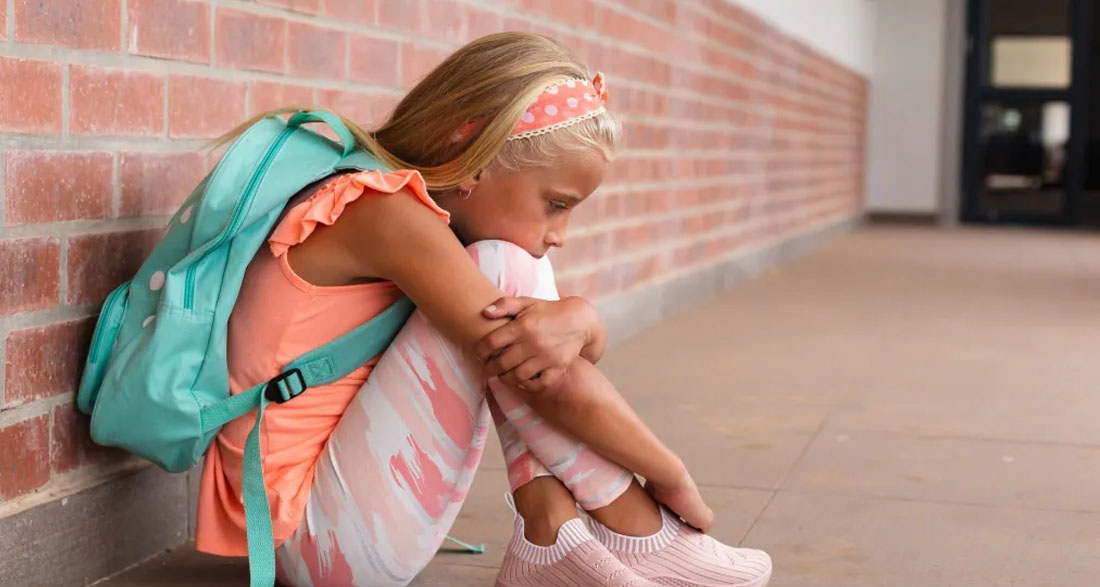
It led me to a little girl sitting by a dumpster behind an apartment building. She was wearing a school uniform, knees pulled to her chest, backpack on the ground beside her.
“Hey… are you okay?” I asked softly.
She looked up, startled, like she’d forgotten anyone else existed. Her eyes were red and swollen. For a second, I thought she might run away.
“They’re all gonna have their dads,” she whispered.
I crouched a few feet away, careful not to scare her. “Who is?”
“Everyone at school. Today is… daddy-daughter day.” She sniffed hard and wiped her nose on her sleeve. “I don’t have anybody.”
“Oh…” I said, my voice catching.
“My dad’s in prison,” she said, kicking a small rock with her shoe. “And my mom… she died a long time ago. I live with my grandma, but she can’t walk good. She told me to go by myself.”
Hearing that, something inside me broke.
See, I had always wanted a family. I was 56 at the time, and a long time ago, I’d been a happy man.
I’d had a fiancée I loved—Rebecca. We’d planned a wedding, dreamed of children, a house that was always filled with laughter. I imagined Sunday mornings with pancakes, cartoons, and little voices calling me Dad.
But a week before the wedding, she sat me down at the kitchen table.
She told me she was pregnant—with her boss’s child. And then she packed a bag and left. Just like that. My dreams shattered. My life collapsed. I fell into a depression so deep I stopped believing I deserved happiness, family, or anything at all.
Biking saved me. There’s nothing like speeding down the freeway, feeling the wind on your face, to make you remember what it is to be alive. The quiet life in my small town, coupled with the freedom of the open road, gave me stability and a little peace.
For thirty years, that was my life. Nights spent as a security guard, weekends riding, pretending the empty hole in my heart wasn’t there.
But standing in front of that little girl, Marissa, I felt something I thought I’d buried for good stir awake. It scared me. I’d spent decades making sure it stayed dead.
“What’s your name?” I asked gently.
“Marissa.”
“And your grandma?” I continued, trying to gauge her situation. “Is she home?”
She nodded. “She gets tired a lot. Sometimes she can’t even get out of her chair.”
I hesitated only a second. Maybe I should’ve thought more. Maybe I should’ve worried about what people would think, how it might look. But I didn’t.
“Hey… I could go with you. Just for today. If you want,” I said.
Her face changed instantly. It was like someone had flipped a light on inside her.
“Really? You’d do that?”
I nodded. “If it’s okay with your grandma.”
She jumped up and grabbed my hand. Her fingers were small, warm, and she held on like she was afraid I might disappear if she let go.
We walked to her home. She knocked on the door with her free hand. Her grandmother answered—a frail woman with shaking hands and tired eyes. For a moment, I thought she might slam the door in my face.
“He wants to take me to daddy-daughter day,” Marissa said. Her eyes pleaded. “Can he, Grandma? Please?”
The old woman studied me long and hard. Finally, she nodded slowly. “Thank you,” she said quietly.
At school, Marissa didn’t let go of me once. Not during breakfast, not during games, not even when the other kids ran ahead. She stayed beside me, hand in mine, anchoring herself to something solid.
“This is my angel man,” she told anyone who asked.
That afternoon, I brought her home. Her grandmother was sitting in a worn recliner near the window, oxygen tubes in her nose.
“Thank you,” she said again. “I can’t do much these days.”
When it was time to leave, Marissa hugged me tightly.
“When are you coming back?” she whispered.
“I… don’t know,” I said softly.
“Please come again soon, angel man.”
It was too much. I told myself I wouldn’t return—but the next morning, I did. And the next.
Every morning at seven, she’d be waiting on the porch, backpack ready, scanning the street for me. When she saw me coming, her face lit up like sunshine, and I knew I was done for. Her grandmother never questioned it, just waved gratefully from the window.
Marissa would grab my hand, and we’d walk. She talked endlessly about school, friends, even a stray cat she tried to feed.
Six months later, at a school breakfast, she stood on her chair and pointed at me.
“This is my Daddy Mike,” she said proudly.
I opened my mouth to correct her, but her grandmother, who had come using a walker, caught my arm.
“Mr. Mike,” she said softly, “if calling you Daddy helps her heal, please don’t take that away from her.”
And so, I became Daddy Mike. Not legally, but in her heart. And mine.
Every morning, she would look up at me and ask, “You won’t leave me like my real dad, will you?”
“Never,” I said.
I meant it. But I didn’t know those words would one day be tested.
Then, one morning, everything changed.
I walked up to her porch at seven a.m., same as always. But a man was there. He had her by the hand, and she was pulling back, trying to get free.
“Hey!” I called out, rushing toward them. “What are you doing to her?”
She spotted me and screamed, “Daddy!”
The man turned to me. He looked just like her—same eyes, same nose—but his expression was hard.
“You must be Daddy Mike,” he said. “Come here. We need to talk. I have a deal for you.”
My heart dropped into my stomach.
I stepped aside with him. Behind me, Marissa cried, whimpering my name.
“I’m Marissa’s uncle,” he said. “Her dad’s brother. I’ve come to take her.”
“She’s alone now,” he continued. “My mom—her grandmother—died early this morning. Hospice called it in.”
“She’s… gone?”
“Yeah,” he said, checking his watch. “I flew in, rented a car, and came straight here. I don’t have much time.”
Marissa cried harder. “Daddy Mike, don’t let him take me!”
I turned to her immediately. “Hey,” I said, lowering myself to her level. “I’m right here.”
She grabbed my shirt with both hands.
The uncle exhaled sharply. “Can we not do this part yet?”
“This part?” I asked, tense.
“The scene. Look, I didn’t ask for this. I’ve got a life back home—kids, a job. I’m here because legally I had to be.”
I felt anger rising. “So, what’s the deal you want to offer me?”
He said it flatly, like he was talking about a car lease. “I can take her. That’s one option. Pull her out of school. Move her across state lines. She’ll adjust. Kids do. Or you can have her.”
“You’re talking about her like she’s furniture,” I said.
He shrugged. “I’m talking about reality. Besides, she’s been saying Daddy Mike will help her since I got here.”
“And that means what?” I asked.
“It means she’s attached,” he replied. “And attachments complicate things.”
I let out a quiet, incredulous laugh. “You’re right. God forbid.”
“I don’t want her,” he said plainly. “I never did. Her dad screwed up, my mother dumped responsibility on herself, and now it’s landed on me. I’m trying to pass it to someone who actually wants it.”
“You’re offering to give her away,” I said.
“I’m offering you the chance to keep her,” he corrected. “Adopt her. I’ll sign whatever is needed. Clean break.”
My chest tightened—not relief, fear. Pure fear. What if I failed her? What if I was too old, too broken, too human to keep her safe?
But then I looked at her—Marissa, in her school uniform, tears streaking her face, holding on like I was her only solid thing.
“I’ll take her,” I said finally.
The uncle relaxed immediately. “Great. I’ll have a lawyer sort out the paperwork.”
Marissa ran to me and hugged me tightly. “It’s okay,” I whispered. “I’ve got you.”
That night, when I tucked her into bed in my home, she gripped my hand.
“You’re not leaving?”
“Nope. I’m staying, and so are you.”
She closed her eyes, breathing even, but didn’t let go of my hand. I sat there in the dark until I was sure she was really asleep.
The next morning, we walked to school like always, but everything had changed. At the front desk, the secretary slid a form across.
“Guardian?” she asked.
“Yes,” I said, taking the pen.
And for the first time in thirty years, the word felt earned.
Everything was different now.