

It was just days before Christmas when everything changed.
I spotted a six-year-old boy walking alone in the dark. He said his mom had died, and he didn’t want to go with strangers. I promised him he wouldn’t be alone.
Thirteen years later, I learned that we had been living a lie—when a woman came to take him away.
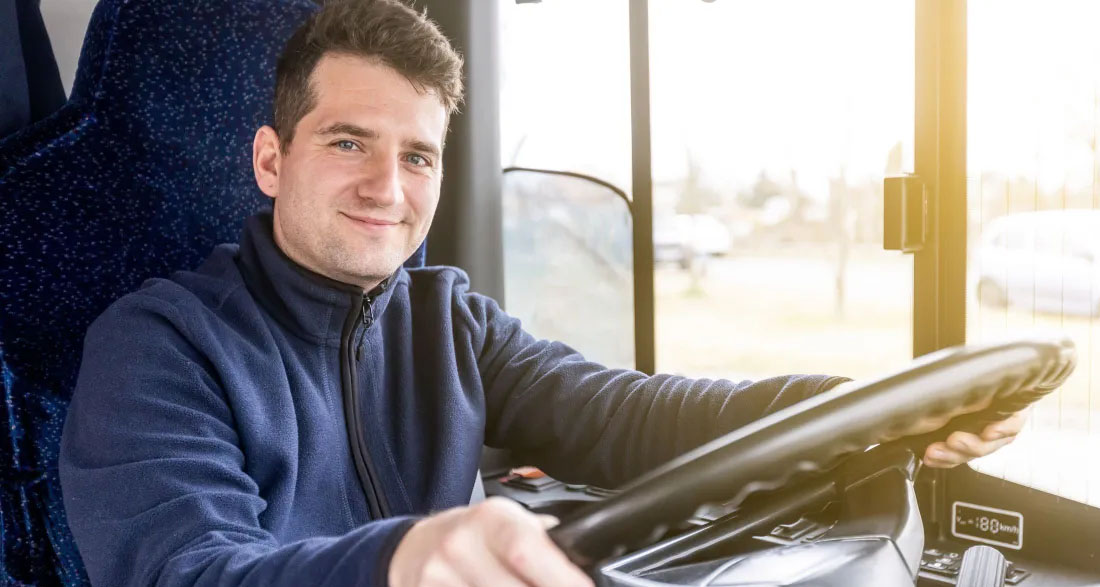
When I was twenty-five, I worked as a school bus driver. It wasn’t glamorous work, but it paid the bills, and at that point in my life, that felt like enough. I showed up every morning, drove my route, waved goodbye to kids, and brought the bus back empty at the end of the day.
I never expected that job to change my life.
It was just a few days before Christmas break. I had already dropped off the last child and was driving the empty bus back to the depot. The heater rattled loudly, struggling against the cold, and the streetlights flickered as snow threatened to fall.
That’s when I saw him.
A small figure on the side of the road, moving slowly under a weak streetlight.
It was a little boy, maybe six years old. He was far too young to be out there alone in the cold and the dark. What caught my attention wasn’t just that he was alone—it was his backpack, way too big for his small frame, and the way he clutched a stuffed bunny tightly against his chest, like it was the only thing holding him together.
This wasn’t a kid who’d wandered out of his yard by mistake.
This little boy was running from something.
I slammed on the brakes. The bus hissed and shuddered as it stopped near him. I opened the door.
“Hey, buddy. Are you okay?” I asked gently.
He looked up at me. His face was pale under the streetlight, his eyes red but dry, like he’d already cried until nothing was left.
“My mom died today,” he said.
“My mom died today.”
The words hit me hard.
Oh God. This poor kid.
“They wanted to take me somewhere,” he continued, his voice small. “But I didn’t want to go, so I ran away.”
Just like I thought—this kid needed help. But I knew I had to be careful. One wrong move and he might run again.
“Do you want to get on the bus?” I asked. “It’s warm inside. Maybe I can take you somewhere safe.”
He stared at the bus, unsure, then glanced over his shoulder like he was checking if someone was following him.
After a long moment, he nodded.
I sat him in a seat near the front and turned the heater up until the windows fogged over.
“What’s your name, kid?” I asked.
“Gabriel.”
“I’m Marcus,” I said. “And I promise you’re safe right now, okay?”
He didn’t answer. He just held that bunny tighter.
I stepped outside and called dispatch on my work phone.
“I found a child on the roadside,” I told them.
“Stay put while we make some calls,” they said.
I climbed back onto the bus and sat down, waiting.
I looked over at Gabriel, and what I saw nearly broke my heart.
He had curled into a tight ball around his bunny. His eyes were open, but empty, like he wasn’t really there anymore. He wasn’t asleep—he had simply shut down.
I draped my jacket over him like a blanket. He didn’t even move.
About fifteen minutes later, dispatch called back and told me to take him to the emergency foster intake center across town. Social services had already been contacted. Someone would be waiting for us.
I told Gabriel, but he didn’t react. Maybe he couldn’t hear me over the heater. More likely, he felt safe enough to let go.
I drove slowly. By the time we pulled into the parking lot, Gabriel was asleep. I lifted him carefully and carried him inside.
A woman rushed toward us. “Gabriel! I was so worried about you!”
That’s when everything exploded.
His eyes flew open. He screamed and twisted in my arms like I was trying to hurt him.
“I want to go home! I want my mom!”
The woman reached for him. “It’s okay, sweetie. You’re safe now. We’re going to take care of you.”
But Gabriel clung to me even harder, his small hands gripping my shirt so tightly I thought it might tear.
“Please,” he cried, “don’t let them take me!”
He clung to me like I was the only solid thing left in his world.
“Okay, bud,” I said softly, rocking him even though it felt foolish. “Just try to relax, okay?”
“I want to go home,” he whispered. “I want to go home.”
The woman looked at me. “Would you mind staying for a while? Just until we can get him settled?”
Of course I stayed. How could I leave him there like that?
I stayed while phone calls were made. While papers were signed. While adults spoke in careful, quiet voices about a child who sat pressed against my side, shaking.
And while I listened, I learned the truth.
Gabriel’s mother had collapsed at work. An aneurysm. No warning. No chance to say goodbye.
There was no family who could take him. The woman I’d met was the social worker who had gone to his house to place him in emergency care. He panicked and ran out the back door.
He had been walking for almost two hours before I found him.
When it was time for me to leave, I knelt in front of him.
“I’ll come visit you,” I promised. “You won’t be alone.”
He looked at me like he didn’t believe it.
But when I came back the next day, he ran straight into my arms.
At first, I told myself I was just checking in. But the truth was deeper than that.
Gabriel reminded me of my twin brother.
The same quiet way of watching people. The same habit of pretending to be fine when he wasn’t. The same way of making himself small so he wouldn’t be a burden.
I lost my brother when we were kids. A river that looked calm until it wasn’t. One second he was there. The next, gone.
I’d spent my whole life wishing I could go back and grab his hand sooner.
Losing Gabriel to the foster system felt unbearable.
So before Christmas, I filed the papers.
I told myself it was fate. A second chance. A way to finally save someone.
That was my first mistake.
The adoption went through quietly, and faster than I expected. Gabriel moved in. At first, he barely spoke. He followed me around the apartment like a shadow, always watching.
Slowly, he changed. He started asking questions. Helping with dinner. One day, he stopped clutching his backpack like he might need to run.
For years, I worked nonstop. Bus driver by day. Taxi driver by night. Later, I started renting out cars, trying to build something stable.
I was always tired. Always chasing the next bill.
But Gabriel never lacked love or safety.
What I didn’t see was the secret he was carefully hiding from me.
Thirteen years passed.
One evening, I came home early and found Gabriel sitting on the couch, crying. Next to him sat a woman in her forties, dressed professionally, holding a folder.
“What’s going on here?” I asked.
Gabriel looked at me, eyes swollen. “Dad… I have to go. We’ll never see each other again. I love you. Thank you for everything.”
The room spun.
“Who are you?” I demanded. “And what did you tell my son?”
“I’d sit if I were you,” she said calmly. “You’ve been living a lie for thirteen years.”
“A lie?” I whispered.
“I’m Patricia,” she said. “Gabriel’s school counselor.”
She asked Gabriel to speak. He finally did.
“I didn’t want to lie,” he said. “I was trying to protect you.”
Patricia explained everything.
For thirteen years, Gabriel had turned down opportunities. Programs. Camps. Travel. He was top of his class.
“Why?” I asked, my voice breaking.
Gabriel whispered, “Because I was scared to leave you alone.”
Patricia added, “Last month, he received a full scholarship to Stanford. Everything covered. He was going to turn it down.”
She left after that.
Gabriel sat there, waiting for me to break.
Instead, I pulled him into my arms.
“You’re going,” I said. “Don’t worry about me.”
He cried harder than I’d ever seen.
“I’ll miss you,” I whispered.
“I’ll miss you too.”
He wasn’t the scared boy on the roadside anymore. He was strong. Brilliant.
“Just promise me one thing,” I said.
“What?”
“Come home for the holidays.”
He smiled through tears. “Of course, Dad. This is still home.”
For the first time, I wasn’t losing someone.
I was letting them go.
And maybe that’s what love really is.