

When I was younger, I used to laugh at people who said birthdays made them sad.
I truly did. I thought they were being dramatic, the kind of people who sighed a little too loudly or wore sunglasses indoors just so someone would ask, “Are you okay?”
Back then, birthdays meant cake.
Cake meant chocolate.
And chocolate meant life was good.
So when someone said, “Birthdays make me sad,” I would smile politely and think, That will never be me.
But now I understand.
These days, birthdays make the air feel heavier, like the world presses down just a little more than usual. It’s not only the candles or the quiet house or the way my knees ache when I stand up too fast. It’s the knowing.
The kind of knowing that only comes after you’ve lived long enough to lose people who once felt permanent. People you thought would always be there, sitting across from you, laughing, breathing, alive.
Today is my 85th birthday.
And much like I’ve done every single year since my husband, Peter, died, I woke up early and made myself presentable. This wasn’t about vanity. It was about respect. About keeping a promise.
I brushed my thinning hair back into a soft twist, just the way he liked it. I dabbed on my wine-colored lipstick, careful not to smudge. Then I buttoned my coat all the way up.
Always to the chin.
Always the same coat.
I don’t usually care for nostalgia. I never liked living in the past. But this… this was different.
This was ritual.
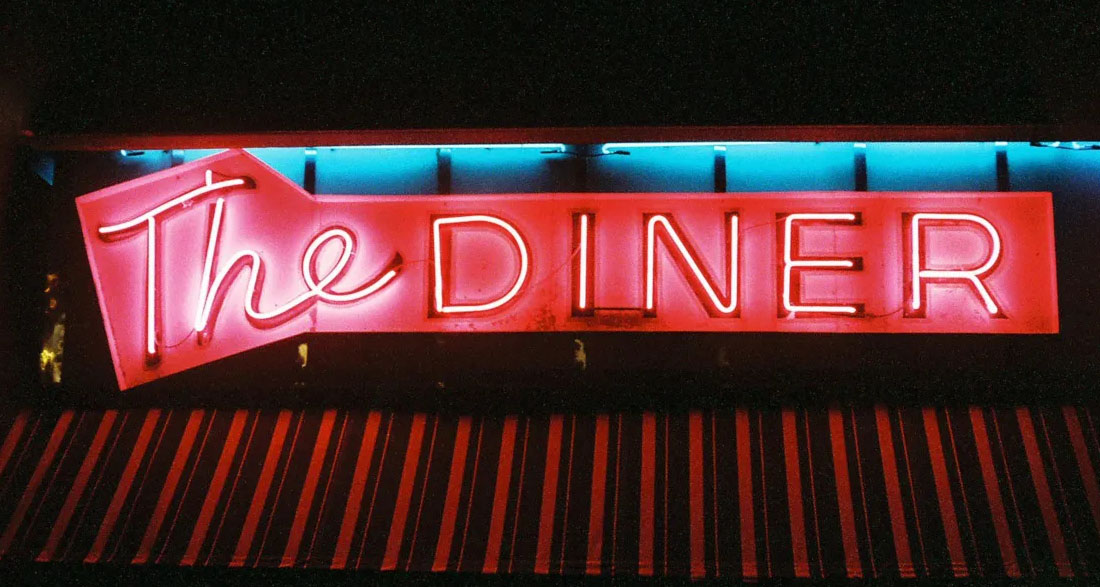
It takes me about fifteen minutes to walk to Marigold’s Diner now. Years ago, I could do it in seven. The diner isn’t far—just three turns, past the pharmacy and the little bookstore that smells like carpet cleaner and regret.
Still, the walk feels longer every year.
And I always go at noon.
Always.
Because that’s when we met.
Standing in my doorway, I took a breath and whispered to myself,
“You can do this, Helen. You’re stronger than you think.”
I met Peter at Marigold’s Diner when I was 35. It was a Thursday. I remember because I had missed the earlier bus and needed somewhere warm to sit while I waited for the next one.
He was already there, sitting in the corner booth, fumbling with a newspaper and a cup of coffee he’d already spilled once.
When I approached, he looked up and smiled like he’d been waiting for me his whole life.
“I’m Peter,” he said quickly. “I’m clumsy, awkward, and a little embarrassing.”
I raised an eyebrow. “At least you’re honest.”
He laughed and added, “You have the kind of face people write letters about.”
I shook my head. “That’s the worst line I’ve ever heard.”
He leaned closer and said softly,
“Even if you walk out of here with no intention of seeing me again… I’ll find you, Helen. Somehow.”
I don’t know why, but I believed him.
We were married the very next year.
After that, the diner became ours. Our place. We came every year on my birthday. Even after the cancer diagnosis. Even when he was too tired to eat more than half a muffin. Even when the doctors started speaking in quiet voices.
And after he passed, I kept going alone.
It was the only place where it still felt like he might walk in, sit across from me, and smile the way he used to.
Today, like always, I opened the door to Marigold’s and let the bell above it announce me. The smell of burnt coffee and cinnamon toast wrapped around me like an old friend.
For a moment, I was 35 again.
Then something felt wrong.
I stopped two steps inside.
My eyes went straight to the booth by the window—our booth. And sitting in Peter’s seat was a stranger.
He was young, maybe in his mid-twenties. Tall. His shoulders were tense beneath a dark jacket. He was holding an envelope, small and worn, and he kept glancing at the clock as if he wasn’t sure this moment would actually happen.
When he noticed me, he stood up fast.
“Ma’am,” he said, unsure. “Are you… Helen?”
“I am,” I replied carefully. “Do I know you?”
He stepped forward and held out the envelope with both hands.
“He told me you’d come,” he said. “This is for you. You need to read it.”
My eyes dropped to the envelope.
My name was written on it.
In Peter’s handwriting.
“Who told you to bring this?” I asked, my voice barely steady.
“My grandfather,” he said softly. “His name was Peter.”
I didn’t sit. I didn’t ask more questions. I took the envelope, nodded once, and walked back outside.
The cold air hit my face like a wave.
I walked slowly, not because of my age, but because I needed time to breathe. I didn’t want to cry in public. Not because I was ashamed—but because people no longer know how to look at grief.
At home, I made tea I never drank. I placed the envelope on the table and stared at it while the sun slid across the floor.
I opened it after sunset.
Inside was a folded letter, a black-and-white photograph, and something wrapped in tissue paper.
I recognized the handwriting immediately.
“Alright, Peter,” I whispered. “Let’s see what you’ve been holding onto.”
The letter began:
“My Helen,
If you’re reading this, you turned 85 today. Happy birthday, my love.
I knew you’d keep the promise of going back to our booth. And I needed to keep mine.
We would’ve been married 50 years if life had allowed it. And my mother always said, ‘If you make it to 85, you’ve lived long enough to forgive everything.’
Helen, there’s something I never told you.
Before I met you, I had a son. His name is Thomas.
I didn’t raise him. I thought letting him go was the right thing at the time. When I met you, I believed that chapter was closed.
But I found him again after we married.
I kept it from you because I didn’t want to burden you. I thought I’d have time.
Time, as it turns out, is a trickster.
Thomas had a son. His name is Michael. He’s the one who gave you this letter.
This ring is your birthday present.
I hope you lived loudly. I hope you laughed and danced. And I hope you always knew I never stopped loving you.
If grief is love with nowhere to go, maybe this letter gives it a place to rest.
Yours, still, always,
Peter.”
I cried then. Quietly. Deeply.
Inside the tissue paper was a simple gold ring with a small diamond. It fit perfectly.
“I didn’t dance,” I whispered. “But I kept going.”
The photo showed Peter sitting in the grass with a small boy on his lap, smiling like he belonged there.
The next day, I returned to the diner.
Michael was waiting in the booth.
“I wasn’t sure you’d want to see me,” he said.
“I wasn’t sure either,” I replied. “But here I am.”
We talked. About Peter. About Thomas. About music and dancing and life.
“Would you meet me here again next year?” I asked.
“Same time?” he said.
“Yes. Same table.”
“I’d like that,” he replied. “I don’t have anyone else.”
“Then come every week,” I said softly.
He nodded, eyes shining. “Yes, please, Helen.”
Sometimes love waits quietly, in places you’ve already been—wearing the face of someone new, but carrying the same old heart.