

On most birthdays, I got a homemade cake that was lopsided and a secondhand toy that probably belonged to someone else first. But my 18th birthday… that one changed everything. And it all started with half a sausage and a stranger’s porch.
I first saw her when I was ten.
We didn’t have much back then. Barely anything. My name’s Stacey, and I grew up in a small two-bedroom house that groaned and creaked whenever the wind blew. The wallpaper was peeling in strips, the radiators barely worked, and the fridge… well, it always seemed to echo when you opened it.
Birthdays? They were small, almost invisible. If I was lucky, my mom baked a chocolate cake, uneven and cracked, using whatever she could find in the pantry. One year, I got a secondhand stuffed bear with one eye missing. I still have him. His name is Harold.
Dinner was always a negotiation.
“How many potatoes do we have left, Ma?” I’d ask.
“Enough for two scoops each… if I water the mash a little,” she’d answer, scooping from a dented pot on the old gas stove. We had one sausage per person. Never more.
Dad worked night shifts at a warehouse. He’d come home smelling like oil and metal, exhausted, his hands rough. Mom cleaned houses part-time, returning with sore, red hands from scrubbing floors that didn’t want to get clean. They tried. God, they really did. But somehow, we were always behind — on rent, bills, even school supplies.
Even at ten, I understood it. I didn’t ask for new shoes when mine had holes. I learned to make hand-me-downs look nice with safety pins and embroidery floss. Complaining wasn’t an option; that was just life.
Everything started to shift the day I wandered a little farther from our street and saw her.
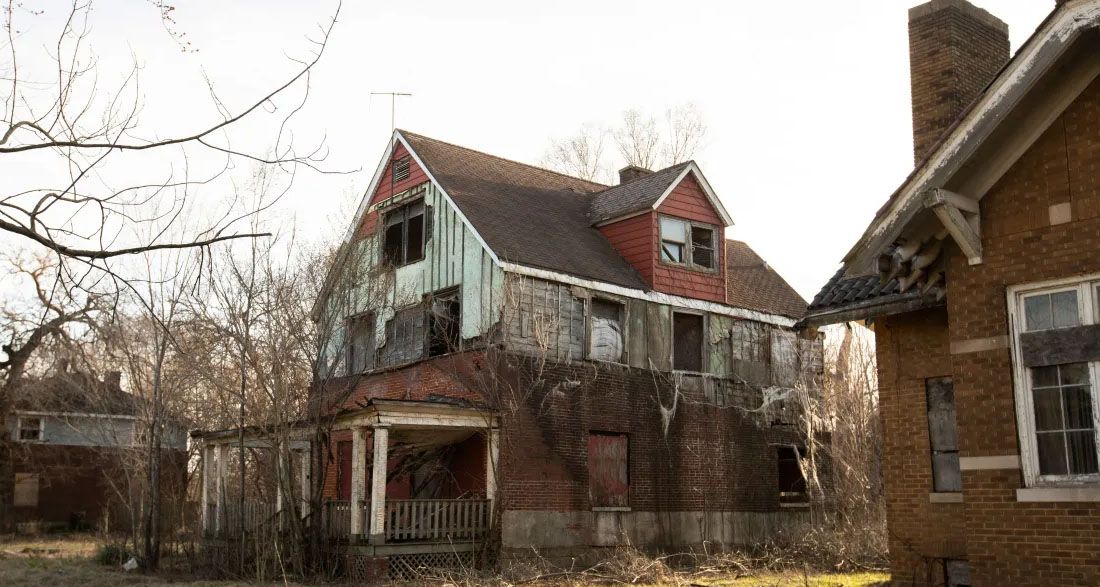
An old woman sitting on her porch. Alone. Something inside me tugged. Something that told me I had to do something, though I didn’t know what yet. I didn’t realize then that one small decision that night would change the rest of my life.
It all started with a Tupperware of mashed potatoes.
I’d eat slowly during dinner, pushing food around my plate while Dad scrolled through his phone and Mom talked about the Miller house she cleaned that day.
“You’re not hungry again, sweetheart?” Mom asked, peering at me with concern.
“I had a snack earlier,” I lied, cutting my sausage in half and slipping part into my sleeve when they weren’t looking. I’d done this so many times it had become second nature. Fold a napkin just right, tuck the food away like a little magician. They had no idea I was saving it for someone else.
Ever since that first glance at Mrs. Grey on her porch, something inside me wouldn’t let go. She looked so… forgotten. Bent over in an old rocking chair, gray cardigan swallowing her small frame, eyes staring off into nothing. Waiting, maybe, for someone who’d never come.
At first, I didn’t even know her name. But I saw the same dim light on in her kitchen each night, and the empty porch every morning. No visitors, no mail, no groceries. Just her. Alone.
So, I started leaving food.
Every night, I wrapped half my dinner in foil or stuffed it into a plastic container and snuck out after dark. Tiptoe up her steps, place the food by her door, and run back home like a shadow. At first, I thought she might not touch it. But the next day, the container would be gone.
And so I kept doing it. Weeks, months, years.
Sometimes, I’d scribble tiny notes and tape them to the lid. “Have a good day!” or “Hope you like mashed potatoes!” I never signed them. I didn’t want her to know I was just a kid. I just wanted her to eat.
Mom eventually noticed.
“You’re getting too skinny,” she said one night, looking me over with worry.
“I’m fine,” I muttered, brushing it off. What was I supposed to say? That I’d been feeding an old woman for two years, barely eating myself?
Then one night, as usual, I brought her food. The porch was empty. The light in the kitchen was off. I knocked softly.
“Mrs. Grey?” I whispered.
Nothing.
The next morning, I learned she had moved out the day before. Just like that… she was gone.
Eight years passed. Life went on, slowly, painfully. I turned 18. The world didn’t feel any easier. But I held on. I studied as if my future depended on it — because it did. I stayed up late with worn textbooks borrowed from the school library, aced every test, and somehow ended up valedictorian of my class.
Graduation came with a bitter aftertaste. No money for college. No scholarships big enough. My parents looked at me with pride… and apology.
“I’m sorry, sweetheart,” Mom said one night, clutching my hand. “We just can’t help with tuition.”
“I know, Mom. It’s okay,” I said.
It wasn’t okay. All my life, I’d dreamed of being a doctor. Not for the money, not for prestige, but because I wanted to help people, to make a difference. But med school? That dream felt like it was on the moon.
So, I did the next best thing. I found a job where I could still help people.
At 17, I started at a nursing home. Part-time at first, then full-time once I turned 18. I was just an assistant — not glamorous, not easy. But I loved it.
Every morning, I helped residents get dressed, take their meds, eat breakfast. I brushed gray hair, listened to old stories, cleaned up messes no one else wanted to handle. I even learned how to lift someone twice my size without breaking my back.
“You’ve got hands like my daughter’s,” one old man told me.
“Gentle,” said another, gripping my arm with teary eyes.
I smiled, pretending it didn’t sting that instead of lectures and labs, I scrubbed wheelchairs and changed sheets. Still… something inside me felt alive there. Something human.
My supervisor, Janet, was all business with her clipboard glued to her hand, but even she had a soft spot.
“You’ve got the kind of heart money can’t buy,” she said one night after a long shift. “Ever think about nursing school?”
“All the time,” I replied.
But we both knew the answer. I didn’t have the money… or so I thought.
My 18th birthday didn’t feel like a birthday. I spent it pouring tea into chipped mugs, wheeling carts of cupcakes down narrow hallways, singing “Happy Birthday” to people who couldn’t remember their own names. Not that I minded. If anyone deserved cake and confetti, it was them.
Janet hugged me in the break room, slipping a five-dollar gas station card into my hand.
“Spend it all in one place, kid,” she smirked.
I laughed. “Luxury, here I come.”
I didn’t expect anything more. Just another day, another shift. Until… right after lunch, Mr. Cullen, the nursing home director, appeared in the hallway. Tall, serious, always calm. But that day, he looked like he’d seen a ghost.
“Stacey,” he said, glancing at me like I was someone new. “Could you come to my office? Someone’s here for you. And… honestly, I’m shocked. This feels like a miracle.”
“Someone’s here for me?” I asked, blinking.
He just nodded, stepping aside.
Confused, I followed him to his office. Sitting in a chair opposite his desk was a man in a navy suit, probably in his 60s, silver hair streaked with white, kind eyes. He stood as I entered.
“Stacey, isn’t it?” he asked gently.
“Yes,” I replied, unsure if I should sit or run.
He pulled a worn envelope from his coat pocket.
“You don’t know me. But… I knew you. Or rather, my mother did.”
I frowned. “I don’t understand.”
He smiled, a mix of pride and sadness.
“My name is Peter. I’m Mrs. Grey’s son.”
The world stopped.
“Your… your mother?”
He nodded. “A long time ago, I left to work abroad, thinking I’d come back rich and ready to take care of her. But life… it got away from me. My mother? She was left alone. I didn’t realize how lonely she was until I finally returned and brought her to live with me.”
His eyes filled with grief.
“Not long before she passed, she told me about a little girl. Said this girl brought her food every day for years. Never said her name. Never asked for anything. Just gave.”
My heart jumped into my throat.
“I didn’t know who the girl was. I searched, asked around. Only recently did I find out it was you. She never stopped talking about you. You saved her, Stacey.”
Tears stung my eyes.
“I made my mother a promise,” he continued. “She asked me to take care of the girl who took care of her.”
He handed me the envelope.
“I’ve paid your full tuition. You’re going to medical school, Stacey. You’re going to become the doctor you always dreamed of being.”
My mouth hung open. I looked at him, then at Mr. Cullen, who gave me a slow, stunned nod.
“Why… why would you do this for me?” I whispered.
He smiled warmly.
“Because you were the miracle she prayed for. And now… it’s your turn.”