

After a quiet weekend at her grandma’s house, my daughter said something that stopped my heart cold.
“My brother lives at Grandma’s,” Sophie said softly, “but it’s a secret.”
I felt like the air had been knocked out of my chest.
We only have one child.
Sophie doesn’t have a brother.
So when she started quietly saving her toys “for him,” I knew something was very wrong. And I knew I had to find out what my mother-in-law was hiding—no matter how scary the truth might be.
My husband Evan and I have been married for eight years. We’re not flashy or dramatic, but we’re strong. Solid. The kind of couple that survives on teamwork and late-night talks after our daughter finally falls asleep.
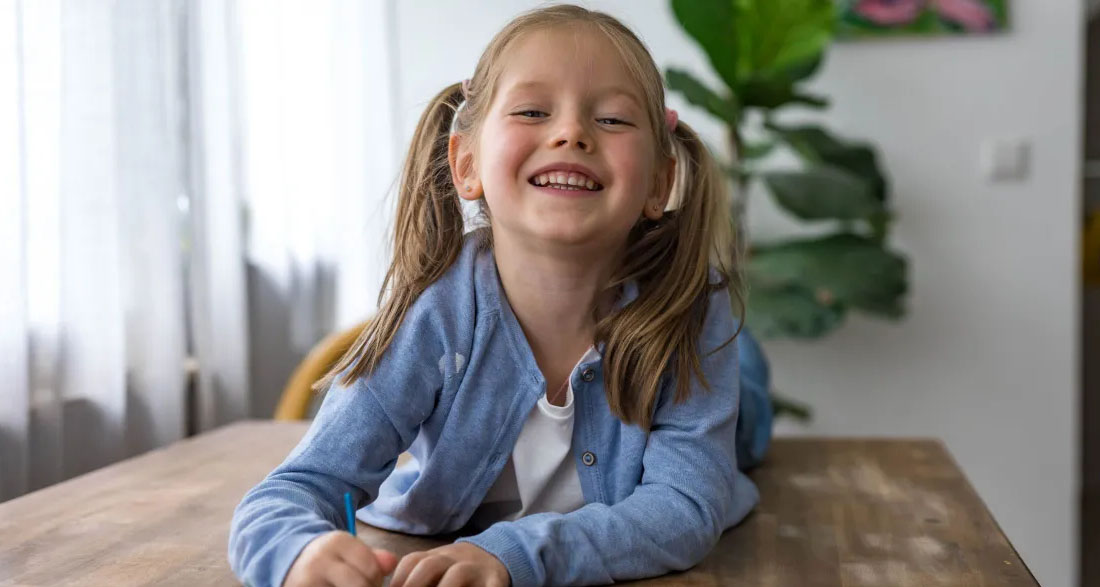
Our daughter, Sophie, is five years old. She talks nonstop, asks a million questions, and somehow makes every single day louder, brighter, and messier than I ever imagined possible. She fills every room she enters.
And she is our only child.
Evan’s mother, Helen, lives about forty minutes away in a quiet neighborhood where every house looks the same and neighbors wave even if they don’t know your name. Her home smells like cookies and clean laundry, and every surface is covered with framed photos.
She’s the kind of grandmother who saves every crayon drawing, even the ones that are just scribbles. She bakes too many cookies. She keeps a box of toys tucked away in her closet “just in case.”
Sophie adores her.
And Helen adores Sophie right back.
So when Helen asked if Sophie could spend the weekend with her, I didn’t hesitate. On Friday afternoon, I packed Sophie’s overnight bag with her favorite pajamas, her stuffed rabbit, and more snacks than any child could possibly eat in two days.
“Be good to Grandma,” I said, kissing her forehead.
“I’m always good, Mommy!” Sophie said with a big grin.
I watched her run up Helen’s front steps, waving without even looking back.
The weekend passed quietly. Too quietly.
Evan and I did laundry, cleaned out the fridge, and caught up on shows we never finish because Sophie is always interrupting. The house felt peaceful. Empty, but peaceful.
That peace didn’t last.
Sunday evening, I picked Sophie up. She was cheerful, chatting nonstop about cookies, board games, and how Grandma let her stay up late watching cartoons.
Everything felt normal.
That night, after we got home, Sophie disappeared into her room while I folded laundry in the hallway. I could hear her moving toys around, talking to herself the way kids do when they’re deep in play.
Then, very casually, like she was thinking out loud, she said:
“What should I give my brother when I go back to Grandma’s?”
My hands froze around a half-folded shirt.
I walked to her doorway. Sophie was sitting on the floor, toys spread everywhere, sorting them into neat little piles.
“Sweetheart,” I said gently, “what did you just say?”
She looked up, her eyes wide. “Nothing, Mommy.”
“Sophie,” I said softly, kneeling beside her, “I heard something. Can you say it again, baby?”
She bit her lip and looked back down at her toys.
“I heard you say something about a brother,” I said. “Who are you talking about?”
Her shoulders stiffened. “I wasn’t supposed to say that.”
My heart started pounding. “Say what?”
“My brother lives at Grandma’s,” she whispered. “But it’s a secret.”
I took a slow breath, trying to stay calm. “You can always tell Mommy anything. You’re not in trouble.”
She hesitated, then said quietly, “Grandma said I have a brother.”
The room felt suddenly too small.
“A brother?” I asked.
“Yes,” Sophie said, like she was talking about a pet. “She said I shouldn’t talk about it because it would make you sad.”
She looked up at me, scared now, like she’d done something wrong.
I pulled her into my arms. “You didn’t do anything wrong, baby. I promise.”
But inside, I was falling apart.
I didn’t sleep that night.
I lay awake beside Evan, staring at the ceiling, my mind spinning. Every explanation I came up with was worse than the last.
Did my husband cheat on me?
Was there a child I didn’t know about?
Had Helen been hiding something for years?
I replayed our entire relationship in my head. Eight years of marriage. The way Evan looked at me on our wedding day. How he cried when Sophie was born. Every memory suddenly felt like it might be hiding something I’d missed.
The worst part was that I couldn’t ask him. Because what if the answer destroyed everything?
The next few days were torture.
I moved through our routines like a ghost. Made breakfast. Packed lunches. Smiled when Evan kissed me goodbye. Inside, my mind screamed questions I couldn’t bring myself to ask.
Sophie didn’t bring it up again, but I caught her setting toys aside when she thought I wasn’t looking.
“What are you doing, sweetie?” I asked once.
“Just saving some toys for my brother,” she said simply.
Every time she said it, something inside me cracked.
I started noticing things I’d never paid attention to before. Evan always leaving his phone face down. The way he sometimes stared into space. Were those signs? Or was I inventing a story that didn’t exist?
Eventually, I knew I couldn’t live like this.
I needed the truth.
And I needed to hear it from Helen first.
I showed up at her house without calling.
She opened the door wearing gardening gloves, surprise flashing across her face. “Rachel! I wasn’t expecting—”
“Sophie said something,” I said, my voice shaking. “She said she has a brother. And that he lives here.”
Helen’s face went pale. She slowly pulled off her gloves, avoiding my eyes.
“Come inside,” she said quietly.
We sat in her living room, surrounded by framed photos of Sophie—birthdays, holidays, ordinary afternoons. I found myself searching for what wasn’t there.
“Is there something Evan didn’t tell me?” I asked. “Is there a child I don’t know about?”
Helen’s eyes filled with tears.
“It’s not what you think, dear.”
She took a long, shaky breath. “There was someone before you. Before you and Evan ever met.”
My stomach dropped.
“He was in a serious relationship,” she continued. “They were young, but they were trying. When she got pregnant, they were scared… but they wanted the baby. They talked about names. About their future.”
She paused, wiping her eyes. “It was a boy.”
“Was?” I whispered.
She nodded, tears streaming down her face. “He was born too early. He lived for just a few minutes.”
The room went silent.
“Evan held him,” Helen said. “Just long enough to memorize his face. And then he was gone.”
My heart ached. “I’m so sorry. I didn’t know.”
“Nobody talks about it,” she said. “The grief destroyed the relationship. They separated not long after. And Evan… he buried it. He never spoke about it again.”
“But you didn’t forget,” I said.
“He was my grandson,” she whispered. “How could I?”
There was no funeral. No grave. Just silence.
So Helen made her own place to remember.
In the corner of her backyard, she planted a small flower bed. Nothing dramatic. Just flowers she cared for every year, and a wind chime that rang softly in the breeze.
“I never thought of it as a secret,” she said. “I thought of it as remembering.”
She told me how Sophie found out.
Sophie had been playing in the yard, asking questions like five-year-olds do. She noticed the flowers looked different.
“Why are these special, Grandma?” Sophie had asked.
Helen tried to avoid the question, but Sophie kept asking. Finally, Helen gave her an answer a child could understand.
“I told her it was for her brother,” Helen said, her voice breaking. “I said he was part of the family, even though he wasn’t here.”
She hadn’t meant for Sophie to take it so literally. Or to carry it home as a secret.
“I never wanted you to think Evan betrayed you,” Helen said. “This happened long before you. I just didn’t know how else to explain it.”
Everything finally made sense.
There was no affair. No hidden child. No betrayal.
Just grief that had never been spoken out loud.
That night, after Sophie was asleep, I sat with Evan.
“I went to your mom’s today.”
His face went pale.
“She told me,” I said. “About the baby. About your son.”
He closed his eyes and nodded. “I’m sorry.”
“Why didn’t you tell me?”
“I didn’t know how,” he said quietly. “I thought if I left it in the past, it wouldn’t hurt anyone.”
I took his hand. “We’re supposed to carry these things together.”
Tears filled his eyes. “I didn’t want that pain to touch our family.”
“But it already did,” I said gently. “And that’s okay.”
He cried, and I held him.
The following weekend, we all went to Helen’s house together.
We walked to the backyard, to the flower bed she had tended for years. Sophie held my hand, staring at the flowers.
They explained it to her in simple words. That her brother had been very small. That he wasn’t alive, but he was real. And that it was okay to talk about him.
Sophie listened carefully, then asked, “Will the flowers come back in the spring?”
“Yes, sweetie,” Helen said through tears. “Every year.”
Sophie nodded. “Good. Then I’ll pick one just for him.”
Sophie still saves toys for her brother.
When I ask what she’s doing, she says, “Just in case he needs them.”
And I don’t correct her anymore.
Grief doesn’t need correcting.
It just needs space.