

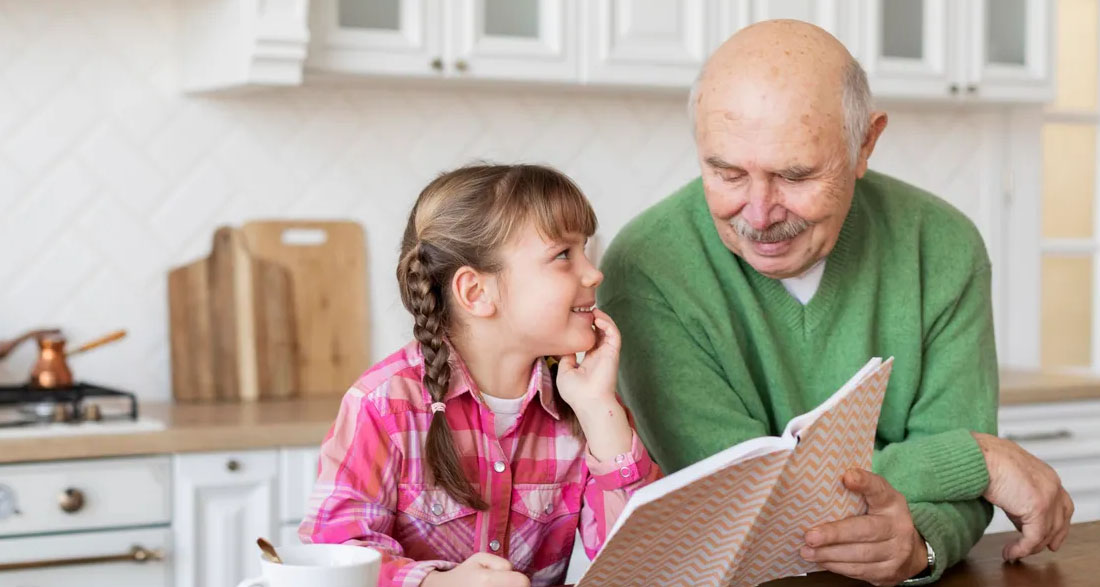
My granddaughter Lily used to run straight into Grandpa Jim’s arms the second she stepped through our door. She would hug him so tightly that he’d laugh and say, “Easy there, kiddo! You’ll crush me!” She’d throw her arms around his waist and announce, “I’m here!” like she was reporting for duty.
So when Lily came to stay with us for a week and suddenly refused to hug him goodnight, I thought maybe she was just tired. But then, lying in bed, she looked up at me and whispered, “Grandma… he’s different.”
I froze. Lily had always adored my husband, almost as if he hung the moon in the sky for her. She loved everything about him.
He taught her to ride a bike, to shuffle cards, to whistle through her fingers. She wore his old baseball cap around the house like it was a crown and called him her “favorite person,” and he pretended not to enjoy it—though the twinkle in his eyes always gave him away.
When my daughter Erin called last month on a Monday morning, I wasn’t sure what to expect.
“Mom,” she said, her voice tight and tired, “can Lily stay with you for a week?”
“Of course,” I said immediately. “Bring her tonight.”
There was a pause. “Thank you. We’ve got work issues… it’s… complicated,” Erin said finally.
That evening, Lily exploded out of the car and sprinted up our driveway like a little whirlwind.
“GRANDPA!” she screamed, throwing herself into his arms so hard he grunted.
“Easy, kiddo,” he laughed, steadying her. “You’re getting strong.”
“I’m seven!” she said proudly, like that explained everything.
The first three days were blissfully normal. Pancakes for breakfast, board games in the afternoon. Grandpa Jim would let her win, and Lily would pretend not to notice, her face carefully neutral. He didn’t mind. He never minded.
But on the fourth day, everything changed.
She grew quiet. If Jim walked into a room, she would follow him silently. She perched on a stool at the counter while he made coffee and narrated each step in a serious little voice.
“First you scoop,” she said. “Then you pour. Then you wait. Then you do not drink it because it’s yucky.”
Jim glanced at me. “See? I’m raising a critic,” he said, chuckling lightly.
But even that first laugh had a crack in it.
That night, after brushing her teeth, Lily passed the living room where Jim was waiting near the couch, as he always did, for a bedtime hug.
I prompted, “Go give Grandpa a hug before bed.”
She stopped, looked at him, then shook her head once.
Jim forced a smile, but I could see it straining. “No hug tonight?” he asked.
“I’m sleepy,” she murmured.
He nodded. “Okay. Sleep tight.”
She walked into the guest room and closed the door.
Later, I sat on the edge of her bed. She stared at the ceiling like it held some secret.
“Sweetheart,” I asked gently, “why didn’t you hug Grandpa? You always do.”
She waited, then turned her eyes toward me. “Grandma… he’s different.”
My chest tightened. “Different how?”
She swallowed. “He was crying.”
I blinked. “Grandpa was crying?”
She nodded. “Last night. I got up for water… I heard noises. I peeked in the kitchen.”
My skin prickled. “Noises?”
“Like… when someone tries not to be loud,” she whispered. “He was at the table. His head was down. He was shaking. He had his hands on his face.”
Her eyes glistened. “Grandpa never cries. He looked… small.”
I took her hand. “Thank you for telling me, Lily. You did the right thing.”
“But he’s different,” she said, her voice trembling. “Is he mad at me?”
“No,” I said immediately. “You didn’t make him cry. Sometimes grown-ups cry. Even strong ones. It doesn’t mean you’re unsafe.”
She nodded slowly. “But he’s different,” she whispered.
“I know,” I said. “I’m going to talk to him. Okay?”
“You’ve been on the same page,” she said quietly.
I left her room and found Jim sitting in his recliner, book open on his lap, eyes staring at the page but not really seeing it.
“You okay?” I asked.
He looked up like I’d startled him. “Fine.”
I watched him more closely the next morning. He went to the sugar, paused, stared at the counter, then blinked. “Right. Of course,” he muttered.
Later that afternoon, I found him in the den at his desk, papers spread out. When he noticed me, he shoved them into a drawer too fast.
“We need to talk,” I said softly.
“About what?” he asked, voice blank.
“Lily,” I said.
He stiffened. “What about her?”
“She saw you crying,” I said.
His face went blank again. Then he looked away. “She shouldn’t have been up.”
“Jim,” I said firmly. “Tell me what’s going on.”
“I was tired,” he admitted. “I had a moment.”
“A moment doesn’t make a child stop hugging you,” I said. “She thinks something is wrong.”
“Kids are dramatic,” he muttered.
“Don’t dismiss her,” I said. “Tell me what’s happening.”
He shook his head. “Nothing.”
“Jim.”
His voice rose. “Drop it.”
I went to the drawer and opened it. Inside, there was an appointment card, a pamphlet, and a printout with bold headings: Neurology. Cognitive assessment. Follow-up.
My hands trembled.
A floorboard creaked. Jim stood in the doorway, hair messy, eyes tired. He froze when he saw the papers.
“You went through my things,” he said.
“I did,” I said. “Because you wouldn’t tell me.”
He sat on the edge of the couch, hands clasped, shoulders sagging.
“I didn’t want you to know,” he whispered.
“Why?”
He let out a humorless laugh. “Because then it’s real.”
“What did they say?” I asked.
“They said it’s early,” he murmured. “Early dementia. More tests. They said Alzheimer’s is possible.”
The world tilted.
“Oh, Jim,” I breathed.
He pressed his palms to his eyes. “I’ve been forgetting things. Names. Why I walked into a room. I re-read and it doesn’t stick.”
“So you cried alone,” I said softly.
“I feel it happening and I can’t stop it,” he admitted, voice cracking.
“Why didn’t you tell me?”
“Because I don’t want to be a burden,” he whispered.
“You’re my husband,” I said. “Not a burden.”
“And Lily,” he said, voice tiny. “She looks at me like I’m the safest place. I didn’t want that to change.”
“So you cried alone,” I said again, throat burning.
“I thought everyone was asleep,” he admitted.
“Lily saw you,” I said gently. “Now she’s confused.”
Jim stared down, silent. “I never meant—”
“I know,” I said. “But we can’t hide this anymore.”
He nodded slowly.
“I’m calling Erin,” I said. “Today.”
Erin came over before lunch with Daniel. Erin took one look at Jim and tears filled her eyes.
“Dad…” she whispered.
Jim didn’t stall. “I’ve been seeing a neurologist,” he said.
“No more secrets that land on a child,” I said.
Erin hugged him hard. “Why didn’t you tell me?”
“I didn’t want you to worry,” Jim said.
“We’re going to worry. That’s love,” Erin replied, tears streaking her cheeks.
That evening, I sat on Lily’s bed.
“Sweetheart,” I said, “can we talk about Grandpa?”
“He just might need more help sometimes,” I explained.
Lily’s eyes widened. “Is he okay?”
“Sometimes his brain gets mixed up. That makes him sad,” I said.
“So he cried,” she whispered.
“Yes. And it’s okay,” I said.
“Is he still Grandpa?”
“Yes,” I said. “He’s still Grandpa. He just might need more help sometimes.”
Later, Lily approached him bravely in the living room.
“Hi, kiddo,” he said, voice shaking.
“You’re still my favorite,” she said firmly.
“Are you scared?” he asked.
Lily hugged him tight. Then she pulled back and said, very seriously, “No more secrets.”
Jim glanced at me, eyes wet. “No more secrets,” he promised.
After Lily went to bed, we sat at the kitchen table.
“I thought if I pretended it was small,” he admitted, “it would stay small.”
“We don’t get to pretend,” I said. “We face it together.”
When Lily left two days later, she hugged him before she got in the car, steady and serious, and placed his old baseball cap on her head like it mattered.
I drove to the cemetery afterward. The wind was sharp, the sky too bright. I sat on a bench and let the fear come. But then I stood, because my husband meant the world to me, and I wanted to be there for him.
When I got home, Jim was in the kitchen with his book. He looked up.
“You okay?” he asked.
“No,” I admitted. “But I will be.”
He gave a small, tired smile. “Me too.”
I wrapped my arms around him. He held me back, solid and warm.
For now, he was still here.