

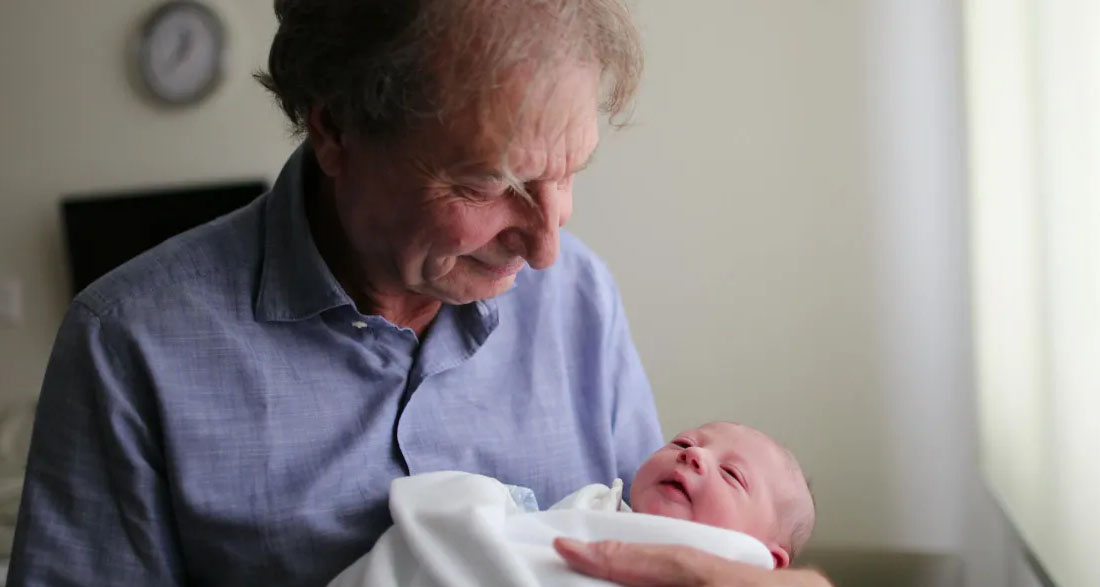
I’m a 65-year-old janitor. I live alone, mostly in the quiet rhythm of my days. Most nights are the same: I come home from work, dump my mop bucket in the sink, heat whatever leftovers are in the freezer, and fall asleep in my chair while the TV hums away.
That night started the same.
I walked in, tired, knees aching, hands smelling of bleach. I dropped my keys on the counter, kicked off my boots, and leaned the mop against the wall.
Then I heard it—a knock at the door. Sharp. Urgent. Different from the usual polite knocks of neighbors or delivery people.
I frowned, wiped my hands on my uniform, and opened the door.
And there she was.
Gillian. My daughter.
“Dad… I need you now,” she said, her voice trembling.
I froze. It had been nearly a year since I’d really seen or heard from her. She was holding a baby carrier, fingers white from gripping it so hard, tears streaming down her cheeks. She was shaking, sobbing so much she could barely catch a breath.
“Dad,” she whispered again. “I need you now.”
Something inside me broke.
Twelve months. Twelve months of silence. Twelve months since she called to say she was pregnant. Twelve months of no visits, no pictures, no updates. I’d lain awake countless nights, wondering if my own daughter was ashamed of me, if she’d forgotten I even existed.
“Come in, sweetheart,” I said, my voice cracking.
She stepped inside, and for a moment, my little house felt smaller, holding its breath along with me. She set the carrier down gently on the living room floor. I knelt.
Inside, a tiny baby girl slept. Mouth slightly open, fists tucked under her chin, dark hair standing in soft little wisps. My late wife’s name flashed through my mind.
“Her name is Rosie,” Gillian said, almost reverently. “After Mom.”
I couldn’t breathe for a moment. Then I whispered, “That’s… that’s a beautiful name.”
“You can hold her,” she said, and I hesitated. A year of distance had made me unsure. Did I even have the right?
“You can hold her. Please. I want you to,” she urged.
My hands shook as I lifted her, delicate as glass. She made a tiny snuffling sound, scrunched her face, and relaxed against my chest. I collapsed into my old armchair and cried. Not quietly. Not dignified. I cried like a little kid.
Gillian sat on the couch, hands over her mouth, sobbing alongside me.
I had dreamed of this moment for months. And I’d started to believe it would never come.
To understand why, you have to know the story.
Gillian wasn’t mine by blood. Her birth mother had been young and scared, leaving her at the hospital with no note, no name. My wife and I couldn’t have kids—three miscarriages, three times packing away tiny clothes we couldn’t bear to see.
When social services called, asking if we’d adopt a baby girl, my wife said yes before they finished speaking. Six weeks later, we brought Gillian home. She cried endlessly at first. We walked floors, sang off-key lullabies. We were exhausted, broke, but happy.
My wife became a natural at raising her. Then cancer came.
Cancer didn’t care that our daughter was eight. It didn’t care that my wife was kind, or that we’d already lost so much. We fought through chemo, hospital stays, sleepless nights, but eventually, the doctors told us there was nothing left to fight. My wife was gone.
The world went quiet.
Bills had to be paid. I had to go back to work. I picked up a second janitor job—day shifts fixing things, night shifts cleaning offices. I carried the weight of making sure Gillian didn’t fall apart without her mom.
I tried. That was all I could do. I burned dinners. Forgot picture day. Once sent her to school in two different shoes. She still teases me about it. I learned to braid her hair from a magazine. I showed up every day, even when I didn’t know what I was doing.
When she was 16, she wrote a school paper about her hero. She left it on the table. I read it alone and cried: “My dad does everything wrong, but he never quits.”
She grew up smart, strong, stubborn. Went to college. Got a good job. Moved away. Then she met Evan, a polished guy with a good job and a wealthy family.
Visits got shorter. Calls got brief. And then one day she told me she was pregnant.
I had to sit down.
“You’re making me a grandpa?” I asked.
She laughed nervously. “Yeah… you’re gonna be a grandpa.”
We talked about names. I offered to help paint a nursery. “Soon,” she said. But soon never came. No baby shower, no ultrasound photos, no visits. I shouldn’t have been needy. I told myself she was busy.
But nights alone, I pictured her in some bright kitchen with her husband’s family, dressed up, laughing, while I stayed in my faded uniform, taking out trash that smelled like old coffee and regret.
I wondered if she was embarrassed of me.
And then she showed up.
“Dad, I’m sorry,” she said, her voice breaking. Hair messy, dark circles under her eyes, cheeks streaked with dried tears. “I’m sorry I kept her from you.”
“You don’t understand,” she said.
I put my arm around her. “Hey… you’re here now. That’s what matters.”
“No,” she said, shaking her head. “You don’t understand.”
“I was never ashamed of you,” I said softly.
She blinked, shook her head. “Dad, no. That’s not it. I was never ashamed of you. Then why… why didn’t you bring her? Why didn’t you call?”
She looked at the baby carrier. Rosie made a tiny squeak.
“I was terrified,” she whispered. “His parents backed him. Evan… he left. Said he wasn’t ready. Said I wasn’t what he signed up for. Said he didn’t want to be tied down.”
“They said I trapped him,” she added, air quoting, then wiped her eyes.
I sat in silence. My hands curled into fists.
“I thought I could do it alone,” she said. “I read all the books. Took the classes. But it’s not like the books. She cries, she won’t sleep… I feel like I’m failing her every single minute.
And I knew… if I brought her to you, I’d see how easy it is for you. How natural. You raised me without Mom. You worked two jobs and still read me stories, did my hair. I thought if I saw you with her, I’d realize how bad I am at this.”
“You were perfect,” I said.
She shook her head, crying again. “I am nothing like that.”
I laughed, rough and short. “You always knew what to do.”
“I was terrified every day of your life,” she said.
“No, you weren’t,” I said. “You always knew what to do. Your mom was the natural. When she died, I was sure I’d ruin you. I burned dinners, forgot stuff, lost my temper. I was scared and tired and guessing half the time. I just loved you enough to keep showing up.”
She sniffed. “But you stayed.”
“Exactly,” I said, brushing Rosie’s tiny fingers. “That’s what she needs from you too. Not a supermom. Just you, showing up, over and over.”
She let out a laugh-sob. “Will you help me?”
“Every single day,” I said, kissing her head. “As long as I’m alive.”
That was three months ago.
Now, every Wednesday, my house is alive with giggles and little footsteps.
“Grandpa!” Rosie shouts as they knock on the door, diaper bag over one shoulder, legs kicking in excitement.
I pretend to be shocked every time. Rosie squeals, grabs my beard, and I laugh, reading her the same stories I read to Gillian years ago. She falls asleep on my chest sometimes, drooling, and I don’t care.
Last week, Gillian handed me a small paper bag.
“So everyone knows the scary-looking janitor is actually the best grandfather in the world,” she said.
Inside was a cardboard badge, “GRANDPA,” decorated with flowers.
I pinned it to my uniform before work.
“Scary-looking?” I said.
“Sure, Dad. Very handsome. Now put it on.”
I did. Most people still just see the janitor. That’s fine. Rosie sees something different. She sees Grandpa.
And after everything, that’s more than enough for me.