

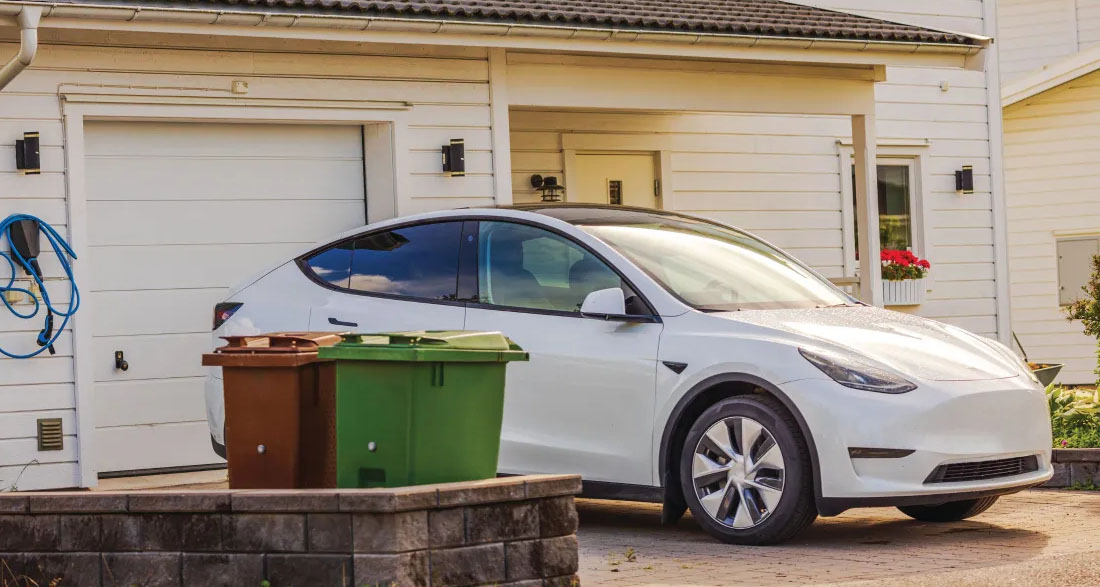
When my husband told me I had to pay $80 a day to use our car, I didn’t argue. I just walked out. I needed space, needed to breathe, needed to wrap my head around the absurdity. The next day, I came home, ready to explode. But I didn’t have to. Karma had already beaten me home—and taught him a lesson money couldn’t buy.
For years, my life revolved around buses, ride requests, and favors. Every errand was a carefully timed operation. Grocery shopping meant juggling bags and a stroller, daycare pickup meant leaving work early in case the bus didn’t show, and every plan felt like a complicated math problem I had to solve just to survive.
Then Daniel and I bought a car, and suddenly, everything changed.
The day we brought it home, Daniel tossed me the keys. “Go ahead. Take it around the block,” he said.
“For real?” I asked, heart pounding. “Right now?”
He laughed, brushing it off. “It’s a car, not a spaceship.”
But to me, it was freedom.
Finally, I could drop our daughter off in the morning without racing the clock. I could stop by the store on the way home without mentally calculating extra travel time. I could say “yes” to things without asking myself the question that had haunted me for years: How will I get there?
“It’s amazing,” I said one afternoon, loading groceries into the trunk. “I don’t know how I managed before.”
Daniel barely looked up, scrolling through his phone. “It’s just a car,” he said casually.
But to me, it wasn’t just a car. We bought it together. We split the payments, we shared the dream of having freedom for once. The registration was in his name, but I didn’t think twice. We were married. We shared everything—our life, our daughter, our home. Why wouldn’t we share a car?
I didn’t know that question would come back to haunt me.
A few weeks later, my mom called from the hospital. Her voice was thin and tired.
“The doctor says I can go home tomorrow,” she said.
“That’s great!” I said, relief flooding me. “How are you feeling after surgery?”
“Sore. Slow. Ready to be out of here,” she replied.
“I’ll pick you up. Don’t worry about a thing,” I said.
She hesitated. “Are you sure? I don’t want to be a burden.”
“You’re not. I’ll get Mila from daycare first, then I’ll come straight to the hospital. I’ll bring you home and help you settle in.”
“Thank you, sweetheart,” she said.
The next afternoon, I had everything planned perfectly: daycare pickup at five, hospital discharge right after, dinner at Mom’s place. All possible because we finally had a car.
I grabbed my bag and reached for the keys on the counter. That’s when Daniel cleared his throat. I turned.
He stood with his arms crossed, shoulders stiff, and a look that made my stomach drop.
“Is something wrong, hon?” I asked cautiously.
He frowned. “Listen. You have to pay me to use my car. $80 a day should cover it.”
I laughed, certain he was joking. “What are you talking about?”
His jaw set, immovable. “You have to pay me. Gas, wear, tear, maintenance… all of it. $80 a day is cheap.”
I froze. I stared at him, waiting for a punchline. Waiting for a smile. Waiting for anything that would tell me he was joking. He didn’t.
“Daniel… I’m your wife. We’re a family. Are you really going to charge me to use our car?”
He sighed, irritated, like I was being deliberately stupid. “Well, of course. You’re constantly using it. Grocery runs, daycare, errands. None of that is free.”
I couldn’t argue. I put the keys down, ordered a taxi, picked up our daughter, and went straight to the hospital.
“I thought you were fetching me in your car,” Mom said as I opened the taxi door.
“That was the plan,” I muttered.
It was late by the time we got to her place. Without a car, we stayed the night. Mila asked why we weren’t going home, and I told her Grandma needed us—which was true. But I also needed distance from Daniel, before I said something I couldn’t take back.
The next day, I returned home, furious and ready to tell him exactly what I thought. I’d lain awake, rehearsing my words: how small he’d made me feel, how he’d turned our marriage into a ledger instead of a partnership.
But karma had already arrived.
The house was silent. No TV, no dishes clattering, no background noise of life. I stepped in, sensing something was wrong.
Daniel sat at the dining table, shoulders hunched, phone face down like it had personally betrayed him. When he saw me, he muttered, “Oh. You’re back.”
I didn’t answer. I set my bag down slowly, studying his tight jaw, bloodshot eyes, and the uneasy energy radiating from him. Something had happened.
“I need to talk to you,” he said.
That would have been funny yesterday.
“It’s about the car… I lent it to Mike last night,” he admitted.
I blinked. “You what?”
“He needed it. His car’s in the shop, early shift… I figured…” He stopped, exhaled hard. “It’s my car.”
The words hit me like a punch.
“And?” I said.
“He got into an accident.”
I gripped the chair for support. “What kind of accident?”
“Nothing major. No one hurt. Other car damaged. Police and insurance involved.”
I folded my arms, trying to steady myself.
“And now?”
Daniel looked at me helplessly. “The insurance company called. Since the car’s in my name and Mike isn’t listed, coverage could be limited… or denied. They need statements, paperwork. The other driver is already calling about repairs.”
I nodded slowly. “Sounds stressful.”
“It is stressful,” he snapped, voice dropping. “I don’t know what to do.”
That was my moment. Surgical precision. I pulled out a chair and sat.
“Well,” I said, calm and steady, “since it’s your car, this is your problem, right?”
He stared.
“That’s not fair,” he protested.
“You know how insurance works. You’ve handled this before. I haven’t.”
“So now you want my help?”
“Yes,” he said immediately. “I need it.”
For the first time in 24 hours, I felt solid ground beneath my feet.
“I can help,” I said. “I know the process. I can make calls, sort paperwork, talk to the adjuster. Probably minimize the damage.”
He exhaled in relief. “Thank you.”
“But it’ll cost you.”
His face fell. “What?”
I met his eyes. “$80 a day.”
He laughed sharply. “You’re joking.”
“You said access costs money. Time costs money. Stress. Expertise. This will take days, and I’m very good at it.”
“Daniel, yesterday I needed the car for Mom and Mila. You looked me in the eye and told me that didn’t matter. Fairness meant charging me,” I reminded him.
He opened his mouth… then closed it.
“This is different,” he muttered.
“No. It’s exactly the same,” I said. “Fairness still matters. You made that clear.”
Silence stretched. Do you know that feeling when someone finally realizes they’ve made a terrible mistake? It’s not satisfying—it’s sad.
“When you charged me to use the car, you turned our marriage into a transaction. I can’t live like that.”
He swallowed hard. “You turned our marriage into a transaction.”
“I’m sorry,” he said, voice small. “I was angry about money… about feeling like I paid more… Instead of talking, I made you feel small. That wasn’t fair.”
I let him sit in it.
“So here’s where we are. Either we’re partners, or we’re not. Either what’s mine is yours and what’s yours is mine, including responsibility—or I’m leaving. I love you, but if you’re turning marriage into a game of debits and credits, it’s not worth staying.”
He shook his head quickly. “I don’t want to live like that either.”
“Then this ends here,” I said.
He exhaled shakily. “You’re right. I acted like the car mattered more than you. More than us.”
“This ends here.”
“I’m sorry,” he repeated, and I could see it—truly see it—in his eyes.
Apology accepted. We handled the insurance together, like partners. I didn’t charge him a cent.
A week later, the claim was settled. Our rates went up slightly, but not as much as they could have. Daniel kept apologizing—not just for the car, but for everything it represented: keeping score, acting like marriage was a ledger instead of a partnership.
I forgave him. But I also made it clear: I would never tolerate that attitude again. I showed him the total I’d paid toward the car, just so he’d know what it would cost if he tried claiming ownership again.
Now, when I grab the keys, he doesn’t say a word. No counting gas. No keeping track.
Because we’re not roommates splitting bills, or business partners balancing accounts. We’re married.
And that means everything.