

When my husband demanded I sell my late grandma’s house to buy a luxury lake home for his mother, I was stunned. But I agreed—on one condition that would shock both him and his mother. And when the three of us sat down for dinner, I gave them a wake-up call they desperately needed.
My name is Emily, and when I was a little girl, my mother died.
It was devastating, leaving a huge hole in my heart that nothing could fill. But my grandmother, Evelyn, stepped in. She raised me in her small, cozy house, which was filled with love and warmth
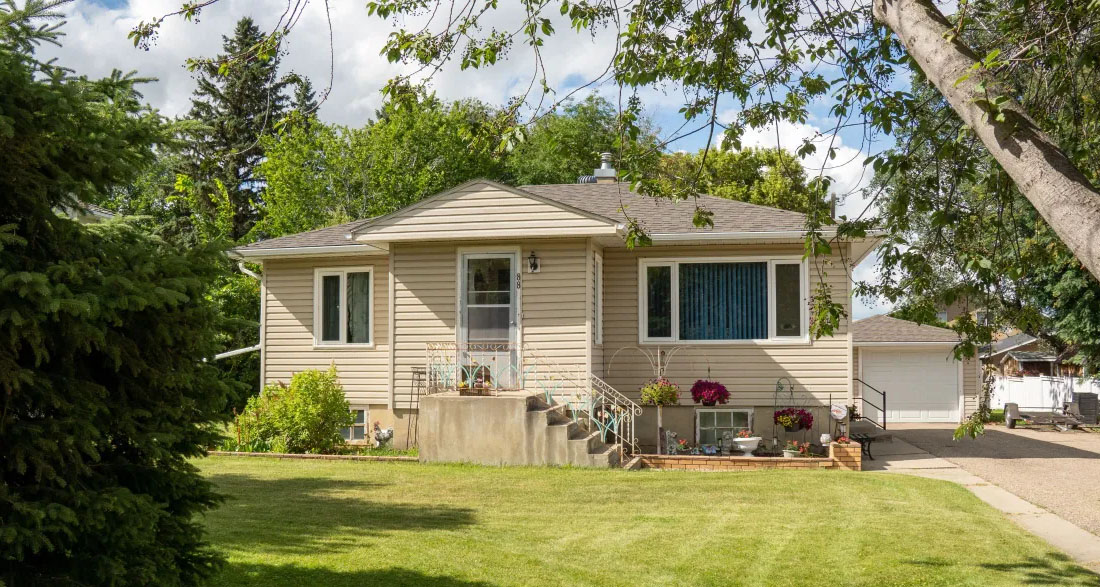
It wasn’t fancy, but it held every good memory I had—the gnarled branches of the pear tree in the yard, the smell of pancakes from the summer kitchen, the quiet evenings by the fireplace.
That house was my heart.
Six months ago, Grandma Evelyn passed away. Losing her felt like losing my world all over again. But there was a small silver lining: she left me her house. It wasn’t much in the eyes of the world, but to me, it was priceless. And I never, ever planned to sell it.
At the time, my husband Jason and I were renting a tiny apartment in the city. We were saving up, dreaming about the day we’d have a home of our own. Living in Grandma’s house could have been perfect—but my grief was still raw, and I wasn’t sure I was ready to face those memories every day.
I muttered to myself one evening, “We can figure out commuting for work… we could start a family there… it might actually be perfect.”
I was imagining a quiet, happy future—until Jason sat down on the sofa one evening with a look that made my stomach drop. It was that anxious-but-calculated expression he gets before saying something huge, and usually, it’s bad.
“Listen, Em. We need to talk about your grandmother’s house.”
Oh no, I thought. Here it comes. My chest tightened, and a tiny wave of dread washed over me.
“I know,” I said softly, twirling the end of my ponytail in my fingers. “I’ve been thinking about it a lot, but everything still feels so fresh, you know?”
He shifted, like he was trying to gather courage, then finally said it:
“My mom wants to sell her house and buy a big house by the lake.”
I frowned. I didn’t see the connection yet.
“If we sell your grandmother’s house,” he continued, “we can combine the money from both sales and buy her that lake house. She deserves it.”
I blinked at him. “For your mom?”
He nodded, hopeful. “Yeah. For Mom.”
Let me tell you a little about Dorothy, Jason’s mom. She loves the finer things—diamonds, luxury trips, fancy cars. Yet, she constantly complained about her “tiny” house.
“Like living in a sardine can!” she once exclaimed.
Her three-bedroom home was perfectly lovely, but to Dorothy, it was never enough. Everything she owned had to be shiny, new, and bigger than anyone else’s. Closets crammed with clothes, boxes of cookware, endless knick-knacks. I never judged her for it—until now.
Jason was asking me to give away the one thing that meant the world to me, everything I had left of my grandmother.
“You’re asking me to sell my grandmother’s house… for your mother?” I gestured around our tiny apartment. “Jason, we could live in Grandma’s house! Have you forgotten that?”
He rolled his eyes, sighing. “DON’T BE SELFISH, Emily! Mom needs it more. We talked about it, and we both agree.”
We both agree? I realized then that Dorothy had spun her web, and Jason, kind-hearted and naive, had fallen straight into it. My grandmother’s house, the last piece of my childhood, my memories, my heart… they were both ready to take it.
Fine, I thought. Let’s see how they like my plan.
I forced a smile. “Okay, I agree. It sounds like a lovely idea to help your mom—but I have one condition.”
Jason’s face lit up. “A condition? Sure, Em! What is it?”
“Oh, nothing major,” I said, waving my hand. “I just need a day or two to figure out the details. Then we’ll have dinner. You and Dorothy will hear all about it.”
Jason grinned. “Sounds perfect.”
I knew he wasn’t being cruel. To him, this was simply helping family. In his world, family always came first. He would never see the manipulation. He needed a lesson—but it had to be quiet, firm, undeniable.
Over the next two days, I planned.
I didn’t want a shouting match. I just wanted a boundary Dorothy couldn’t ignore. So I arranged a small, intimate dinner at our apartment.
Dorothy arrived, immediately launching into lake-house ideas. “Granite countertops here, a new dock there,” she rattled off, clearly dreaming of a world that didn’t exist yet.
We ate a little, the conversation light, dominated by Dorothy’s fantasies. Then, I set my fork down, folded my hands, and said:
“It’s time I told you my condition for selling Grandma’s house.”
Jason straightened. Dorothy’s eyes sparkled with triumph.
I looked between them. “If I sell my grandmother’s house for your lake home, your mom must sell everything she owns too.”
Jason blinked. “Everything?”
I nodded, counting on my fingers. “Her house, her SUV, her summer cottage—everything. If this is about family, then sacrifices are equal.”
For a moment, Jason was silent. I saw it—the realization washing over him. He finally understood what he had been asking me to give up.
But Dorothy couldn’t accept reality. She slammed her fork down. “This is RIDICULOUS! After everything I’ve done! I raised that boy alone! And you can’t sell one old house to THANK ME? Some wife you turned out to be!”
Jason winced. “Mom—”
“I won’t be talked to like this!” she screamed. “You should be grateful I even want a home where the whole family can gather! Helping me is part of being a GOOD wife!”
I didn’t rise to the bait.
“I’m happy to help family, Dorothy,” I said calmly. “Truly. I want you to be happy in a new home. But asking me to hand over the most valuable thing I own isn’t helping. This house is where my grandmother raised me. That’s not a small ask. That’s everything.”
Dorothy threw her napkin down and stormed out, muttering about ungrateful daughters-in-law.
The apartment fell silent. Jason rubbed his face with both hands, shoulders slumped in shame.
“Emily… I’m sorry,” he finally said. “I really didn’t understand what I was asking you to give up.”
I reached across the table and took his hand. “I know. I love that you want to take care of your mom. But we don’t do it by erasing my family. That’s not how partnership works.”
He nodded. “You’re right. I shouldn’t have been so blind.”
The boundary was set, firm and clear. My grandmother’s house—with its pear tree and summer kitchen filled with memories—was safe. And so was our marriage.
My little house was safe.
And so was our love.