

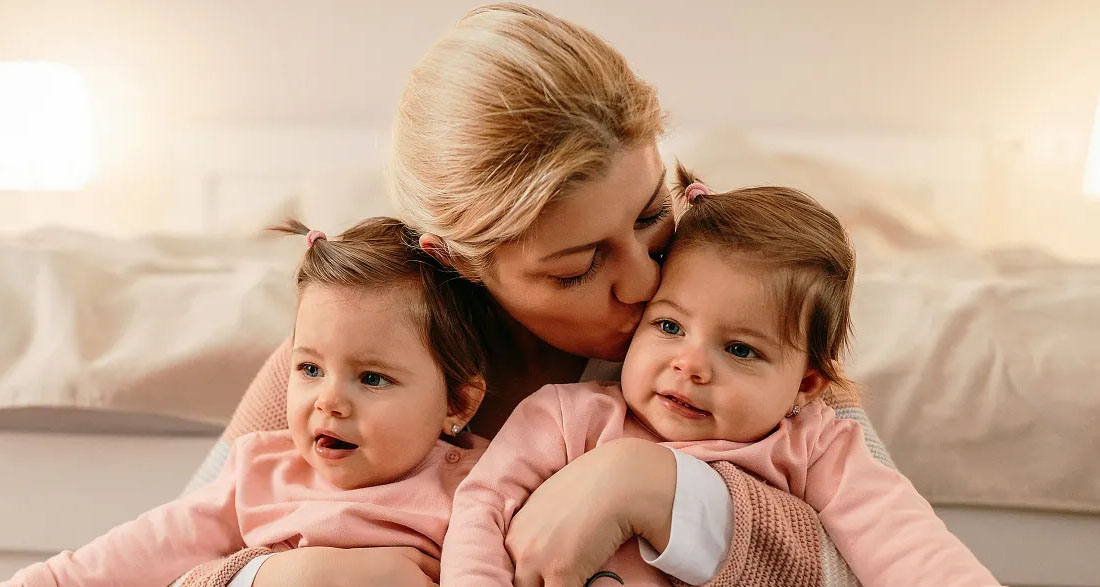
Fifteen years ago, my life was ripped apart. I was thrown out of the only home I’d known with nothing but my newborn twins in my arms and a single, heavy promise to survive.
Fifteen years later, I had built a life I could be proud of—a life full of strength, purpose, and laughter—but then, just when I thought my past was buried, the man who shattered my world walked back through my door, asking for help.
What would you do if the person who abandoned you suddenly needed you?
People always talk about the day that changes everything. For me, it wasn’t a single day. It was a slow unraveling, a quiet falling apart that began in silence and ended with the sharpest gasp of air you can imagine.
My name is Emily. I’m 33 years old. I got married when I was just 18, dizzy with love and dreaming of a life I didn’t fully understand. I always wondered what kind of mother I would be if life forced me into it early, if we started our family before we were ready.
David was 21 when we married. He had that kind of confidence that made people lean in when he spoke. He could walk into a room and make everyone feel like they’d known him forever. He made me laugh.
He held my hand in public as if the world could see our love. He whispered about the future like it was something we could reach out and touch.
I thought I had won the jackpot. But love, I would learn, isn’t always enough.
We weren’t rich. Not even close. But we had enough. A small, two-bedroom house technically belonged to his mother, but she let us live there until we could get on our feet. It felt like ours.
We planted flowers in the front yard, painted the spare room soft green, just in case someday we had children. We weren’t even talking about babies seriously yet. Back then, I believed love alone could hold us together.
In the beginning, life felt simple. David and I stayed up late, feet tangled under the sheets, whispering about names for our future children. He liked Owen for a boy, Toni for a girl. I liked Lily or Cara. I never thought much about boys’ names.
Those conversations were soft and lazy, floating in the air like dreams, safe to call “someday.”
Then things began to unravel.
David worked in construction management. He was organized, confident, and direct—but when two of his big projects got canceled back-to-back, I saw a change. It started small: he stopped kissing me goodbye in the mornings, ignored my texts for hours. He grew quiet, distant.
Then came the snapping. Over things that didn’t matter—whether I bought name-brand cereal or balanced the checkbook “wrong.”
“It’s just bad luck, Em,” he said one night, slamming a drawer. “A job will come through soon. I just know it will.”
Weeks turned into months. His hope was brittle. He stopped looking for work. Most days, I’d find him on the porch, staring at the dead patch of grass where we’d once dreamed of planting a herb garden. He barely looked at me anymore.
And when he did, it was with emptiness I didn’t know how to touch.
I tried everything. I picked up extra shifts at the pharmacy, cut corners to stretch our budget. I cooked his favorite meals, hoping the smell of roasted garlic and chicken might remind him of us. I made tiramisu from scratch.
Croissants for breakfast. I did everything I could think of. I told myself love was supposed to survive storms.
Then, one morning, I found out I was pregnant. I sat on the bathroom floor staring at the positive test through tears—scared, yes, but full of hope. This was it. This was our reset. I believed David and I would be fine once our child arrived.
That night, I told him.
“You’re serious?” he asked, fork frozen halfway to his mouth. “Emily, we can barely pay the bills. How are we supposed to raise a kid?”
“I know it’s not ideal, David,” I said gently. “But maybe this is the good thing we need. Maybe… this is the blessing we’ve been asking for.”
He didn’t answer.
At our first ultrasound, the doctor smiled warmly and dropped another bombshell.
“Congratulations, it’s twins!” she said.
David went pale. His hands fell to his sides as if they weren’t his own. There was no joy, no curiosity—only panic. I wanted him to smile, to laugh, to pull me close and promise we’d handle it together. But he didn’t.
That moment broke something inside me. The man I married—the one who danced with me in the kitchen, left little notes on the fridge—was gone.
From then on, everything shifted. David became colder. Conversations disappeared. His laugh, the one I fell in love with, vanished. He stopped asking about the pregnancy, touching my belly, or pretending to care. Every time I brought up names, doctors, or baby clothes, he waved it off.
“Emily, can we not do this right now?” he said each time.
I kept trying anyway. I worked more shifts, saved every dollar, clipped coupons like prayers. Every night, I whispered to my belly:
“We’re going to be okay, my chickens. I’ll make sure we’re okay.”
When our daughters, Ella and Grace, were born—David’s dark hair and my green eyes—they were perfect. And I dared to hope he might come back.
He held Ella for maybe three minutes.
“Good job,” he mumbled, brushing a dry kiss on my forehead before returning to his phone.
He never held Grace.
The first month blurred into endless nights of diapers and feedings. My body ached, but the hollow where my heart should have been hurt more. I did it all—every bottle, every cry, every load of laundry—alone. David barely helped, always claiming he was too tired or couldn’t handle it.
One afternoon, folding tiny onesies, he came in slowly.
“We need to talk,” he said.
“What now?” I asked, gripping a baby sock.
“I can’t do this,” he said vaguely.
“Do what?” I asked.
“This. The crying, the mess, the pressure. I’m not cut out for it. I made a mistake,” he said coldly.
“There’s no mistake, David,” I whispered. “We have children. Your children.”
“I didn’t ask for two,” he said. “This wasn’t the plan.”
“Where do you expect us to go?” I whispered.
“That’s not my problem anymore,” he said, looking me in the eye.
The next morning, I packed our lives into two bags. Swaddled Ella, buckled Grace into her car seat, and left.
We found shelter in a rusty trailer at the edge of town. The roof leaked when it rained. The heater worked when it wanted. But it was ours. I worked double shifts—grocery store by day, cleaning houses at night.
I paid Marissa, a neighbor’s teenage daughter, to watch the girls. Sometimes I skipped meals. Sometimes the lights went out. But we were safe.
Then I started Bright Start Cleaning. What began as survival grew into a business, then a sisterhood, hiring women like me—single mothers who needed a chance. Our trailer echoed with laughter. Ella and Grace grew strong, kind, and always believing in me.
“You’ll make it work, Mom,” Ella said once.
“You’re the reason we have everything,” Grace added.
By the time the girls were 12, I bought us a small two-story house. Chipped paint, crooked shutters, a patchy backyard we turned into a garden. That first weekend, we planted daisies and danced barefoot in the grass. Grace said it smelled like happiness—and she was right.
By 15, we had a real office space. Clean, warm, filled with light, photos of the women who helped build it on the walls. Every Friday, we shared coffee, baked goods, stories—like a family.
Then, one Tuesday morning, the past walked in.
I was reviewing applications when I heard the bell. My heart stopped. David. Older, gray creeping into his hair, shoulders slouched. He held a folded résumé in one hand, hope in the other.
“Emily,” he said.
“David,” I said, heart pounding. “What do you want?”
He looked around, paused on the framed photo of Ella and Grace smiling with school awards.
“You built all this?” he asked.
“I did,” I said. “While raising my daughters.”
He swallowed hard. “I lost everything, Emily. Business failed, girlfriend left, mom passed… I just need a chance.”
For a brief moment, I almost pitied him. Almost.
“David, you had your chance. You walked away,” I said.
“I’ll do anything!” he said, stepping forward. “Clean floors, take out trash, fix plumbing—I’ll do anything!”
“No,” I said, shaking my head. “I’m not the woman you left behind. I don’t owe you a way back in.”
He lingered, hands down, defeated. I watched him leave, the door creaking behind him.
That night, Ella and Grace were curled on the couch, bickering over which movie to rewatch for the hundredth time. Ice cream in hand, they laughed. I watched them, my chest swelling. Life had tested me—and I had passed. As for David? The girls were better off never knowing him.