

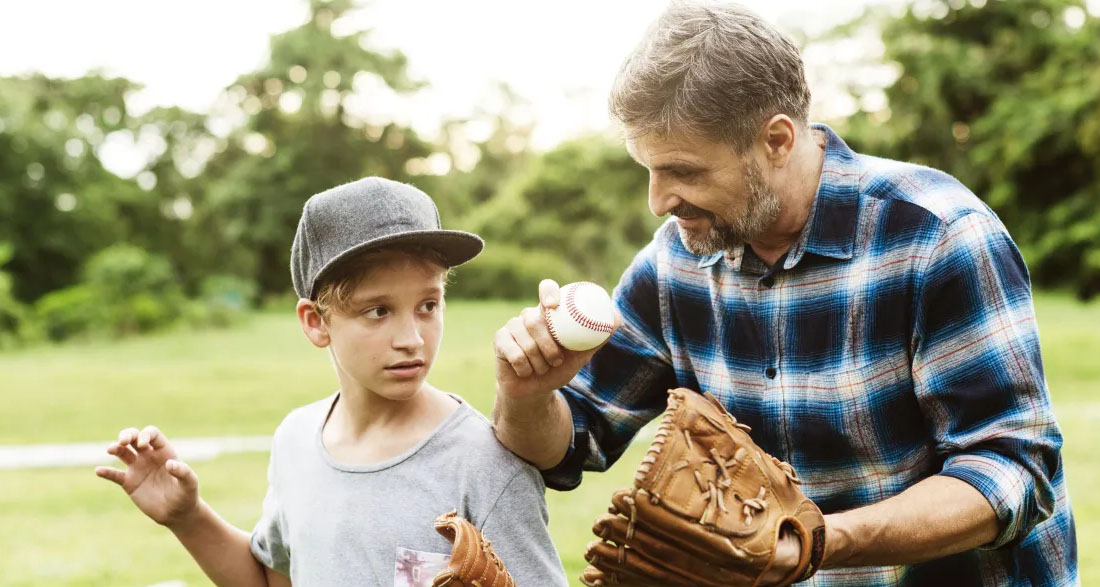
After his best friend died, my husband, Mark, decided to step in for the man’s eight-year-old son.
Every Saturday, they played baseball together, grabbed burgers, and did “guy stuff” that only fathers and sons—or father figures—seem to know how to do. I believed every word he told me. I thought he was being kind. I thought he was grieving in the right way.
I was wrong.
It started six months ago, when Mark’s best friend, David, died suddenly of a heart attack. I still remember Mark’s face when he told me. The color had drained completely, his eyes hollow, like the world had ended in that single moment.
I wrapped my arms around him, hugging him tight, but his arms hung limp at his sides. He didn’t fight to return the hug. He didn’t fight to hold on to anything.
I thought he was just in shock. I thought he was grieving. I didn’t realize that underneath it all, he was feeling guilt too.
At David’s funeral, the church was packed. Family, friends, neighbors—everyone who had ever crossed paths with David came to mourn. His widow, Sarah, looked so fragile, like she could shatter if the organist hit a wrong note.
Her black dress hung loosely on her, and her hands trembled as she clutched them together.
Sarah hugged Mark longer than anyone else. It wasn’t a brief, polite gesture—it was careful, deliberate, protective. Mark held her gently, and for a moment, I saw a flicker of something in his eyes I couldn’t place. Desire? Sadness? Regret?
“I don’t know what I’d do without you,” Sarah whispered softly.
David and Sarah’s son, Leo, only eight years old, clung to his mother’s dress, staring up at Mark with wide, unsure eyes. Mark bent slightly and placed his hand on the boy’s shoulder.
For a fleeting second, I thought I glimpsed a deep, complicated emotion flash in his face—something that didn’t belong in the realm of innocent caregiving.
After the service, Mark lingered at the casket. Five minutes passed. Then ten. He stayed rooted, his hand resting on the edge, lips moving as if speaking to someone who could no longer respond. Leo eventually shuffled over and stood silently behind him.
“Mark?” I finally asked.
He startled. “I was just saying goodbye,” he muttered. But his voice was tight, too quiet, like he was hiding something.
Later that night, Mark sat on the edge of our bed, staring at the floor for an hour.
“Leo doesn’t have a dad now,” he whispered finally. “I need to step up. Make sure they’re okay. Both of them.”
I nodded. “Sarah is going to need a lot of help,” I said.
“Leo doesn’t have a dad now,” he repeated, almost like a mantra.
A week later, he told me Sarah had agreed to let him spend time with Leo.
“I’m taking him to baseball practice every Saturday, starting this week,” he said, his voice tight with purpose.
So it began. Every Saturday morning, Mark was out the door at 7 a.m., baseball bag in hand.
“Practice,” he’d announce, keys in hand, a strange urgency in his voice. “Then I’ll grab him a burger. Maybe we’ll do some other guy stuff.”
Friends and family praised him as a saint. I even believed him. Nobody suspected the truth that was slowly building beneath the surface.
A month into this new routine, I suggested we could do more.
“Why don’t you bring Leo over after practice? I’ll cook. Sarah’s exhausted. We can help.”
Mark hesitated in the kitchen doorway. “That might confuse things,” he said, finally.
“Confuse what?” I asked, genuinely baffled. “It’s just a meal.”
He stared at the wall, thinking, then nodded curtly. “Okay. We can try it.”
The first Saturday Leo came over, the atmosphere changed instantly. He stood in the entryway, backpack clutched like a shield, as if waiting for permission just to breathe. We baked cookies, then I read him Harry Potter.
He was a sweet, shy kid—but there was something tense lurking beneath the surface. Mark sat at the kitchen table the whole time, watching us. I could feel his eyes drilling into the back of my skull, and Leo kept nervously glancing at him.
This past Saturday, practice ended early because of rain. Mark brought Leo home, but the boy was in a foul mood. He complained of a piercing headache and said he needed to run to the pharmacy. The second the front door clicked shut behind Mark, everything changed.
Leo’s rigid posture melted away, replaced by a nervous energy that made him seem older than his eight years. He sat at the kitchen table, gripping a blue crayon until his knuckles were white.
“You don’t lie,” he said quietly, almost a statement of law.
I froze. “I try not to, Leo.”
He glanced toward the front door, making sure Mark was really gone. Then he pulled out a crumpled piece of paper from his pocket.
“But Mark lies,” he whispered. “I wasn’t supposed to steal this. I took it from Daddy’s casket. Before they closed it.”
A cold shiver ran down my spine.
“He put it there,” Leo said, voice trembling. “He slid the note under Daddy’s hand. But I saw. I waited until he walked away.” He pushed the paper toward me.
My hands shook as I unfolded it. The first line made my blood run cold:
“David, I need you to take this secret to the grave with you…”
I sank into the nearest chair, unable to breathe.
The note went on, spilling the truth in black ink:
“I never wanted you to know because it would only hurt you, but I love Sarah. I always have. I never acted on it. I swear that. I would never do that to you. But pretending I didn’t feel it nearly broke me.
Watching you build the life I imagined, raising the son I would have given anything to protect… I’m not going to try to replace you, but I will step in now that you’re gone, to make sure they’re never alone. Forgive me for loving what was never mine.”
“That’s why he’s mad sometimes,” Leo said softly.
“Mad? When?” I asked, trying to keep my voice steady.
“When Mom doesn’t answer his texts right away. Or when she says he can’t stay when he brings me home,” Leo replied.
A furious clarity settled in my chest. No wonder Leo had been tense around Mark. He knew exactly what Mark’s motives were all along.
“Thank you for showing me this, Leo. You were very brave,” I said, hugging him. “Do you want me to take you home now?”
He nodded quickly, relief flooding his face.
When I brought Leo home to Sarah, her smile dropped instantly.
“Hey, what’s going on? Where’s Mark?” she asked.
“Can we talk? In private,” I said.
Leo raced off to watch TV. I handed Sarah the folded note. Her face went pale as she scanned it.
“Oh my God,” she whispered. “All those Saturdays… all those ‘check-ins’… I thought he was just being kind. But now… I think I’m going to be sick.”
Tears shimmered in her eyes, but there was a hard, resolute edge beneath them.
“He knew it was wrong,” I said quietly.
“He’s never coming near my son or me again,” she said firmly.
Back at my house, Mark was waiting when I returned.
“Where have you been?” he asked, voice low. “I tried calling you.”
I held up the note. The change in him was immediate.
“Where did you get that?” he hissed.
“Leo took it from David’s casket,” I said.
“I never crossed a line!” he stammered. “I never—”
“You crossed plenty of lines,” I cut in. “You used a grieving child to get close to a widow. You weren’t honoring David. You were trying to replace him.”
Silence fell, heavy and suffocating. Mark looked lost, unrecognizable.
“I already told Sarah,” I said quietly.
He broke then, shouting, crying, a storm of emotions spilling out.
“I’ve done nothing wrong!” he yelled.
“I’m leaving you,” I said.
I walked past him, upstairs to pack a suitcase. He didn’t follow. He didn’t call out. He just stood in the kitchen, surrounded by the ruins of his secrets.
I stopped in the doorway and looked him in the eye.
“Really? Because I think the only reason you stayed ‘faithful’ is that Sarah doesn’t feel the same. You weren’t being a good man, Mark. You were just waiting for a turn that was never going to come.”
He flinched. I stepped out into the rain. I didn’t look back. For the first time in six months, I could finally breathe.
“You were just waiting for a turn that was never going to come.”