

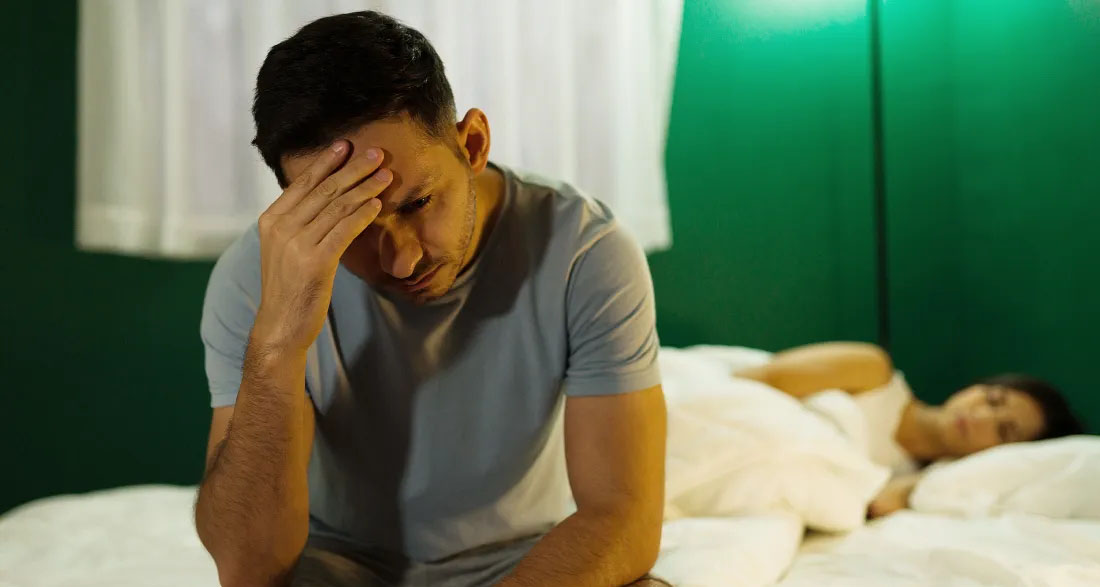
My husband and I used to have one of those quiet, easy marriages people envied… until the night he suddenly packed up his pillow, walked into the guest room, and locked the door behind him.
At first, I honestly thought it was because of my snoring.
But the truth turned out to be something I never could’ve imagined.
My name is Anna. I’m 37, and I’ve been married to Ethan for eight years. Up until a month ago, I would’ve described our marriage as steady, comfortable, and maybe even a little boring—but in that sweet, “we’ve been through life together” kind of way.
We weren’t the couple making grand gestures or dramatic declarations, but we were close. We finished each other’s sentences, knew which mug the other preferred in the morning, and could tell when one of us was stressed just by the way we sighed.
Our life was small but warm: a two-bedroom house, an herb garden that I constantly forgot to water, and two cats who only remembered we existed during mealtimes. Weekends meant pancake mornings, failed DIY projects, and Netflix shows we fell asleep halfway through.
We had survived so many storms—health scares, infertility, miscarriages, layoffs. The kinds of things that either bond people together or tear them apart. And somehow, we’d always found our way back to each other.
Which is why none of this made sense at first.
The first night Ethan brought up my snoring, he came into the bedroom rubbing his eyes, looking tired but trying to be sweet.
“Sweetheart,” he said, giving me a small smile, “I love you, but lately you’ve been snoring like a leaf blower on overdrive. I haven’t had a solid night’s sleep in weeks.”
I laughed. Like, actually belly-laughed. I teased him about being dramatic, he kissed my forehead, and then he carried his pillow into the guest room like he was checking into a hotel for fun.
“Just for a night or two,” he promised.
The next morning, I joked, “If you’re staying in there, you better start delivering room service.” He smiled, but something about his face was… off. Now I know that smile wasn’t real.
A week passed.
Then two.
The pillow stayed in the guest room. His laptop and phone followed. And then—he started locking the door.
That’s when everything shifted in my gut.
One night I asked casually, “Why are you locking the door?”
He just shrugged and said, “I don’t want the cats getting in and knocking over my work stuff.” His tone was calm, easy, almost rehearsed.
Nothing he did was openly mean. But it felt like he was checking boxes instead of connecting with me. The hug goodbye, the “How was your day?”—they all felt too smooth, too polished, too… practiced. Even the way he kissed my forehead was starting to feel like a cover-up instead of affection.
He even switched to using the hallway bathroom instead of ours.
When I asked about that, he said, “Don’t worry so much, babe. I’m just trying to get ahead at work.”
But his voice had something in it—strain, maybe. Or guilt. Or fear.
I couldn’t name it, but it made my chest tight.
One night at around two in the morning, I woke up and reached across the bed out of instinct. His side was cold.
A faint light glowed under the guest room door.
I almost knocked… but I didn’t. I told myself I was imagining things.
The next morning he was already gone. No breakfast, no goodbye kiss—just a note: “Busy day, love you.”
Every night after that, it was the same excuse:
“You were loud again, honey. I need real sleep.”
“Babe, it’s just for my health.”
“It’s temporary.”
I started to believe I was the problem. Maybe he was really exhausted. Maybe I sounded like a chainsaw. Maybe he didn’t want to hurt my feelings.
I bought nose strips, herbal teas, sprays, humidifiers. I even propped myself up with so many pillows that I slept like a resurrected vampire.
Still, according to him, nothing helped.
But it wasn’t my snoring he was escaping.
He was living in that room. Hiding.
After three weeks of this, I started spiraling quietly inside my own mind.
Was he no longer attracted to me?
Was he disgusted by me?
Had I changed in ways I didn’t see?
My anxiety got so bad that I went to a specialist without telling him. The doctor suggested recording myself at night to check my breathing, timing, and snoring intensity.
So, I did.
That night, I set an old handheld recorder under my lampshade. It had enough battery to run all night. I whispered to myself, “Let’s see what’s really going on,” and pressed record.
In the morning, the second I opened my eyes, I grabbed the recorder and hit play.
For the first hour, it was boring—soft hums, a creaky ceiling, but no snoring. I fast-forwarded.
Still nothing.
Then, at exactly 2:17 a.m., I heard footsteps.
Not my footsteps. Ethan’s.
Slow, careful steps in the hallway… then the soft click of the guest room door.
My stomach dropped.
Then I heard a chair being pulled back. A sigh. Typing.
Not sleeping.
Not resting.
Not “getting his health on track.”
He was awake in that locked room. Every night.
Doing what?
The question ate at me all day.
That night at 2 a.m., I set my alarm. When it buzzed, I slipped out of bed and padded into the hallway.
The same faint yellow light bled under the guest room door. The typing sound was constant, steady, unmistakable.
I tried the doorknob. Locked.
Then I remembered something.
When we moved into the house, I made extra copies of every key. I kept them in a tin box behind the cookbooks because I lose things constantly.
Ethan didn’t know.
I felt almost sick with nerves as I crept into the kitchen and pulled out the tin.
Back in the hallway, I stood in front of the door shaking like I was about to open a horror movie jump-scare.
For a second, I almost knocked.
But no. I wanted the truth.
I slid the key into the lock.
The click was deafening.
I opened the door only an inch and peeked inside.
Ethan sat at the desk, lit by his laptop’s glow. He looked exhausted, shoulders slumped. Papers and takeout containers covered the desk. His phone was charging beside him.
But what made my blood run cold were the dozens of tabs open on his screen.
Email threads.
Payment platforms.
Message windows.
And right there in the center… a picture of a boy. Maybe 12. Big smile. Science fair project behind him.
My heart dropped.
I whispered, “Ethan?”
He flinched so hard he nearly knocked over his cup.
“Anna? What are you doing up?” he stammered.
“I could ask you the same thing,” I snapped. “What the hell is going on?!”
He stood, rubbing the back of his neck, eyes darting everywhere but at me.
“It’s not what you think,” he said. “I was just… catching up on freelance work.”
“Freelance work? At two a.m.? With the door locked?”
“I can explain,” he insisted.
“Then explain.”
He sank back into the chair like all the strength had drained from him.
“I didn’t want it to be like this,” he whispered.
“Like what?”
He lifted his head, eyes rimmed with red. “You’re right. I’ve been lying. But not because I don’t love you. I love you so much, Anna. I just… didn’t know how to tell you.”
“TELL ME WHAT?” I yelled.
His hands shook as he turned the laptop toward me.
The boy’s picture filled the screen again.
“Who is he?” I whispered.
Ethan swallowed hard. “He’s my son.”
The world literally tilted. I grabbed the desk to keep from collapsing.
“I didn’t know about him,” he rushed out. “Thirteen years ago I dated someone named Laura. We broke up. I moved states. She never told me she was pregnant.”
My voice was tiny. “And now?”
“She found me on Facebook two months ago. She said she’s sick—autoimmune disorder. She can’t work full-time. And she told me about Caleb.”
“Caleb,” I repeated, numb.
“We did a paternity test,” he added softly. “It’s real.”
I stared at him, shaking from anger and shock.
“So the snoring excuse? All lies?”
He winced. “I didn’t want to put more pain on you. After everything—the miscarriages, the infertility—I didn’t want to break your heart.”
“So you hid a child instead?” I shot back.
He nodded miserably. “I started taking online gigs at night to send them money. For Caleb’s braces, school, clothes… everything.”
My chest burned.
“You lied to me every night,” I said.
“I know,” he whispered. “And I hate myself for it.”
I sat down, staring at the laptop. The messages between him and Laura were polite, practical—not flirty.
“What happens now?” I asked.
“I don’t know,” he said honestly. “She wants Caleb to meet me. He’s been asking about his father.”
“And you want to meet him.”
“Yes,” he breathed. “I do.”
I closed my eyes.
“Then we’ll meet him together.”
His eyes widened. “You’d do that?”
“I’m not okay,” I told him. “But I won’t punish a child for something he didn’t choose.”
He broke. Tears streamed quietly down his face.
“No more secrets,” I said. “Or this ends.”
“I swear,” he whispered. “Never again.”
Two weeks later, we drove to a small library to meet Caleb.
He stood outside waiting, backpack slung over one shoulder, shifting nervously.
Ethan approached first. “Hey, Caleb.”
“Hi,” the boy said shyly.
Ethan gestured toward me. “This is my wife, Anna.”
I smiled gently. “Hi, sweetheart.”
He gave a tiny nod. “Hi.”
We spent the afternoon talking. At a diner, he told us about his robotics club, how he wanted to learn coding, how much he loved building things that beeped or spun or lit up.
He was sweet. Smart. A little awkward. And real.
Something inside me softened as I listened. Not forgiveness for the lie—but understanding that none of this was Caleb’s fault.
On the way home, Ethan quietly took my hand.
“Thank you,” he whispered.
“You don’t have to thank me,” I said. “Just be honest from now on.”
He nodded. “I will.”
That night, for the first time in weeks, he came back to our bed.
No excuses.
No locked doors.
Just us.
“Hey,” he whispered in the dark.
“Yeah?”
“I’m sorry for all of it.”
“I know,” I said softly. “But from now on, everything we face—we face together.”
He squeezed my hand. “Together.”
And for the first time in a long time, I believed him.
Because love isn’t just about comfort or routines—it’s about tearing down the walls, standing in the rubble, and choosing to rebuild anyway.
That night, with Ethan’s hand in mine, I realized we were already starting over.