

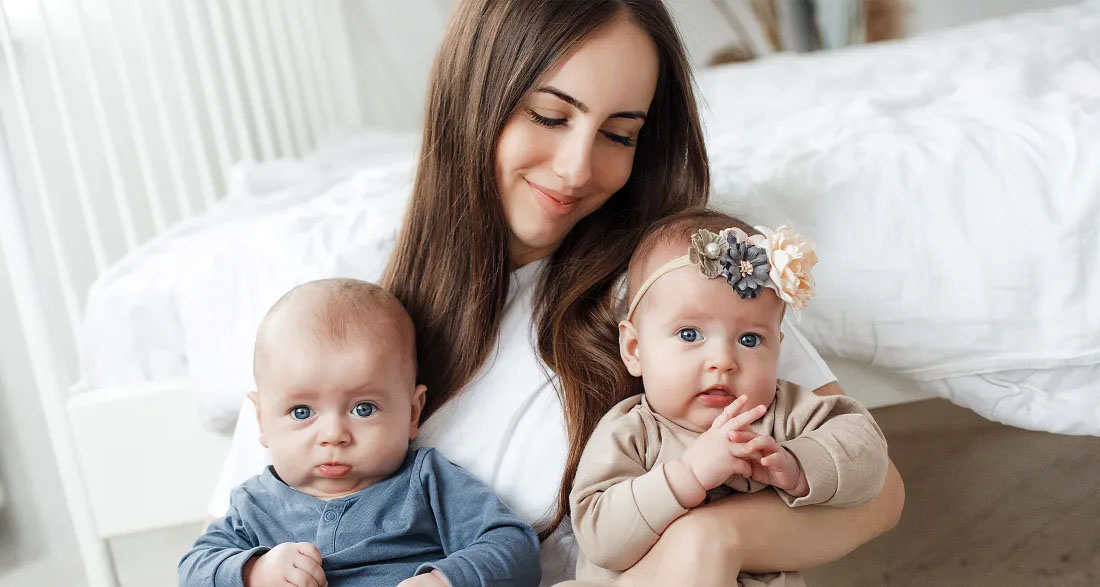
After my emergency C-section with twins, my husband’s attitude shocked me. Instead of offering support, he started criticizing my housekeeping and demanding home-cooked meals, even while I was recovering and caring for two newborns around the clock.
When he actually called taking care of our babies a “vacation,” I knew it was time to show him exactly what my days were like.
My name is Laura, and I’m 35 years old. For years, I believed I had the perfect marriage. My husband, Mark, and I built everything together from scratch.
We weren’t rich, but we had our own small family business, something we poured our hearts into.
I handled client relationships and bookkeeping while Mark took care of the hands-on work. Every evening, exhausted but happy, we’d share Chinese takeout on the couch, laughing about the crazy customers we dealt with that day. We were a team in every sense of the word.
“One day, we’ll have little ones running around here,” Mark said once, gesturing to our cozy living room.
“Can’t wait,” I replied, snuggling closer to him.
We had dreamed of starting a family for so long. When I finally got pregnant, we were over the moon. But when the ultrasound technician announced we were having twins, Mark jumped out of his chair.
“Two babies!” he shouted in the doctor’s office. “I’m going to be a dad to two babies at once!”
He called everyone we knew that day—his mom, my parents, our friends, even our regular customers. He was so proud, already planning how he’d teach them about the business when they were older.
The pregnancy felt magical. Every night, Mark talked to my belly in silly voices for each baby. He read parenting books, assembled two cribs, and painted the nursery green since we didn’t know the genders yet.
“You’re going to be such an amazing mom,” he said one night, rubbing my back when I couldn’t sleep.
I felt loved, supported, and ready for anything.
But reality hit hard. The delivery didn’t go as planned. After 18 hours of labor, my blood pressure spiked dangerously high, forcing the doctor to order an emergency C-section.
“We need to get these babies out now,” she said, preparing for surgery.
Everything happened in a blur. One moment I was pushing, the next I was in the operating room under bright lights, machines beeping around me. Mark held my hand, but fear was written all over his face.
Minutes later, Emma and Ethan were born—healthy but tiny. Relief washed over me, quickly replaced by the harsh reality of recovery.
A C-section isn’t just a “different way” to deliver a baby—it’s major surgery. I couldn’t sit up without help for a week. Laughing or coughing felt like my body was being torn apart from the inside. Simple tasks like getting out of bed or lifting the babies shot pain through my abdomen.
And the babies… two tiny humans who needed everything, every two hours. Feeding, burping, changing, soothing—repeating in an endless cycle. Nights blurred into each other.
At first, Mark seemed supportive. “Just rest, honey. You’ve been through so much,” he’d say, patting my shoulder. He’d bring me water while I nursed, sometimes holding one baby while I fed the other. For the first few days home, I believed we were still a team.
But it didn’t last.
About a week in, he walked through the door, loosened his tie, and looked around the living room. Baby blankets draped over the couch, bottles on the coffee table, toys scattered on the floor.
“Wow,” he said, chuckling. “Didn’t realize I lived in a toy store now. You had all day and couldn’t put things away?”
I was sitting on the couch, still in pajamas, Emma sleeping against my chest. I’d been up every hour the night before.
“Sorry,” I said quietly. “I’ll try to do better tomorrow.”
I thought it was a harmless joke. But a few days later, he sniffed the air like something smelled bad.
“No dinner again?” he asked, opening the empty fridge. “Laura, you’re home all day. What do you even do?”
His words hit me like a slap. I’d sterilized bottles at 3 a.m., changed diapers every hour, rocked crying babies while biting my lip against the incision pain, pumped milk while one screamed and the other needed feeding. Yet I just whispered, “I’m sorry. I’ll order pizza.”
“We can’t keep ordering takeout,” he said. “It’s expensive and not healthy.”
I wanted to scream, “When do you expect me to cook? I can barely shower!” But exhaustion silenced me.
His criticism became daily. Every evening, he found something wrong. The living room wasn’t picked up. Dust on the coffee table. Baby bottles scattered across the kitchen counter.
“Other women manage just fine,” he said one evening, throwing his jacket over a chair. “My mom had four kids and kept a spotless house. Some women have three or four babies and still make dinner every night. Why can’t you?”
I was nursing Ethan while Emma fussed in her bouncer, my incision throbbing.
“Mark, I’m still healing,” I said. “The doctor said six to eight weeks. Sometimes I can’t even bend without pain.”
“Excuses, Laura. You’re home all day while I work to support the family. The least you could do is have dinner ready.”
“I was up every hour last night,” I whispered. “Ethan wouldn’t stop crying, Emma refused to nurse. I haven’t slept more than 30 minutes at a time in three weeks.”
“You chose to be a mother,” he said coldly. “This is what comes with it. Stop acting like you’re the only woman who’s ever had babies.”
I stared at him. This wasn’t the man I married.
That night, after finally getting the babies down and crawling into bed, he turned to me with one final blow:
“If you can’t handle this, maybe you weren’t ready for twins.”
His words echoed in my mind long after he fell asleep. I lay there, listening to the baby monitor, wondering how my loving husband became someone I barely recognized.
The next morning, I made a decision. If he thought staying home with babies was a vacation, he needed to experience it himself.
“Mark, I need you to take a day off work next Tuesday,” I said over breakfast. “I have a full-day follow-up for my C-section. I can’t bring the twins.”
“A whole day off? That’s a lot to ask,” he said.
“It’s important. I need to make sure I’m healing properly,” I replied firmly.
He leaned back. “Fine. Might be nice to have a break from the office. A whole day at home sounds like a vacation compared to dealing with clients.”
My stomach twisted at his words, but I smiled. “Great. I’ll make sure everything’s ready for you.”
“Laura, please,” he chuckled. “How hard can it be? Babies sleep most of the day, right? I’ll probably watch TV, maybe nap myself. You worry too much.”
I nodded silently, already planning how he’d see the truth.
I prepared everything: bottles in the fridge, pre-measured formula, stacked diapers, fresh clothes, even a schedule. Baby monitors were set strategically around the house so I could watch from my friend Sophie’s across town.
“This is either the best or worst thing I’ve ever done,” I told Sophie.
“Trust me,” she said. “He needs this.”
Tuesday morning, Mark lounged on the couch, remote in hand, looking relaxed.
“Have a good appointment. Don’t worry about us,” he said.
I kissed the babies goodbye and left.
At first, he looked confident. “This is going to be easy,” he muttered as Emma and Ethan slept.
But soon, Ethan whined. Mark glanced over, did nothing. The whining escalated into crying.
“Okay, okay,” he said, picking up Ethan like he was made of glass. “What’s wrong, buddy?”
He fumbled with the bottle, spilling formula. Emma woke, crying too. Chaos erupted.
Diaper changes were disasters. Blowouts left him gagging. By noon, the living room was a war zone—bottles, diapers, and burp cloths everywhere. Mark, sweaty and frantic, muttered, “This is insane… how does she do this every day?”
By 3 p.m., both babies had spit up, waking each other. Mark collapsed on the floor, whispering, “I can’t do this. I can’t do this anymore.”
When I returned at 6 p.m., my husband looked beaten. His clothes stained, hair messy, eyes red. He ran to me, grabbing my hands.
“Laura, I’m so sorry,” he said, voice shaking. “I had no idea. I thought you were exaggerating. One day! How do you do this every day?”
I held his hands. “This is my reality, Mark. Every day, every night. And I do it because I love them.”
Tears filled his eyes. He dropped to his knees.
“Please forgive me. I’ll never criticize you again. I’ll help. I can’t let you do this alone anymore. I’ll be the partner you deserve.”
That night, he washed bottles, prepared for the next day, and when Ethan woke at 2 a.m., he whispered, “I’ve got him. You rest.”
In the following weeks, Mark got up early for morning feedings, left little notes on my coffee mug: “You’re amazing. Love you.” He rolled up his sleeves instead of criticizing.
One evening, as we sat on the couch with both babies calm, he said, “I don’t know how you survived those first weeks. You’re stronger than anyone I know.”
I smiled, tears in my eyes. “I didn’t just survive. I dragged myself through them. But now I can breathe again.”
He kissed my head. “We’re in this together now. Always.”
That day taught us both a lesson. Mark learned being home with babies isn’t a vacation—it’s the hardest job. And I learned sometimes, you have to show someone the truth in a way they can’t ignore.
Now, our partnership is stronger than ever. Marriage isn’t about one person working while the other stays home. It’s about recognizing we’re both working hard and supporting each other through the beautiful, exhausting chaos of raising our family.