

My husband used my mom’s cabin to cheat with his coworkers, but catching him was only the first crack in the mask. What came next was finding out who he truly was — and who I was becoming.
My name is Ashley. I’m 33, born and raised in western Massachusetts. I spend my days drowning in contracts, spreadsheets, and deadlines. When the city noise gets too loud — when traffic, coworkers, and office gossip start feeling like a swarm — I don’t run to a bar or a yoga studio like other people.
I go to my mother’s cabin.
Or… I used to.
My mom died three summers ago. I can still feel that summer like it never ended. I had just turned 30 when cancer took her. It came fast, but somehow it lingered long enough to scar everything it touched. She was 57 — stubborn, fierce, soft in the places that mattered.
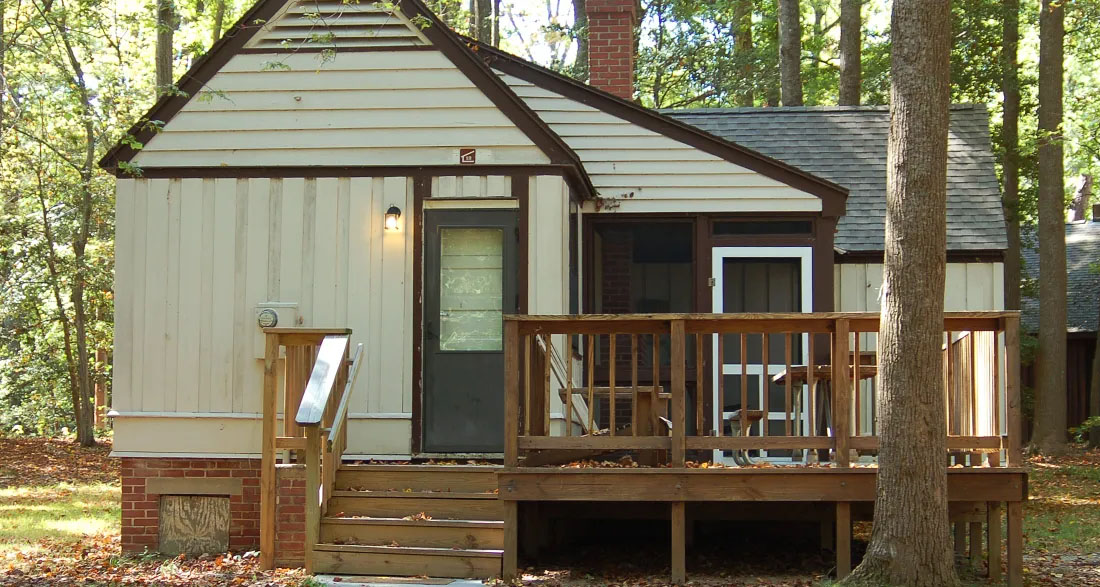
The cabin was her sanctuary. A tiny two‑bedroom pine hideaway tucked between a maple grove and a creek that whispered all year. She called it her “quiet house.” I used to tease her and say, “Mom, it’s too quiet,” and she’d laugh and reply, “That’s the point, Ash.”
When she left it to me, it wasn’t just a building. It was holy.
The porch sagged like an old tired smile. The woodstove coughed instead of heating. The roof complained during storms.
But it was the only place where my thoughts straightened out.
Sometimes, sitting there alone, I swear I could still hear her voice.
I kept the cabin exactly the way she left it. Her quilt draped across the couch. A jar of her dried lemon balm sitting on the window sill like a tiny shrine. The old chipped green mug we used during blackberry season still waiting in the cupboard.
I protected that cabin like a heartbeat.
Nobody else touched it — especially not Liam.
Liam is my husband. Thirty‑four, charming, tall, and always radiating warmth. He’s the kind of man who fills a room with his presence even when he doesn’t speak. But he hated the cabin.
The one time I invited him, he wrinkled his nose and said,
“It’s too far. There’s no Wi‑Fi. No delivery. Babe, you spend more on gas than therapy would ever cost.”
He preferred electric fireplaces, sushi delivery apps, and the sound of his phone buzzing with notifications. I preferred the silence of trees.
So I let the cabin remain only mine.
Until the day I learned I wasn’t the only one using it.
The day everything cracked
It was a brutal Tuesday. The kind of day that sinks its teeth into your bones. A client yelled at me for an hour about a late contract. Madison, the team lead, stole an idea straight from my mouth and got praised for it.
Then a jackknifed truck blocked the on-ramp for three straight hours on my way home.
I couldn’t breathe. I needed the cabin the way lungs need air.
Without thinking, I texted Liam:
“Going up to the cabin for a few hours — be back for dinner?”
He didn’t reply. Fine. Maybe he was in a meeting.
I grabbed my bag, my flannel, and started driving. The trees shifted into deeper colors as I got closer, like even nature knew I needed calm.
I turned onto the gravel lane —
and froze.
His car was already there. Parked on my mother’s sacred ground like it belonged.
My heart dropped straight through my ribs.
He hated this place.
He never came here.
Not once.
I killed the engine but left it running just in case. My boots barely touched the ground as I circled to the side window.
Maybe he planned something sweet? A surprise? Maybe he finally changed his mind?
I peeked inside.
Liam was on the couch, shoes off, beer in hand.
Smiling.
And next to him — a woman. Maybe late 20s. Curled up comfortably, laughing at something he had just whispered to her. She leaned in close. He leaned closer.
They looked perfectly in place.
Like they had done it before.
My heartbeat became a slow, ugly thud. I didn’t gasp. Didn’t cry. I simply turned, walked back to my car, and drove home in silence.
That night I scrubbed the kitchen sink until my knuckles ached. I made dinner and left it on the stove. I still didn’t cry.
The cameras
The next morning, I bought three wireless cameras. Small, black, so discreet even an insect wouldn’t notice.
Porch. Driveway. Living room window.
I lied to myself as I set them up.
“If there’s ever a break-in…” I muttered to my reflection.
But I already knew.
And I didn’t have to wait long.
Friday night: his car. Then hers.
Only this time, a different woman. Tall, slim, red coat.
They walked inside laughing softly. She slid off her shoes like she lived there. Like she had done it before.
And then came more.
A cycle.
A pattern.
Every week: new woman, same routine. Soft voices. Wine. Practiced touches.
One night he even brought a male coworker who arrived with a six-pack and a stupid grin, like he was attending some private club.
My stomach twisted each time — but it was the notebook that truly broke something open.
The ledger of betrayal
I was grabbing a sweater from Liam’s home office when I noticed the black notebook on his desk.
Something told me to open it.
My hands shook before I even touched the cover.
It wasn’t a journal.
It was a ledger.
Names. Initials. Dates.
And ratings.
“7/10: good laugh, fun in the kitchen.”
“8/10: brings wine, stays late. Quiet.”
“Top Picks / Best Getaway” scribbled at the end.
My vision went cold.
This wasn’t cheating.
This was a hobby. A game. A catalog.
I photographed every page, then sat on the edge of his desk. Not grieving — not yet. I just felt hollow.
When he came home, I smiled like nothing was wrong. I kissed him, asked about his meeting. He called me “unflappable” with a smirk.
He had no idea who he was playing with.
So when he suggested a weekend getaway at the cabin, softly saying,
“Just us, babe. No phones. Reconnect.”
I smiled back.
“Sounds good.”
The night the truth walked through the door
Friday came. We packed the car like newlyweds. He even brought his favorite plaid shirt.
I brought my mother’s quilt. And the wedding album. And his black notebook.
At the cabin, dusk settled like a sigh. I made coffee, opened wine, and placed our wedding album right on top of his filthy ledger.
Let him see the difference between real and fake.
At ten, the gravel outside crunched.
The porch light flicked on.
She walked in — the latest woman. The way she stepped inside made it clear she knew every room.
Liam didn’t even look panicked at first. He stared at her, then at me, his face draining of color.
I didn’t move.
I didn’t yell.
“Make yourselves comfortable,” I said calmly from the kitchen.
“The kettle’s on.”
She froze.
He swallowed hard.
The silence thickened around us.
I reached into my pocket and unfolded a piece of paper — printouts from his notebook.
I slid it across the table.
“Thought you might want to see this.”
He saw his own handwriting and went pale.
He whispered, “Is this—”
“Yes.”
He whispered, “You’re being dramatic.”
I smiled. Slow. Dangerous.
“Am I?”
I leaned in.
“Tell me, Liam… when you bring them here — when you sit where my mother used to knit — do you imagine I don’t know? Do you imagine this place is yours to ruin?”
He said it was nothing.
Just fun.
Just feeling “important.”
“No,” I said. “You mean powerful.”
He didn’t argue.
Then I slid an envelope toward him. Inside was a thumb drive.
Every video. Every clip.
“This is everything,” I said quietly. “Everything you did.”
He whispered, “You recorded me?”
“You recorded yourself,” I replied. “I just saved it.”
Then I gave him his choices:
Tell me the truth — all of it — or I could send everything to HR, to his boss, to the partners of every woman he brought here.
His jaw shook.
What he told me wasn’t an apology. It was a confession soaked in excuses. A pathetic story about attention and fading glory at the office.
I slept under my mother’s quilt that night. He stayed on the couch, small and shrunken.
Consequences don’t need help
The unraveling began immediately.
Rumors spread at his office. Someone found a printed page — maybe one of the women. Another told her fiancé.
HR got anonymous complaints.
His team left him out of meetings.
Email threads didn’t include him.
His jokes stopped landing.
His charm dried up like spilled wine.
At home, things broke quieter.
I changed the cabin locks.
I replanted Mom’s lemon balm.
I reclaimed the porch.
Liam begged to come back to the cabin one day.
Voice shaking.
“Just for a few hours. Please.”
“No,” I said. “Not ever.”
Two months later, he moved out. Not because I demanded it — because he had nothing left to cling to.
He tried one last line at the door.
“We could try counseling.”
I handed him a box of books.
“I know,” I said. “But I won’t.”
A year later
He has a dull desk job now. No flirtations, no games. He texts sometimes:
“Sorry.”
“Hope you’re okay.”
“Can we talk?”
I never respond.
The cabin is mine again.
Whole. Quiet. Safe.
I fixed the porch. Repainted the shutters. Repaired the stove.
One evening, I took that black notebook and burned every page in the fire drum. The flames curled around his words like they were ashamed to exist.
The ashes drifted into the trees — my mother’s trees — and vanished.
Sometimes, when I drive up that dirt road, I remember the old version of myself. The thin, tired woman who broke easily.
She’s gone.
What’s left is someone softer but stronger. Someone who learned that silence can be sharp, and love can grow back even after being scorched.
And when I sit on the porch wrapped in my mother’s quilt, I swear I hear her voice again:
“You did the right thing, Ash.”
And for the first time in years,
I believe her.
I’m finally home.