

I’m 91, and for a long time, I had accepted that my life would end quietly.
No visitors, no phone calls, no knocks at the door—just me and the ticking of the old hallway clock. I’d watch the shadows creep across the walls, the house creaking as if it were trying to talk to me. That kind of lonely makes you feel invisible, like you’re see-through.
My husband had been gone for decades. My children moved away, started their own lives, and slowly drifted off. At first, there were visits. Then phone calls. Then texts. And finally… silence. Birthdays meant a single cupcake and the TV. Holidays were frozen dinners and reruns. I got used to it—or thought I had.
No one ever called for Jack.
Jack was the boy who moved in next door. He was twelve, skinny, lanky, and always had his skateboard glued to his hand. His cap was always backward, and he had a way of moving that made it clear he was practicing something, always learning.
I’d see him in the evenings, skating up and down the sidewalk. He would fall, grimace, get up, and try again. Other kids had parents calling them inside for homework or dinner. Not Jack. His house stayed dark, even at night. No lights, no car in the driveway. No one ever called for him.
I told myself I wasn’t being nosy. I was just observant. That little lie lasted until the night I heard him crying.
It was late. The kind of late where the world outside is quiet except for the hum of distant traffic. I woke to a soft sound, not the TV, not the pipes, not the creak of the house… sobs. Muffled, broken sobs that made my chest tighten.
I held my breath.
I pulled on my robe and slippers and shuffled to the front window, peeking through the curtain just enough. There he was—Jack. Sitting on his porch, knees pulled to his chest, arms wrapped around them, shoulders shaking. His cap lay beside him. No porch light. No glow from inside.
Before I could second-guess myself, I opened the door and stepped outside.
“Jack?” I called softly. “Honey, are you okay? Are you cold? Is your mom home?”
He jerked his head up. His face was streaked with tears. He looked terrified, like he’d been caught doing something wrong.
“I’m fine,” he blurted, voice cracking. “I’m fine.”
“Are you cold? Is your mom home?” I asked again, taking a step closer.
He stared at me. Then, without another word, he grabbed his cap, ran inside, and slammed the door. The sound echoed down the street.
I shuffled back to my house, old and useless, and couldn’t sleep a wink that night.
The next day, I watched his house like a hawk. By seven, my stomach felt like a clenched fist. Usually, he’d come out with his skateboard after school. That day… nothing. Four o’clock. Five. Six. Porch dark, curtains unmoved.
“Just say something so I know you’re okay,” I whispered to the empty street.
I baked a pie to give my hands something to do. Apple—my favorite. When it cooled, I carried it next door and knocked.
“Jack? It’s Mrs. Doyle. I brought pie.”
Silence. I knocked again. Still nothing.
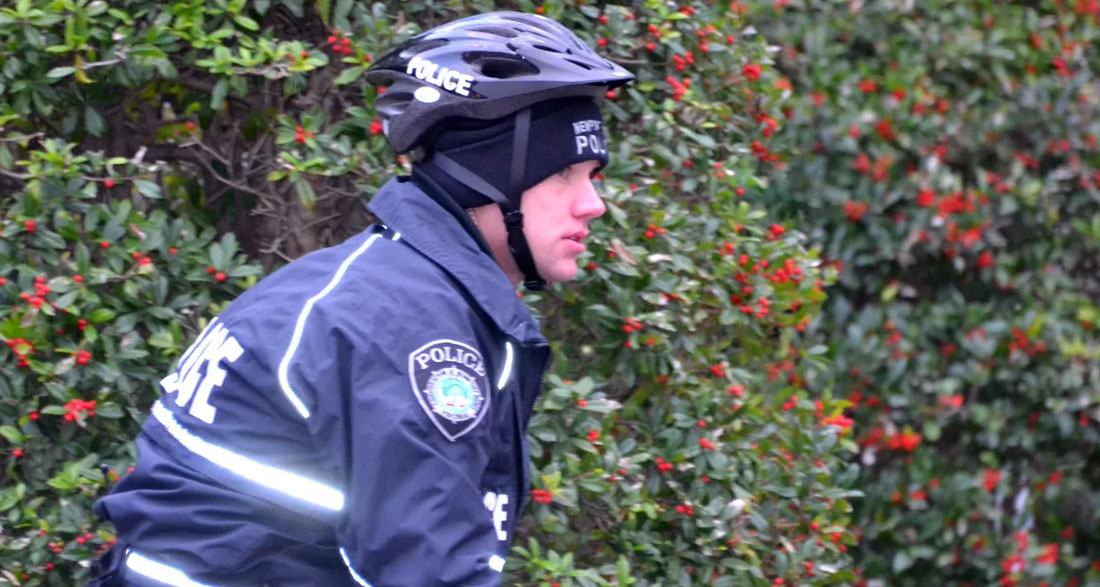
By morning, I’d made up my mind. I called a taxi—I don’t drive anymore, and at ninety-one, I shouldn’t—and went to the police station.
The officer at the front desk looked barely older than Jack.
“Ma’am, can I help you?” he asked.
“I hope so,” I said. “I’m worried about a boy on my street. I might be wrong. But if I’m right and say nothing…”
“You did the right thing coming in,” he said kindly, grabbing a clipboard.
I told him about the crying, the dark house, the unanswered door. He didn’t laugh. He didn’t dismiss me.
A few minutes later, a calmer, older officer joined us.
“Helen?” he said, shaking my hand. “I’m Murray. Tell me about Jack.”
So I did. Again. My hands twisted in my lap.
“I know I’m just the old lady next door,” I said, “but if something happens to that boy and I sat on my hands…”
“You’re not ‘just’ anything,” he said quietly. “You’re someone who noticed. That matters.”
That afternoon, Officer Murray and I walked to Jack’s house together. He knocked firmly, not aggressively. The door opened a crack. One eye, one slice of a face peered out.
“Hi. I’m Officer Murray. Your neighbor was worried,” he said gently.
Jack’s gaze flicked to me, then back.
“Is your mom home?” Murray asked.
“She’s working,” Jack said.
“Mind if I step in and talk for a minute? You’re not in trouble. I just want to make sure everything’s okay.”
“Do you have a warrant?” Jack asked, narrowing his eyes. Twelve going on forty.
“No warrant,” Murray said. “I’m just here to check on you.”
From somewhere inside, we heard a loud crack, like something heavy had fallen. My heart leaped. Murray stiffened.
“The house is old,” Jack said quickly.
We went inside. The place felt wrong. One ancient couch, a wobbly table, boxes, no signs of adult life. Dishes piled in the sink, trash overflowing, a pot burned solid on the stove. One mattress on the floor. A backpack. A skateboard. That was it.
“How long has your mom been gone?” Murray asked.
Jack shifted, tugging at his sleeve. “A week… or nine days. Mom sends money when she can. She had to help my grandparents. There wasn’t room for me. She said I’d be okay.”
“You shouldn’t be handling this by yourself,” Murray said softly.
“I’m almost 13,” Jack said, as if that made it fine.
“Please don’t take me away,” he whispered, turning to me. “Tell him I’m okay, Mrs. Doyle.”
I knelt in front of him, knees complaining. “You’re not okay. You’re scared and alone, pretending you’re not. That isn’t okay.”
Murray turned to me. “If we get his mom’s permission and clear it with CPS, would you be willing to have Jack stay with you for now?”
“You’d want me there?” I asked.
“Yes,” he said.
Jack blinked fast. “You’d want me there? I’m loud. I fall a lot. I forget stuff.”
“I’ve had too much quiet and not enough falling,” I said. “We’ll manage.”
That night, Jack stayed in my guest room. Backpack, game console, skateboard, everything.
We settled into a routine. I made breakfast. He pretended to hate oatmeal, then scraped the bowl clean. We did homework together. We laughed until our stomachs hurt. He showed me superheroes; I showed him black-and-white films where people talked.
Weeks later, his mom came back. Tears in her eyes, she said, “You can’t disappear like that again.”
Jack flew into her arms. “I know,” she cried. “I thought I was doing what I had to.”
Life wasn’t perfect, but it was better. Jack sometimes stayed at my place, sometimes at his mom’s. But he was always part of my life. He grew taller, his voice deepened, he carried my groceries, and scolded me for climbing stools.
Then came the word: cancer.
“At your age, we focus on comfort,” the doctor said gently.
I went home, pulled out my will. My children’s names were still on it, but they hadn’t come around in years.
By the time I finished, everything I had—my small savings, jewelry, this little house—was left to Jack and his mother.
“Why us?” Jack asked.
“Because when I was alone and ready to disappear, you sat on my couch, ate my bad oatmeal, and let me be your grandma. You gave me a reason to wake up.”
“You’re stuck with me,” he said, hugging me tight.
“Good,” I said. “Somebody has to be.”
I don’t know how much time I have left, but I know this: I won’t leave this world as a ghost in an empty house. This house will stay full of life long after I’m gone—skateboard marks on the steps, pencil lines on the wall where we measured Jack’s height, laughter spilling out of the windows.
All because one night, I heard a kid crying and decided not to look away.