

“You and your child mean nothing to me.”
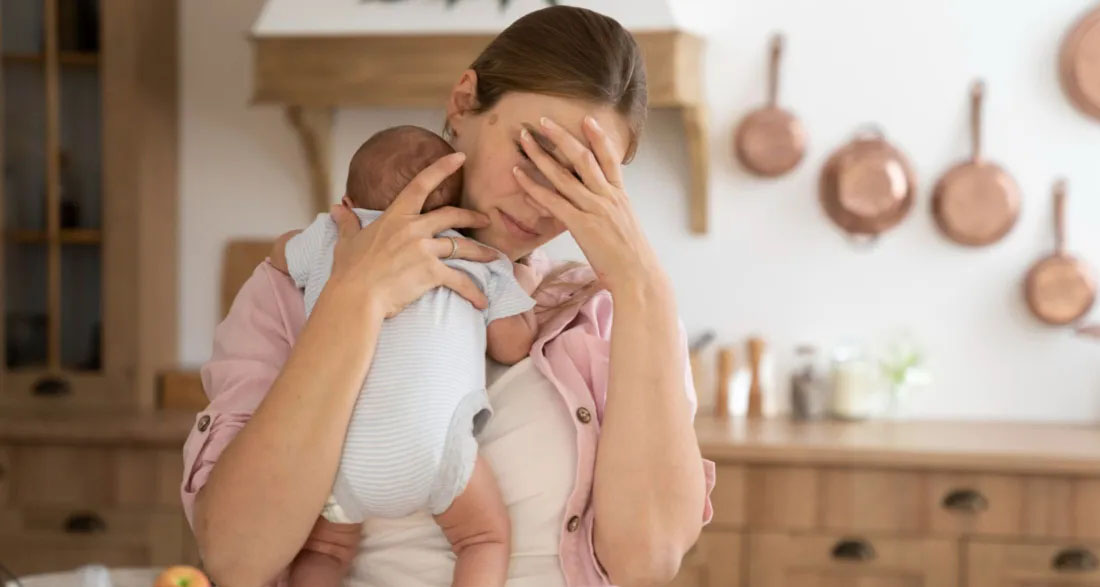
Those words hit me like a punch to the gut. That was the last thing my mother-in-law, Deborah, said before slamming the door in my face. Two days after I buried my husband, she threw me and our newborn son out like trash.
I’m Mia. I was 24. My three-week-old son, Noah, was in my arms, still wearing the same funeral clothes I’d worn to say goodbye to Caleb. The apartment we’d shared was no longer mine.
“Where am I supposed to go?” I whispered, my voice shaking, almost breaking apart.
Deborah glanced at Noah, her eyes cold, sharp, like she’d bitten something sour. “Not my problem!” she said, then turned and locked the door.
I stood there, stunned, holding Noah as his tiny cries filled the hallway. My suitcase, diaper bag, and Caleb’s hoodie—the only thing I grabbed that wasn’t strictly necessary, but still smelled like him—were all I had. I didn’t know where to go, but I had to move. Survival didn’t wait for grief.
Let me rewind so you understand how we got here.
Caleb and I tried for years to have a baby. Doctors, tests, tears in the bathroom when no one was watching, pretending to be okay while feeling broken inside. When I finally got pregnant, we cried together on the bathroom floor.
Caleb whispered to my belly, “We’ve been waiting for you, my love. We can’t wait to meet you.”
When Noah was born, he had a huge birthmark covering half his face. The hospital room went quiet, the kind of quiet people think is polite, but really it’s judgment. My heart dropped. I panicked because I knew how cruel strangers could be.
Caleb, though… he didn’t hesitate. He kissed Noah’s head gently and whispered, “Hey, buddy. We’ve been waiting for you, my love.”
Something inside me melted. Noah was wanted. Loved. Completely.
Deborah? She stared too long at Noah’s face, then looked at me like I’d painted that birthmark myself. “Well… you never know what really happened,” she said, her words like seeds of doubt falling on my heart. Caleb always tried to protect me, saying, “Ignore her. She’ll come around.”
But she never did.
And then, out of nowhere, Caleb was gone. A heart attack at 27. One normal day, and the next, a phone call that froze my blood. The funeral was a blur. I clutched Noah like an anchor; if I let go, I would drift away completely. Deborah cried loudly, like grief needed an audience.
A week later, she showed her true colors.
She walked into the apartment that was technically hers to enter—it was in her family’s name—and looked at me flatly. “You need to leave,” she said.
“Deborah, please,” I begged. “I just need time to figure things out.”
Her gaze slid to Noah. Her mouth twisted. “He probably isn’t even Caleb’s. You got pregnant somewhere else and tried to trap my son.”
My world shattered.
“You have no right to this apartment,” she spat. “You should be grateful I’m not calling the cops.”
And just like that, I left. With a suitcase, a diaper bag, Caleb’s hoodie, and my newborn. Weeks of survival followed: friends’ couches, cheap motels, anywhere that would take me. Every time Noah cried, I felt like I was failing him. Every stare at his birthmark made me wish I could vanish.
One rainy afternoon, walking home from the grocery store with Noah strapped to me, a car splashed water over us. A young woman jumped out, furious at first, then froze when she saw me crying, holding my drenched baby.
“Oh my God… are you okay? What happened?” she asked, concern breaking through.
I broke down completely. I told her everything—Caleb’s death, the funeral, being kicked out, Deborah’s cruelty.
The woman listened without interrupting. When I finished, she said softly, “I know that kind of woman. My stepmother did the same thing after my father died. I know the pattern. I know the cruelty that hides behind family.”
“My name’s Harper,” she added. “I’m a lawyer. I can help you.”
A few days later, Deborah called. Her voice was sweet, soft. Like nothing had happened.
“Mia,” she cooed, “I want you and the baby to come for dinner. I’ve been thinking… I don’t want us to be enemies.”
Grief made me stupidly hopeful. Maybe she’d seen Noah and realized he was the last piece of her son.
I went.
The dinner felt surreal. Candles, warm food, and Deborah, suddenly doting, calling Noah “my precious grandson.” She even touched my hand. I almost believed her.
Then she said, casually, “Caleb saved a large amount of money. He was planning to buy you a house. He left it to you in his will.”
My heart raced. Caleb had been secretly planning a future for us.
Deborah leaned in, sweet smile slipping, her words sharp. “But I think we should discuss how that money gets divided. After all, I raised Caleb. I sacrificed everything for him.”
I froze.
“I’m saying I deserve most of that money. You were just his wife. I’m his mother. You need to know your place,” she hissed.
Her mask fell away. Threats replaced warmth. “If you don’t agree, I’ll make sure you get nothing. I’ll fight you until you’re broke. You’ll never see a dollar.”
I left, shaking, holding Noah. I called Harper immediately.
“She wants the money. She wants everything Caleb left for us,” I whispered.
Harper’s voice went hard. “Let me handle this.”
Weeks of nightmare followed, but this time, I had backup. Harper sent official letters. Deborah tried every trick—twisting stories, calling me a gold digger, hinting at grandparent rights. But we had proof, documents, and the paper trail. Finally, Deborah lost.
The money was ours. Caleb’s love had built a safety net even after he was gone. I sat in Harper’s office, holding Noah.
“It’s done,” she said.
I didn’t cry at first. Then the flood came. Ugly, messy crying. Relief mixed with grief.
A month later, I signed papers for a small house. Not fancy. Just ours. On moving day, sunlight poured through the empty rooms. I held Noah, looking at his birthmark soft in the warm light.
“You’re here. We’re here. We made it,” I whispered.
Deborah never apologized. She never acknowledged her cruelty. And I didn’t need her to.
I learned something powerful: love doesn’t end with death. It transforms. It becomes the choices people make, the plans they leave behind, the safety they build. Caleb’s love was still here. Noah was safe. And that’s more than Deborah could ever understand.
Family isn’t just blood. Family shows up, fights, protects. Harper showed up when my own family didn’t. She became family by choice.
Now, rocking Noah to sleep in our little home, I tell him about his father. About love that survives loss. About protection, hope, and fighting for what matters.
Because that’s what real families do. They show up. They fight. They love.
And that’s the only family worth having.