

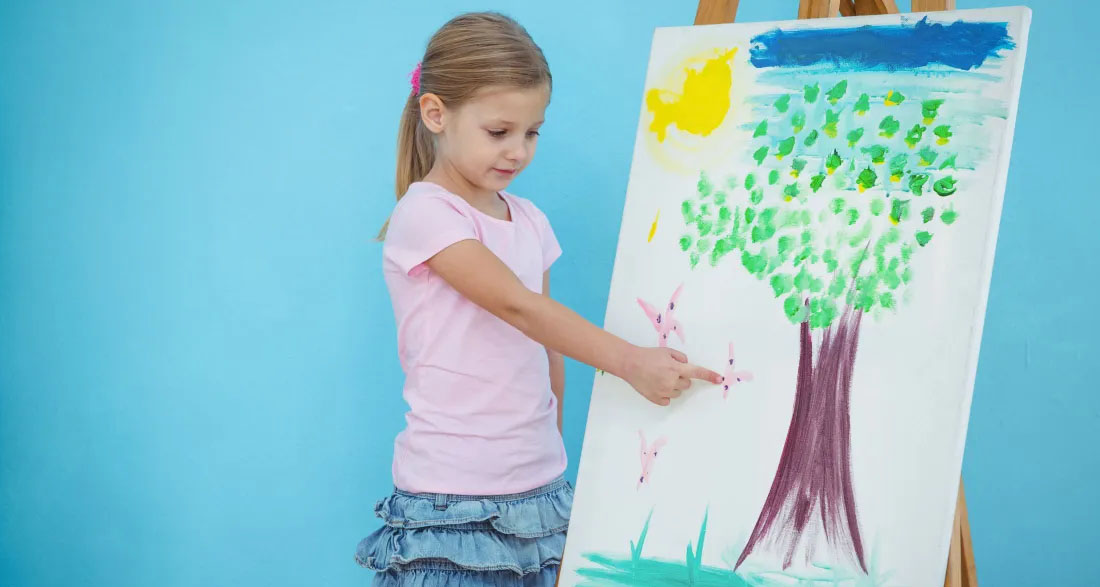
When my daughter stopped bringing home her artwork, something in my chest clenched. Something was off.
Fighting cancer had already stolen so much from me—my strength, my energy, my mornings where I could barely hold a mug of tea.
Yet I had no choice but to trust my mother-in-law, Debbie, despite all the tension and history between us. One secret drive would change everything, forcing me to confront the truth about family, forgiveness, and how love can show up in the most unexpected ways.
When your life boils down to doctor visits, white walls, and the rhythmic drip of chemo, you start noticing the tiniest things.
You notice the house growing quieter.
You notice the fridge staring back at you, empty of your daughter’s latest masterpieces.
My daughter, Ellie, is six.
And I’m Wren, her mother, battling cancer.
Before I got sick, art had been ours. Our sanctuary. A bridge between the chaos of the world and our little universe.
Our home was overflowing with her messy, bright paintings: crooked suns with purple rays, five-legged stick cats, green dogs that seemed to bounce off the walls. Glitter in her hair, paint on her sleeves—Ellie would practically sprint into the house yelling:
“Mama! I made the best thing today!”
But now? The fridge looked tired. Paper rainbows curled at the corners, weeks old. No new suns. No painted unicorns leaping across construction paper. Only silence, punctuated by my panic—the fear of yet another thing slipping from my grasp.
Art had been our thing. And now it wasn’t.
I tried to be grateful. Debbie stepped in when chemo left me too weak to drive, though she made sure I remembered who was really in charge.
“I can handle two little classes, Wren,” she said, tossing her keys into her purse like she was heading to a board meeting. “You need to focus on getting better, not school pickups.”
I forced a small smile, feeling that old familiar tug of resentment. “I appreciate it. Just let me know if you need help with the money.”
She sniffed. “I’ll manage. You just worry about yourself.”
Still, I handed her $25 for every class, even when the grocery budget got scary tight.
Later that night, my husband, Donald, found me at the kitchen table, counting quarters.
“Wren, we’re okay, right?” he asked, frowning at the small pile of coins.
“We are,” I said, forcing reassurance. “I just want to keep Ellie’s routine normal. She loves art. She shouldn’t lose that too.”
He touched my hand gently. “She won’t lose anything. And Mom’s committed to helping.”
At first, it seemed fine. Ellie came home pink-cheeked, shoes thudding, talking about unicorns, paint splatters, and glitter. Debbie waved a receipt, mentioned the lesson themes, and life seemed, almost, normal.
But slowly, I began to notice the changes.
One Wednesday, Ellie dropped her backpack and rushed to wash her hands. No paper. No “Mama! Look what I made!” at dinner.
“Ellie, what did you paint today, hon?” I asked, my voice steady though my stomach twisted.
She blinked up at me, then at Debbie, who was scrolling on her phone.
“The teacher kept it for an exhibition,” Debbie said quickly.
“Yeah. For an exhibition, Mama,” Ellie added, trying to sound casual.
I forced a laugh. “Wow. That must be a great painting.”
But my chest felt tight. Something in Ellie’s voice sounded off. I glanced at the fridge. The drawings there seemed to sag, as if they’d been waiting for weeks.
I tried to brush it off. Maybe she had forgotten.
The next week:
“Did you paint today, honey?” I asked, trying for casual.
Ellie shrugged. “The teacher kept it again.”
Debbie, almost too cheerfully, said, “Yes, all the kids had to leave their projects for display. Big end-of-term thing.”
Saturday came. Again, no new art, no paint-stained hands. This time, Debbie said, “Ellie spilled water all over it, ruined the whole thing. Didn’t you, sweetheart?”
Ellie nodded, lips pressed thin.
It was always a different excuse. Exhibition. Spilled water. Forgotten supplies. But Debbie’s eyes darted nervously, and Ellie’s nods were too careful.
I realized something terrifying: I hadn’t seen a single new project in over a month.
I asked Ellie one evening as I brushed her hair for bed, trying to sound casual:
“Honey, what did you make in art class today?”
She looked up, wide-eyed. “Of course we go to art school. Wednesday and Saturday. We don’t go anywhere else.”
“Honey, that’s not what I asked,” I said, my stomach dropping.
She hesitated, glancing at Debbie. My daughter, who once begged me to see every picture, now sounded like she was reading from a cue card.
The next morning, I called the art school, voice steady though my heart pounded:
“Hi, this is Wren. My daughter, Ellie… has she been attending her classes lately?”
A warm voice answered. “Ellie… no, ma’am. We haven’t seen her in about four weeks. Is everything okay?”
Four weeks? My throat went dry. Where had my child been going twice a week? Where was all that money going? Was Ellie safe? Was I missing something worse?
Friday morning came gray and cold. My hands shook as I reached for my coat. I watched through the blinds as Debbie’s red sedan pulled up, scarf knotted tight, sunglasses hiding her eyes. Ellie bounced to the door, backpack thumping.
“Mom, I’m going now!” she called.
“Have fun at class, sweetie,” I said.
Debbie’s sharp voice cut through my panic. “We won’t be late. I’ll have her back for lunch.”
I nodded, stomach churning. “Text me if you need anything. Please.”
Her hand hovered over the doorknob. “I always do,” she said automatically.
As soon as they left, I threw on Donald’s sweatshirt and boots, hardly recognizing myself in the mirror: pale, hollow-eyed, determined.
Out in the car, I followed them silently, counting breaths. At first, Debbie took the usual route past the grocery store, Ellie’s school, the bakery she loved. Then, without warning, she turned left, away from the Art Center.
My pulse spiked. “Where are you going?” I whispered.
The car rolled into an older neighborhood by the river, lawns wild, porches sagging. Debbie stopped in front of a faded green house. My heart sank—it was Helen’s house, her friend who was supposed to be away visiting her son in Australia.
I parked half a block away, sending Donald a quick text with my location. Heart pounding, I hurried to the house. I knocked. No answer. I tried the knob—it turned.
Inside, the smell of fabric softener and something sweet drifted through the air. A machine hummed in the background.
I followed the sound. There was Ellie, sitting at a table piled with scraps of fabric—pinks, blues, wild prints. She guided a tiny square under the needle of a sewing machine, tongue poking out in concentration. Debbie knelt beside her, steadying the cloth and adjusting the dials.
They froze when they saw me.
“Mom! You’re here!” Ellie exclaimed, eyes wide with surprise.
Debbie straightened, shoulders tense. “Wren, why did you follow us?”
“I could ask you the same thing,” I said. “Why lie about art classes? What’s going on, Debbie?”
For a moment, nobody moved. Ellie glanced between us, uncertain. Debbie exhaled.
“You shouldn’t be out in the cold, Wren. You look exhausted,” she said, voice strained.
I shook my head. “Don’t change the subject. You’ve been lying for weeks. Ellie, are you okay?”
Ellie nodded, clutching the fabric. “We wanted to surprise you,” she whispered, glancing at her grandma.
Debbie finally spoke, voice softer now. “We should have told you. I knew you’d try to do everything yourself. But that doesn’t excuse lying.”
Ellie’s small voice trembled. “I asked Grandma to teach me to sew. We wanted to make pretty things for you—hats, silk hair scarves—so you wouldn’t be sad. That’s why we came here. It felt more important than art class, Mama. And we wanted it to be a surprise.”
My chest loosened, the panic dissolving into a flood of relief and love.
Debbie swallowed hard. “I knew I should trust you, Wren. I thought… I thought coming from foster care meant you wouldn’t hold a family together. But I was wrong. I’ve watched you get knocked down, over and over, and still put Ellie first. I’ve watched you be her mother on the worst days of your life. That changed me.”
Donald arrived then, stopping in the doorway. Ellie ran to him, scarves clutched tight, explaining everything as he kissed the top of her head, eyes full of tears.
For the first time, I looked at those crooked, bright scarves and realized I didn’t just need them—they were a piece of our love, stitched carefully, secretly, across the weeks I’d feared we’d lost.
Later, at home, Ellie climbed onto my lap. She traced the pattern of my headscarf with her finger. “You look beautiful, Mom.”
I brushed away a tear and hugged her close.
That night, as I tucked her in, she whispered, “Can I help you tie your scarf tomorrow, too?”
“You can help every single day until my hair grows back, baby,” I said, smiling through tears.
The next morning, Debbie came by, nervous, with a basket of fresh pastries.
“I’m sorry, Wren. For everything. I signed Ellie back up for art class and I’ll pay for it myself. I should have trusted you—with my son, with Ellie, and with this. You’re stronger than anyone I know.”
We sat at the kitchen table, pastries and fabric before us, Ellie drawing new patterns on scrap paper. Life was still hard. Chemo days loomed, hair fell in handfuls, smiles sometimes faltered.
But every time I wrap one of Ellie’s scarves around my head—bright, uneven, stitched with love—I remember: love finds a way, even when you least expect it.