
I was abandoned on a stranger’s doorstep as a newborn and adopted by a single mom in a wheelchair.
Twenty-five years later, my idea of family was put to the ultimate test.
My name is Isabel. I’m 25 years old.
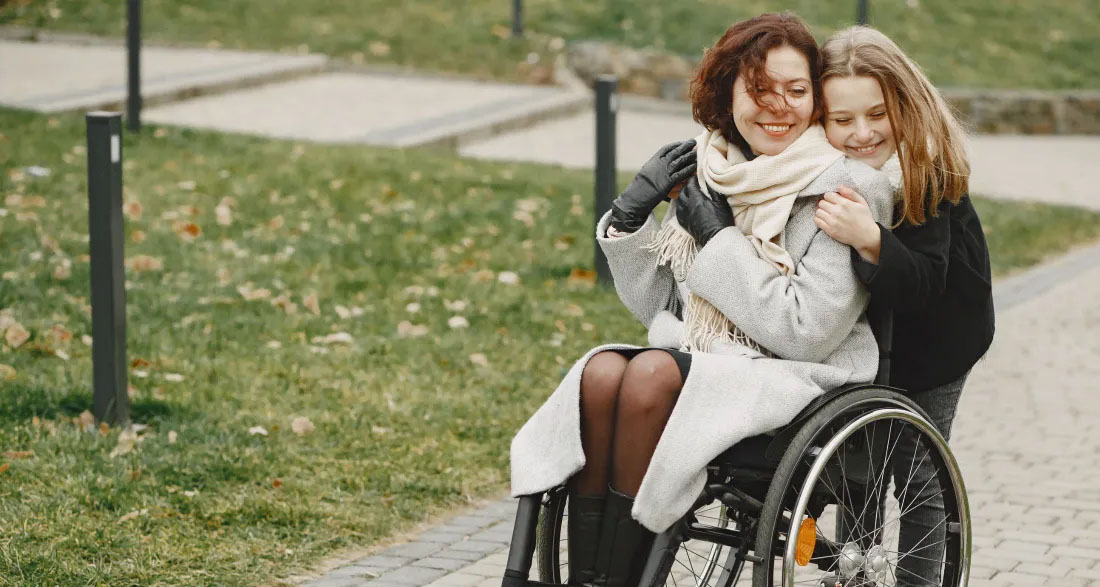
My mom has used a wheelchair for as long as I’ve been alive. To me, that was never strange. It was just… her. The chair was part of our life, like the kitchen table or the front door.
But her story didn’t start that way.
When she was in her early twenties, a drunk driver ran a red light and slammed into her car. She survived, but her spine didn’t. The doctors told her the damage was permanent. She would never walk again. She would never carry a pregnancy.
She told me she cried once in the hospital. Just once.
Then she wiped her face and said to herself,
“Okay. This is my life. I’m still going to live it.”
And she meant it.
She got an apartment. Learned how to drive with hand controls. Went to work every day as a paralegal. Built routines. Built independence. Built a future that didn’t include kids—because she thought that chapter had been taken from her.
Then one cold morning, everything changed.
She was getting ready for work when she heard it.
Crying.
Not a cat. Not a dog. Thin, sharp, desperate crying that wouldn’t stop.
She wheeled toward the door, confused. The sound got louder. She opened it—and froze.
A baby carrier sat on her doormat.
Inside was a newborn. Red-faced. Tiny fists waving in the air. Wrapped in a cheap, thin blanket that barely kept out the cold.
Next to the carrier was a folded note.
She kept that note. I’ve read it more times than I can count.
It says:
“I can’t keep her. I have no choice. I’m sorry.”
That’s it. No name. No explanation. Just goodbye.
My mom called 911 immediately. The paramedics came, checked me over, wrapped me in warm blankets. They said I was cold, but healthy. They explained that social services would take me and asked if she wanted them to do it right then.
She looked down at me.
And she said,
“I’m going to be her mother.”
Everyone told her she was out of her mind.
“You’re single,” people said.
“You’re in a wheelchair.”
“Do you know how hard this will be?”
“You should let a normal family adopt her.”
She nodded politely. Then ignored every single one of them.
She went through inspections. Interviews. Home visits. Endless paperwork. People asked her questions that dripped with doubt.
“Can you physically handle a baby?”
“What happens if something happens to you?”
“Do you really think this is fair to the child?”
She pushed back. She stood her ground. She refused to be small.
Months later, the adoption was finalized.
It was always us.
She named me Isabel.
She was never “the woman who adopted me.”
She was just Mom.
We had no nearby family. No grandparents. No backup plan. Just the two of us.
We did homework at the kitchen table. She taught me how to cook safely. She came to every school play and sat in the front row, clapping like I was the only kid on stage.
If there wasn’t a ramp, she complained until there was one.
If someone talked over her, she interrupted and said,
“Excuse me, I’m right here.”
On my first day of school, she wheeled me to the door, adjusted my backpack straps, and said,
“You’re braver than you feel. Go prove it.”
When I cried over friends or crushes or grades, she didn’t tell me I was dramatic.
“Your heart doesn’t know it’s small,” she’d say. “So it hurts. We respect that. Then we move on.”
I always knew I was adopted. She told me early.
“One night, someone left you at my door,” she said. “I opened it. From that second, you were mine.”
I never felt abandoned.
I felt chosen.
When I got into college, she cried in the car and tried to laugh it off.
On move-in day, she rolled around my tiny dorm room, rearranging everything. Before she left, she squeezed my hand and said,
“You’re going to build something. Don’t forget where you came from. And text me.”
That “something” started during junior year.
My best friend Lena and I were complaining about T-shirts.
“Why is everything either stiff or see-through?” she said.
“Because the universe hates us,” I replied.
We started sketching designs. Soft shirts. Clean lines. No cringey slogans.
Our dorm turned into a packing station. Boxes everywhere. Energy drinks stacked like trophies. We expected maybe a few pity orders.
We sold out.
Friends shared posts. Strangers ordered. Messages poured in.
We named the brand Doorstep.
Lena liked the sound.
I liked what it meant.
My mom was there from day one.
After graduation, we rented a tiny office. One desk. Clothing racks. Windows that barely opened. No investors. No safety net.
We messed up constantly. Wrong sizes. Late shipments. Bad suppliers.
My mom showed up after work, parked her chair by the door, and folded shirts into perfect stacks.
“Quality control,” she’d say. “I’m terrifying.”
She answered customer emails. Flagged bad contracts. Became our unofficial third partner.
A few months ago, I bought my first car. Nothing fancy—but mine.
I jingled the keys and said,
“That one. Doorstep paid for it.”
She covered her mouth and started crying.
“It’s not the car,” she said. “It’s that you did this.”
I thought that was the emotional peak.
I was wrong.
One Tuesday morning, I opened the front door and froze.
A woman stood on the porch.
Late forties. Nice coat. Perfect hair. She stared at my face like she recognized it.
“Isabel?” she asked.
“Yes,” I said carefully.
She smiled. Soft. Practiced.
“I’m your biological mother.”
My stomach dropped.
“My name is Karen,” she said. “I’ve been looking for you. I heard about your brand. Doorstep, right? You’re very successful. I always knew you would be.”
She nodded like she deserved credit.
“Without me,” she said, “you wouldn’t have any of this.”
Anger burned through me. But instead of yelling, something calm and sharp took over.
“You’re right,” I said.
Her shoulders relaxed.
“I’ll give you something,” I continued. “A check. Even my car.”
Her eyes lit up.
“There’s one condition,” I said.
“Of course,” she smiled.
I opened the door wider.
“We’re not doing this without my mom.”
Inside, my mom sat calmly at the table.
Karen said sweetly,
“Thank you for raising her. I always trusted you’d do a good job.”
“You didn’t trust anything,” my mom said. “You walked away.”
I placed a photo album on the table and opened it.
“Find one picture,” I said to Karen. “Any moment. Any year. Where you were there.”
She flipped pages. Faster. Slower. Then stopped.
“I carried you for nine months,” she snapped.
“That was your choice,” I said. “Being a mother is everything after that.”
“You chose to dump a baby and hope someone else fixed it,” my mom added.
Karen crossed her arms.
“So I get nothing?”
“You get nothing,” I said. “Not money. Not credit. Not access.”
I opened the door.
“Blood isn’t a free pass,” I said. “Love is.”
She left.
I locked the door. My hands shook.
My mom whispered,
“I was afraid you’d leave with her.”
I hugged her tight.
“You opened the door,” I said. “You stayed. You’re my mom.”
That night, we sat with the album open.
Page after page of my life.
Page after page of her.
DNA doesn’t make a family.
Showing up does.