

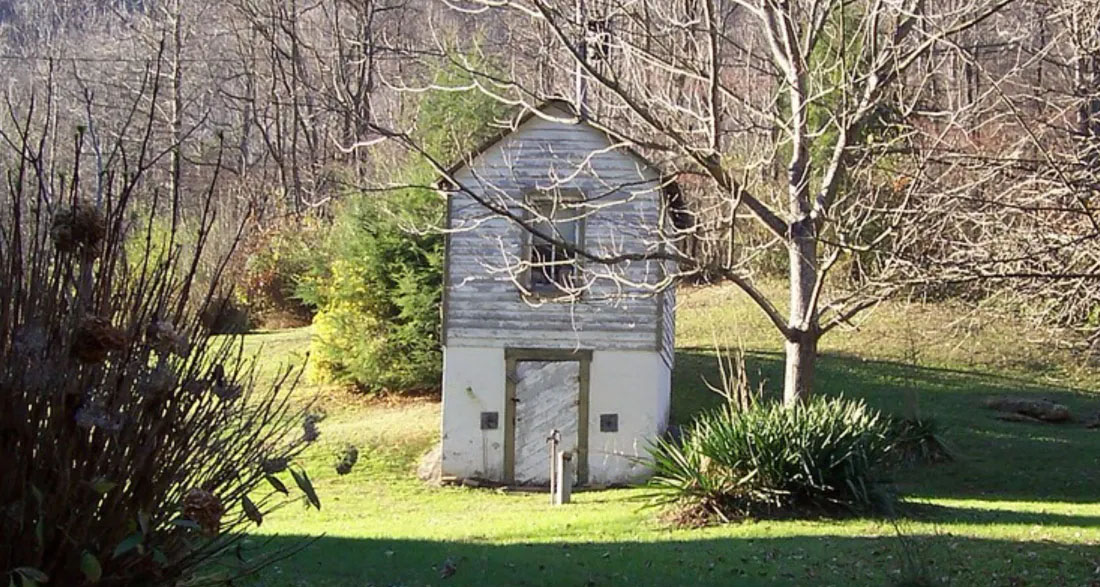
I’m 41 now, and I still dream about that cellar door.
Growing up in our old stone house in Pennsylvania, there was one rule that never bent, never broke, and never got questioned: “Never open the cellar.”
Nobody was allowed near it. Not me. Not my friends when they came over. Not relatives during holidays. Not even my dad.
The door sat at the end of a narrow hallway. Its paint was peeling, the handle rusted and icy cold. My mom, Lorraine, treated it like it was radioactive. If I even looked at it too long, she’d appear like a shadow behind me.
“Don’t touch that,” she’d warn sharply, her voice tight with fear.
I remember being seven, playing hide-and-seek with my cousin at Thanksgiving. I dashed down the hallway, searching for a hiding spot, my hand barely grazing the cellar handle when I froze. Mom’s footsteps echoed behind me.
“Kate, don’t!” she gasped, eyes wide. “Go play upstairs. Now!”
Her warnings made the cellar feel like a dark secret, a forbidden world just out of reach. And every time I wondered what was in there, fear won over curiosity.
By the time I was twelve, I finally asked. Mom didn’t get angry. She just looked at me with deep, weary sadness and said softly, “Some doors are not meant to be opened, Kate.”
Mom wasn’t dramatic. She was ordinary in almost every way. A medical transcriptionist. Made plain casseroles. Volunteered at church. Kept the house spotless. Paid the bills. She didn’t believe in ghosts or superstition, so her fear of that cellar was deliberate. Something real.
Dad, Jim, backed her completely. “Your mother says it’s off-limits,” he would say, plain and final. “That’s enough.”
He never questioned her. Never pushed. Looking back, I wonder if he was scared too—not of the cellar, but of what opening it might do to Mom.
Over the years, every housekeeper got the same warning: “The cellar is locked. Don’t open it. Don’t ask about it.” One laughed, thinking it a joke. Mom didn’t. The housekeeper quit a month later.
I grew up, left for college, moved across the country, got married, got divorced. I built a life far away from that house and that door.
At dinner parties, I’d tell the story for fun: “My mom had this weird thing about the basement.” People laughed, called it quirky, and moved on. But legends never stay buried forever.
Then came the call.
Dad’s voice shook over the phone. “It’s your mom… stage four. Pancreatic cancer. She’s asking for you.”
The next day, I was back in Pennsylvania. Mom looked like a shadow, fragile and pale, her hands thin and spotted with bruises from the IVs. But when she saw me, a weak smile flickered across her face. She reached for my hand.
“Sit,” she whispered.
I sat beside her hospital bed, holding her icy fingers.
“There’s something I need you to do,” she said, barely audible. “Before I go.”
My heart raced. “Anything, Mom.”
“Open the cellar.”
I laughed nervously, confused. “Mom… now? After all these years?”
“Only you. Only now. Before I go.” She squeezed my hand weakly. “You deserve to know why I kept it locked.”
“Why me? Why not Dad?”
Her eyes filled with tears.
“The man who raised you must never see it. Promise me, Kate. He can’t know.”
I nodded. I didn’t understand, but I nodded.
She closed her eyes, exhausted. “I should’ve told you sooner,” she murmured. “But I was protecting you. And him. And myself.”
The next morning, she pressed a brass key into my palm.
“Go today,” she said softly. “Before I’m gone.”
I waited until Dad left for errands. Then I stood in that narrow hallway, staring at the door that had haunted my childhood. The key felt heavy in my hand. I slid it into the lock. It turned stiffly, groaning like it hadn’t been used in decades.
Cold, stale air spilled out. My heart pounded. Part of me expected horror: a crime scene, a secret, something terrifying.
I flipped the light switch. Weak yellow light flickered and held, spilling down narrow wooden stairs. Step by creaking step, I descended.
And then I gasped.
It wasn’t a cellar. It was a nursery. Fully furnished, perfectly preserved. Pale yellow wallpaper dotted with tiny ducks. In the corner, a white wooden crib. A rocking chair with a faded cushion beside it. A dusty mobile of stars hung motionless above the crib.
Everything was clean, cared for, paused in time.
On a small shelf lay folded baby blankets, a stuffed bunny with one ear bent, a carousel-shaped music box. My hands shook as I wound it. A soft lullaby echoed through the quiet room.
In the corner sat a shoebox. I opened it, trembling. Inside were dozens of photographs: my mom in her mid-20s, cradling a baby girl I’d never known. Smiling, radiant, exhausted in a hospital bed. Another in the backyard, the baby reaching for the camera, sunlight warming her tiny face.
The date on the back: June 1981. Two years before I was born.
My knees buckled. Who was this baby? Why had Mom never told me? Why lock away this room like a secret grave?
In another dusty box, a small cassette tape: “For Kate: When You’re Ready for The Truth.”
I ran back upstairs, hands shaking, dug out an old tape player, pressed play.
“Kate,” Mom’s voice said softly. “If you’re hearing this, it means time is finally pulling me away… and you’ve opened the cellar.”
I sank onto the bed.
“You had a sister,” she said. “Her name was Abigail. Born 1981. Eighteen months later, she got sick. Pneumonia. It happened fast. One week she was fine, the next…” Her voice broke.
“Your father couldn’t handle it. He shut down. Stopped saying her name. Wanted to pack everything away, move on. But I… I couldn’t erase her. So I moved her nursery to the cellar. Every blanket, every toy. I locked it away… not from the world, but for me. She still existed somewhere.”
I sobbed quietly, clutching the player.
“Every year on her birthday, I’d sit in that rocking chair. Wind the music box. Pretend she was still here. Your father thought I was doing laundry. He never knew.”
“Your father knew I kept some of Abigail’s things,” she whispered. “But what I never told him… her ashes. They’re in a small urn, in the cellar. I just… couldn’t let her go completely.”
I went back down to the cellar, not scared anymore—heartbroken instead. Beneath the crib, a wooden box. Inside, a small ceramic urn, white with pink roses. A photo of Mom holding baby Abigail. I lifted it gently, whispering, “I’m so sorry, Abigail. I’m so sorry you were forgotten.”
I sat in the rocking chair, cradling the urn, crying for Mom, for Abigail, and even for Dad, who’d never been allowed to grieve.
When I locked the cellar again, I took the urn and photo with me. Dad came home an hour later. His eyes landed on the photo, then the urn. He froze.
“Why would you bring this out now?”
“I didn’t know how to carry it,” I said.
His throat moved. His eyes filled. “I… I just didn’t.”
“I know, Dad. But we don’t have to carry it alone anymore.”
We didn’t speak much after that. Just sat together, quiet, grieving—but not pretending anymore.
That evening, I returned to Mom’s hospital room. She was drifting in and out of sleep, but when she saw me, her eyes locked on the urn and photo. She held them to her chest, kissing them softly, tears streaming.
“Thank you,” she whispered. “For seeing her. For remembering her.”
“I wish I’d known, Mom. I wish you hadn’t carried this alone.”
“I couldn’t burden you with my grief, sweetheart. You were my second chance. My reason to keep going.”
That night, Mom passed in her sleep. I never told her I’d shown Dad the urn and photo. I just whispered into the dark, “I’m sorry,” hoping she understood.
At the cemetery, we placed Abigail’s urn beside Mom’s grave. Dad knelt, hand on the earth, tears slipping freely.
“I didn’t forget her,” he said softly. “I just didn’t know how to remember.”
I stood beside him, shoulder to shoulder. For the first time, we grieved together… and not alone.