

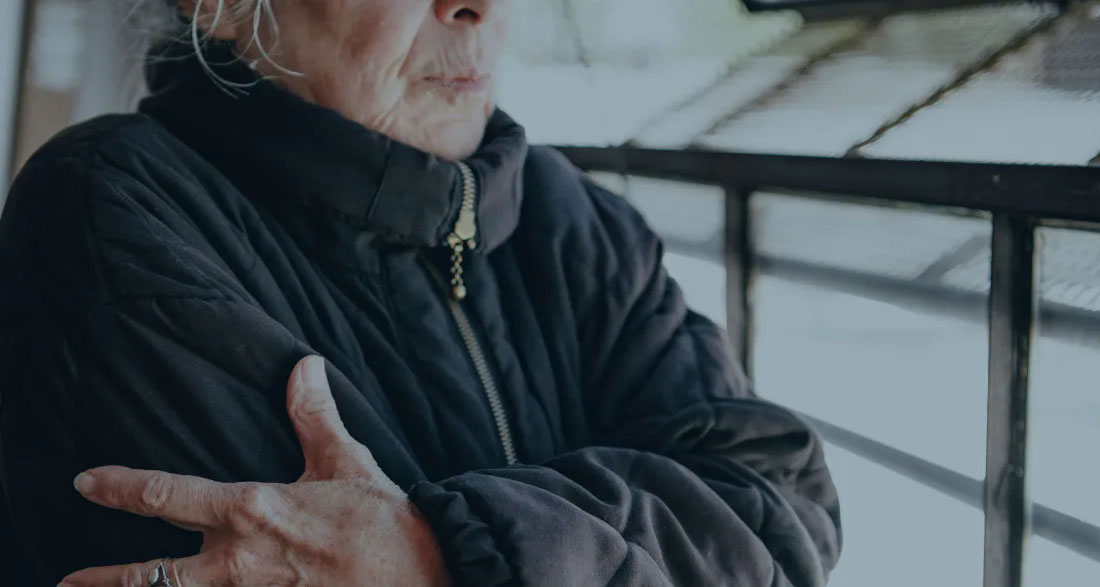
My name is Jimmy. I’m 36 years old now, but for most of my childhood, I had one wish that followed me everywhere: I wished my mother owned a different coat.
For 30 winters, my mom wore the same ragged coat.
It was charcoal gray wool. The elbows were thinning. The cuffs were covered with little pills of fabric from years of use. Two of the buttons didn’t even match the others. She had sewn them on herself over the years when the originals fell off.
I hated that coat.
Every time winter came, there it was again. The same coat. The same patches. The same worn-out look that made me feel small and embarrassed whenever my friends were around.
When I was 14, the embarrassment got so bad that I asked Mom to drop me off a block away from school.
She looked at me for a second, then gave that tired but gentle smile she always had.
“Why so far away today, baby?” she asked softly.
I stared at the car window and muttered, “I just… don’t want my friends to see the coat.”
She didn’t argue. She never did.
She only smiled again and said quietly, “It keeps the cold out, baby. That’s all that matters.”
At the time, I thought she just didn’t understand how embarrassing it was. I promised myself that one day, when I had money, I would buy her a coat so beautiful she’d never want to wear that old thing again.
And years later, I did.
When I landed my first real job as an architect, I celebrated the way any proud son would. I went straight to a high-end store downtown and bought my mom the most beautiful coat I could find.
It was a soft cashmere trench coat. Elegant. Expensive. The kind of coat that told the world you had made it in life.
When I gave it to her, she gasped and held it against her chest.
“Oh Jimmy… it’s beautiful,” she said warmly. “You didn’t have to spend so much.”
“I wanted to,” I told her proudly. “Now you can finally throw that old coat away.”
She smiled at me, hugged me, and hung the new coat carefully in her closet.
But the next morning when she left for work, she was wearing the old coat again.
My mom worked at a flower shop in the mall. She had always loved flowers. Ever since I was little, she said they were the only things in the world that were beautiful without trying.
But that coat became a constant argument between us.
“Mom,” I insisted more than once, “we’re not that poor family anymore. Please… just throw that thing away.”
She would look at me with a sad expression, as if I had said something that hurt her more than I realized.
“I know, baby. I know,” she would answer quietly. “But I can’t throw it away.”
“Why not?” I would ask.
But she never explained.
She would just smile again, the same quiet smile, and continue wearing that coat every winter.
And she wore it until the very last day of her life.
Mom died when she was 60.
It happened suddenly, on a Tuesday morning in February during the coldest week of the year. The doctors later said that regular checkups might have caught the problem earlier.
I lived in the city by then, busy with my career. But I visited every weekend and called Mom every evening.
At least that’s what I told myself.
The truth is, it was easy to believe that was enough.
She was still wearing that same coat the day she died.
After the funeral, I drove to her small apartment alone.
The place felt painfully quiet. I told myself I had come there to pack her things, but really I just needed something to do with my hands. My chest felt hollow, like something had been carved out of me.
The coat was still hanging by the door.
Same hook.
Same place.
It looked like she had just stepped out to check the mail and would walk back in any moment.
When I saw it, something twisted inside me.
Grief makes you feel powerless. But anger? Anger feels like something you can still control.
I stared at the coat and thought, We could have afforded better for years.
She had chosen to keep wearing that thing.
Now she was gone, and I would never understand why.
Frustrated, I grabbed the coat off the hook. I was ready to throw it away once and for all. I was done with it. Done with the embarrassment. Done with the stubbornness. Done with everything that coat had represented in my life.
But the moment I lifted it, something felt strange.
It was heavier than it should have been.
I ran my hand along the lining.
That’s when I remembered something.
Years ago, Mom had sewn extra pockets inside the coat. Deep hidden ones.
And now they were bulging.
My heart started beating faster as I slipped my hand into one of the pockets. I expected to find old tissues, candy wrappers, or maybe coins she had forgotten.
Instead, my fingers touched something thick.
I pulled out a bundle of envelopes.
They were tied together with a brittle rubber band that looked almost as old as the coat itself.
My hands trembled as I counted them.
Thirty envelopes.
Each one carefully numbered in Mom’s handwriting.
None of them had stamps. None had addresses.
Confused and curious, I sat down right there on the floor by the door, still holding the coat.
I opened the envelope marked “1.”
The first line made my vision blur.
“Dear Jimmy. When you find these, I’ll be gone. Please don’t judge me until you’ve read them all.”
I swallowed hard and kept reading.
In that first letter, she explained everything.
My father’s name was Robin.
She wrote that he had been the love of her life when she was 22. They met one cold November afternoon in the town square. She had been carrying groceries when the bag broke and everything spilled onto the sidewalk.
She wrote, “Your father knelt down beside me and started picking up apples like it was the most important job in the world.”
According to her letter, he smiled and said, “Looks like you could use a hand.”
She laughed and replied, “Looks like I could.”
From that moment on, they were inseparable.
For two years they were deeply in love.
Then Robin received an opportunity to work abroad. A job that promised more money than either of them had ever dreamed of earning.
He promised he would come back.
“Just give me time,” he told her. “I’ll save enough money and come back so we can build a real life together.”
The day he left was freezing cold.
Before boarding the bus, he took off his coat and wrapped it around her shoulders.
Mom had protested immediately.
“You’ll freeze without this,” she told him.
But he smiled and said gently, “Just keep it while I’m gone. It’ll keep you warm until I come back.”
That coat was the very one she wore for the next 30 years.
Weeks after he left, Mom discovered she was pregnant.
She wrote letter after letter to his forwarding address, telling him about the baby.
But none of them were ever answered.
For years, she believed he had abandoned her.
All she had left of him was the coat.
She raised me alone, working two jobs, wearing that coat every winter because it was the last thing he had given her.
When I was six, I once asked her why I didn’t have a dad.
I remember it clearly.
She knelt beside me and said softly, “Some dads have to go away.”
But in the letter she admitted that my question broke something open inside her.
That night, on the anniversary of the day Robin left, she sat at the kitchen table and wrote him a letter.
She told him he had a son.
She wrote that the boy had his eyes.
She sealed the letter and tucked it into the coat pocket.
And she did the same thing every year after that.
Thirty years.
Thirty letters.
I sat on the floor for a long time after learning that.
Then I opened more envelopes.
The early letters were full of everything my father had missed: my first steps, my first words, the way I cried every morning during my first week of kindergarten.
But around the ninth or tenth letter, something changed.
In one letter she wrote, “Jimmy is fifteen now. He just won a design award at school. I cried the whole drive home because I wished you could have seen him.”
Then she revealed something that made my heart stop.
While cleaning one day, she had found an old newspaper clipping from the country where my father had gone.
It was a small obituary.
Robin had died in a worksite accident just six months after leaving.
Six months.
He died before he ever knew my mother was pregnant.
He never came back… because he never could.
He hadn’t abandoned us.
He simply never had the chance to return.
Mom had spent years believing he had walked away.
And then she spent the rest of her life knowing the truth—that he never had.
The letters written after that discovery were different.
She wrote to him saying she was sorry.
“Robin, I’m sorry I was angry for so many years,” she wrote. “I didn’t know the truth.”
She continued telling him about my life.
One line in particular hit me hard.
“He became an architect,” she wrote proudly. “He builds things that last. You would have been so proud of him, Rob.”
I read that sentence three times.
The final envelope looked newer than the others.
My hands shook as I opened it.
Inside was a photograph.
It showed my mother standing beside a young man I had never seen before. Both of them were laughing. Both looked so young that it hurt to look at.
My father.
And Mom had written one final letter.
“Son, I found out Robin had a sister. Her name is Jane. She still lives near the town where you grew up. I never contacted her because I was afraid she wouldn’t believe me. I was afraid she’d think I was lying. And I was afraid you might get hurt.”
Then she wrote something that changed everything.
“But you deserve to know you are not alone in this world.”
She included an address.
“Take the coat. Take this photo. Find her. Tell her Robin had a son. Tell her that son became an architect who builds things that last.”
Three days later, I drove to that address.
It led me to a small cottage at the edge of town.
Snow was falling when I knocked.
An elderly woman opened the door.
“Can I help you?” she asked cautiously.
“I think you might be Robin’s sister, Jane,” I said.
Her face hardened.
“My brother died decades ago,” she said coldly.
“I know,” I replied. “I’m his son. My name is Jimmy.”
She stared at me.
Then stepped aside.
“Come in.”
I laid the photograph and letters on her kitchen table.
She stared at the photo without touching it.
“Anyone could find a photograph,” she said sharply.
“My mother kept that coat because he wrapped it around her shoulders the day he left,” I said.
“My brother wasn’t married,” she replied.
“No,” I answered quietly. “But he loved her.”
She pushed the photo back.
“People come here claiming things about my brother all the time. It never ends well.”
“He didn’t know she was pregnant,” I said. “He died before she could tell him.”
Her voice turned firm.
“I said leave.”
So I stepped outside.
Snow fell harder.
I stood there on her porch wearing the coat the same way my mother had.
Five minutes passed.
Then ten.
The cold sank into my bones, but I didn’t move.
Finally, the door opened again.
Jane stood there watching me.
“You’re going to freeze,” she said.
“I know.”
“Then why are you still standing there?”
I looked at her and said quietly, “Because my mother waited thirty years for answers she never got. I can wait a little longer.”
She stared at the coat.
Slowly she stepped forward and touched the collar.
Her fingers paused on a tiny repair along the seam.
Her eyes filled with tears.
“Robin fixed this himself,” she whispered. “The summer before he left. He was terrible at sewing.”
Then she stepped aside.
“Get inside before you catch your death.”
I followed her into the warm house. The fireplace crackled softly.
She made tea and placed two cups on the table.
After a long silence, she looked at the photograph again and said gently,
“He has your eyes.”
Then she looked at me.
“It will take time,” she said.
“I know,” I replied.
“But I suppose,” she added softly, “you’d better start from the beginning.”
When I left that night, I hung the coat on the hook by her door.
She didn’t ask me to take it back.
And I didn’t.
Some things belong where they finally find warmth.
My mother didn’t wear that coat because she was poor.
She wore it because it was the last thing that ever wrapped around her from the man she loved.
For half my life, I was ashamed of that coat.
Now I understand.
Some things aren’t rags.
Sometimes they are proof of love.