

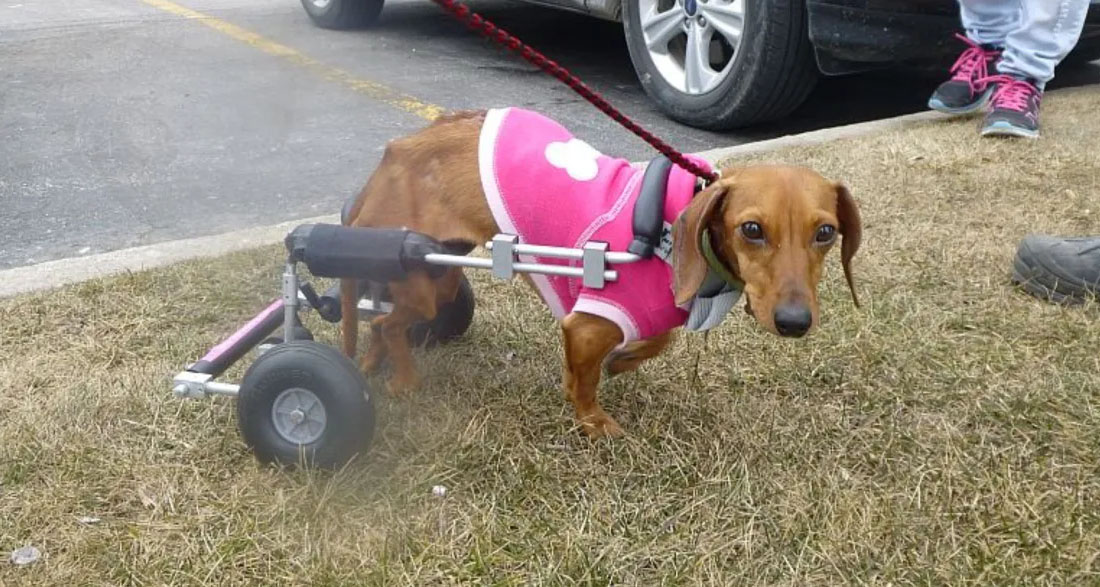
I was out for one of my usual walks with my rescue dogs when the world decided to test me. A neighbor—one of those who thinks they run the block—suddenly decided my dogs didn’t belong here. What happened next taught her, and a few others, that kindness isn’t weak. It has claws, and sometimes wheels.
I’m 75 years old, born and raised in Tennessee. I’ve spent most of my life taking in the ones nobody else wanted. I didn’t plan it that way when I was younger. It just happened, one broken and forgotten creature at a time.
As a little girl, I would find injured birds near the creek. Later, when my husband and I bought our small house, it became stray cats.
After he passed, I turned my love toward dogs. But not the kind people line up to adopt. No, I went for the scared ones. The forgotten ones. The ones who already knew what it felt like to be left behind.
That’s how I came to have Pearl and Buddy.
They were tiny rescue dogs, both under twenty pounds, both unable to use their back legs. Pearl had been hit by a car; Buddy was born that way. The rescue group fitted them with tiny wheels, and that changed everything.
My dogs don’t walk or run like others. They roll.
Their little carts click softly on the pavement, and when they move, it’s as if their whole bodies smile. They wag their tails like they’ve never known anything but joy.
When we’re out walking, most people can’t help but smile. Kids wave and shout questions. Adults crouch down, rubbing their heads or saying, “Well, will you look at you,” or, “Aren’t you two something special?” Anyone with a heart can see it immediately: these dogs have survived.
Last Tuesday began like any other day. The air was warm but gentle, the sun low enough to cast half the street in shadow. Pearl rolled ahead, sniffing mailboxes like she expected secrets to pop out. Buddy stayed close, his wheels bumping softly against the curb.
Halfway down the block, Marlene stepped out.
She lives three houses down—a woman about 55, always pressed and proper, as if she’s late for something important even when she’s standing on her own lawn. Everyone knows Marlene. She watches people from her blinds and acts like she owns the block. In her mind, maybe she does.
Her eyes fell on Pearl’s wheels, but not with curiosity. There was a sour twist to her lips, a wrinkled nose like she’d smelled something rotten. Then, loud enough for anyone to hear:
“Those dogs are disgusting!”
I stopped so fast my shoes scraped the pavement. My hands clenched the leashes before I even realized it.
Pearl looked up at me, sweet and trusting, ears twitching. Buddy rolled in place, unaware of the cruelty just spoken aloud. Poor thing didn’t understand it, but I did.
Marlene stepped closer. “This isn’t a shelter. People don’t want to see… that. Get rid of them!”
For a moment, I couldn’t speak. My chest felt tight, my neck hot. My hands unconsciously held the leashes tighter.
Then I heard my mother’s voice through mine:
“Bless your heart,” I said calmly. “That dog, in fact, both of them, saved me, not the other way around.”
Her eyes narrowed. She leaned in, voice sharp. “Either you get rid of them, or I’ll make sure you do.”
Then she turned on her heel and went inside, as if she’d just commented on the weather instead of threatening her elderly neighbor. Her door clicked shut.
I stood there longer than I intended. My chest ached, my throat burned. All I could think was, Lord, have mercy.
At my age, patience isn’t just a virtue—it’s a weapon. I didn’t confront her. Not yet. I chose patience with purpose. I decided then and there that Marlene would learn the hard way not to mess with me.
The next day, I walked Pearl and Buddy earlier than usual. The day after, I walked later. I changed routes. I timed it so people were outside watering lawns or carrying groceries. It cost me comfort; my knees ached more, some days I returned home exhausted. But I kept going.
I listened, gathered whispers, learned the stories about Marlene. I knew not to underestimate threats.
“She complained about my Christmas lights once,” Mrs. Donnelly said quietly while pretending to admire Pearl. “Said they were an eyesore.”
“She called the city about my grandson’s bike ramp,” added another neighbor, shaking her head.
I said nothing about my own encounters. I let people talk. Restraint mattered. The gossip spread, and I was ready.
A few days later, Marlene escalated things.
I was brushing Pearl on the porch when an animal control truck rolled up. A young officer stepped out, polite and stiff, clipboard in hand.
“Ma’am,” he said, “we received a complaint.”
I felt my stomach drop. I kept my voice calm. “About what?”
He glanced at the dogs. “Concerns about animal welfare and neighborhood safety.”
I gestured to the street. “Would you mind waiting a moment? I have some people who’d like to say something.”
Mrs. Donnelly, one of my allies, stepped out. “I had a feeling,” she said with a sigh. Two more neighbors joined, hesitant, eyes flicking to Marlene’s house.
Marlene finally came outside, forcing a smile. “What’s all this?” she asked.
The officer explained.
“I was just worried,” Marlene said sweetly, voice soft. “Health risks, you know.”
I spoke, steady and calm. “You called my dogs disgusting.”
She scoffed. “I never said that.”
Mrs. Donnelly cleared her throat. “You did. You said it loud.” She added the Christmas light story. Marlene’s smile faltered.
I stepped forward. “I wake up alone,” I said quietly. “These dogs give me a reason to keep going. Pearl had to learn to trust again. Buddy learned joy. And both found a way to walk again.”
The officer looked at Pearl as she rolled up to his boot, wagging her tail. The air shifted.
“Ma’am,” he said to Marlene, “there doesn’t appear to be any violation here. These animals are well cared for.”
“I was only trying to do the right thing. This is a family neighborhood.”
“So am I,” I said, voice steady. “And those dogs are my family.”
The officer added, “Repeated false reports can be considered harassment.”
Marlene’s eyes flashed. “Are you threatening me?”
“No, ma’am. Just informing you.”
The power shifted. Marlene turned and went inside. Her door clicked harder than before.
The officer smiled faintly. “Have a good afternoon, ma’am,” he said and drove off.
Mrs. Donnelly clapped her hands. “Well, that was something.”
A few days later, someone left a note in my mailbox: “We love your dogs. Keep walking them.”
Then a little girl ran up to me, shy but excited. “Can I walk with you?”
By the end of the week, neighbors were timing their routines around ours. Doors opened when Pearl and Buddy rolled by. Waves, conversations, laughter—it all spread.
Mrs. Donnelly stopped me one afternoon. “We should do something nice for them.”
“For whom?” I asked.
“Pearl and Buddy,” she said. “They make people smile.”
And just like that, the Roll Parade was born. Not official, no permits—just neighbors, kids, dogs, bells ringing, laughter spilling through the streets.
Pearl’s wheels clicked faster than ever. Buddy rolled with joy, knowing it was for him. Marlene watched from behind her blinds. I didn’t look. I didn’t need to.
At the end of the block, Mrs. Donnelly smiled at me. “You did well, old girl.”
I laughed through tears. “So did they,” I said, nodding at Pearl, Buddy, and the rest of the neighborhood.
Later, the sun dipping low, I sat on the porch. Pearl curled against my leg, Buddy asleep at my feet. The street was quiet, but it felt warmer.
I thought about the choice to stand up, to say something, to protect my family. How easy it would have been to give up, to hide.
Pearl lifted her head. I scratched her ears and whispered, “We did all right, didn’t we?”
Her tail thumped once, sure and steady. Buddy snorted in sleep.
For the first time in a long while, I felt that the whole block was home—and Marlene wouldn’t mess with us again.
“We did all right, didn’t we?”