

I’m 35, basically raising two energetic boys mostly on my own, and our street has always been the kind of harmless, suburban neighborhood where kids play outside and people wave from their porches.
That is, until our neighbor across the street decided that normal kid laughter was a problem—and turned it into something way bigger than anyone should have to deal with.
I feel like I live as a single mom most days. Mark, my husband, works insane hours. Gone before the kids wake up, home right before lights out. By the time he appears, I’ve already been referee, chef, homework helper, and shower supervisor.
My kids? Not the issue.
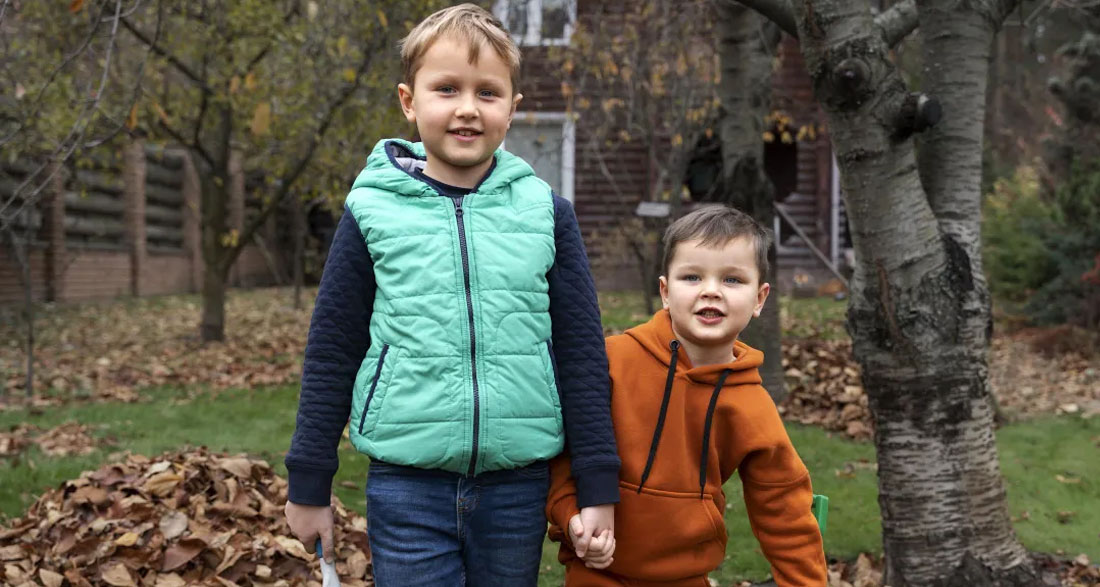
It’s mostly me and our two boys, Liam, 9, and Noah, 7.
School. Snacks. Homework. Bickering. Dinner. Showers. Bed. Repeat.
A lot, yes. But honestly? The boys are amazing.
They love being outside. The second someone yells, “Playground?” they drop their tablets like they’re hot. Bikes, scooters, chalk, tag—anything. They’re loud, yes, but that’s just kids being kids. Laughing, yelling “Goal!” or “Wait for me!”—not terrorizing anyone.
They never go into other people’s yards. Never touch cars. Don’t kick balls at windows. Just normal neighborhood fun.
But that’s when Deborah appeared in our lives.
Deborah lives directly across the street. Probably in her late 50s, gray bob perfectly coiffed, clothes always matching her flower beds, yard immaculate—every leaf in place. And she looks at my kids like they’re stray dogs.
The first time I really noticed her, Liam and Noah were racing scooters past her house. Noah shrieked with laughter when Liam almost ran into a trash can.
Her blinds snapped up, and I swear, her glare could have burned through glass. She stared like they were smashing windows.
I told myself, “Okay, grumpy neighbor. Everyone has one.”
But it didn’t stop.
Every time the kids were outside, I’d see her blinds twitch, a curtain move, her silhouette lurking behind the storm door. Then came the marching across the street, the judging.
One afternoon, the boys were kicking a soccer ball on the grass strip in front of our house. I was on the porch with a lukewarm coffee.
“Mom! Watch this shot!” Liam yelled.
Noah screeched as the ball flew wide.
And then… Deborah, marching across the street.
“Excuse me,” she said.
Her voice was tight, like she’d wrapped it in plastic to keep it from cracking.
“Hi. Something wrong?” I asked.
Her smile didn’t reach her eyes. “It’s the screaming,” she said. “Children shouldn’t be screaming outside. It’s not appropriate. Just… keep them under control.”
“They’re just playing. They’re not even near your yard,” I said, blinking.
“It’s very disruptive. I moved here because it’s a quiet street.”
I looked around at bikes, chalk drawings, basketball hoops. “It’s a family street,” I said slowly. “There are kids in almost every house.”
Her jaw tightened. “Just… keep them under control. Please.”
Then she turned and walked away like she’d done something heroic.
I stood there stunned. The boys looked confused.
“Are we in trouble?” Noah asked.
“No. You’re fine. Go play,” I said.
I tried to let it go. I ignored her glances, the blinds twitching, the storm-door stares. I didn’t want neighbor drama. I didn’t want my kids to feel like criminals just for laughing outside.
I told myself she’d get over it. She didn’t.
Then, last week, everything snapped.
The boys wanted to go to the playground with Ethan, the kid from three houses down. It’s a two-minute walk, and I could still see them from the porch for part of it.
I started loading the dishwasher.
“Where are you?” My phone rang.
It was Liam.
“Mom… there are police here.”
My heart stopped. “What? Where are you?”
“Are you their mother? They’re talking to us. Can you come?”
I dropped everything and ran.
At the playground, my kids and Ethan were standing near the swings, looking terrified. Two officers a few feet away.
“The caller also mentioned possible drugs and ‘out-of-control behavior,’” one officer said.
“Ma’am? Are you their mother?”
“Yes,” I said, out of breath.
The officer explained: “We have to respond to every call.”
“Drugs?” I repeated. “They’re seven and nine!”
The second officer’s expression softened. “They look okay to me,” he said quietly.
After a few questions, they left, but the damage was done. My boys had been terrified.
When Mark walked in that night, I told him immediately: “Deborah called the cops on the kids.”
He froze. “What?”
“They’re seven and nine. She said there might be drugs.”
“And they said she can just keep calling,” I added.
Mark looked like he was processing a nightmare. “What do you want to do?”
“I want cameras. Outside. Covering the front, the sidewalk, even the playground if it reaches. Everything recorded.”
The next morning, I went to the store, grabbed two outdoor cameras and a doorbell cam. Nothing fancy, just obvious, solid coverage. Mark installed them that night.
Noah watched him from the porch steps. “Are we in trouble?” he asked.
“No,” I said. “Someone else is. These help us prove it.”
Finally, the real game began.
The boys rode their bikes, ran, laughed, and I watched them through the cameras. Deborah appeared on her porch, glaring, phone in hand, but the footage told the real story: the kids were fine.
Twenty minutes later, the police arrived again. Same officer as before, already tired.
“I want to show you something,” I said. I pulled up the screen recording, handed it to him.
Footage after footage: Deborah watching, calling, glaring. Kids laughing, playing safely.
“You have more of this?” he asked.
“Yes,” I said. “From all week. She’s terrified the kids, called the cops, said there were drugs. They’re seven and nine!”
He nodded, then approached Deborah.
“Ma’am, we’ve seen footage of your repeated calls and observations,” he said.
Her face flushed. “It’s still disruptive! I have a right to peace!”
“They’re on a playground. Kids are allowed to be loud,” the second officer said.
A nearby parent muttered, “Are you serious?” Another said louder, “They’re kids, not monks.”
Cornered, Deborah spat, “Fine. I won’t call again. But when something happens, that’s on you.”
Finally, the street was peaceful. Kids played outside. Bikes, tag, soccer. No blinds snapping. No storm-door staring. No phone glued to her hand.
One afternoon, Noah ran up to me, sweaty and grinning.
“Mom, is the mean lady gone?”
“Not gone,” I said. “But she finally realized other people can see what she’s doing too.”
And that was all it took.
I protected my kids. Got proof. Stayed calm. I didn’t scream. Didn’t egg her house. Didn’t start a neighborhood war.
Now, when my boys are outside, laughing too loud, being exactly who they’re supposed to be, I don’t feel that knot in my stomach anymore.
Because if Deborah ever decides to pick up that phone again?
She will be the one on the defensive.