

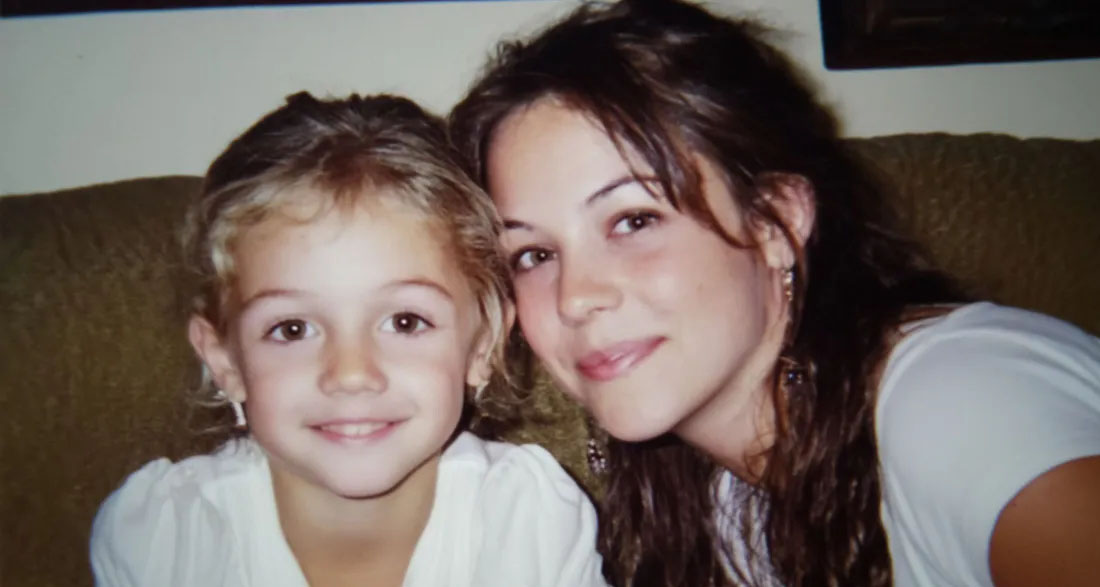
My parents didn’t die. They just left.
Not all at once, not like in the movies with slammed doors and suitcases flying across the hallway. No, Tanya and Charlie disappeared in pieces. Sometimes it was an argument over who had to take care of me that week, as if I were a stray left behind on a corner, forgotten.
I was ten when I finally understood. They didn’t want me anymore. Not because I did something wrong, not because life was too hard—they had just moved on. And I was no longer part of the plan.
My father, Charlie, married Kristen. She’d been his “friend” forever, always wearing perfume that made your head spin and smiling like she held secrets you weren’t allowed to know. Kristen had a son, Travis, just a year younger than me, and soon after their wedding, a baby girl with golden curls came into their lives.
“Our perfect little sunshine,” they said.
They became his real family. The one he showed off at barbecues, the one on Christmas cards.
And me? I was leftover.
Meanwhile, my mother, Tanya, married Donnie. He had thick forearms, a voice that never rose above a grumble—but somehow, that quiet grumble scared me more than any shouting ever could. He hated disruptions—tears, questions, homework help.
When my half-sister, Rosie, was born, my mother’s world shrank to a strict schedule of bottles, naps, and sleep-training apps. Hugs became one-armed pats; conversations became short and shallow.
“Ivy, you need to be quiet. Donnie just worked a double shift,” she said once, when I showed her a sketch of our backyard.
I remember the night they stopped pretending altogether. I lay in my room, listening to the muffled argument through the closed bedroom door.
“She’s not my kid, Tanya. Seriously. I didn’t want kids. It’s different with Rosie—she’s my blood,” Donnie grumbled.
“Well, she’s not his either. Charlie doesn’t even call anymore, Don,” my mother hissed back.
“What do you want me to do?”
“She’s not my kid, Tanya. Seriously. I didn’t want kids.”
Then, through the crackle of a speakerphone, my father’s voice came, like a judgment from somewhere far away:
“We’ve got our own routine now, Tanya. It’s not easy with two young kids. Kristen’s not comfortable adding another one. Ivy doesn’t even fit in here.”
Later that night, my mother sat me down at the kitchen table, hands wrapped around a lukewarm cup of tea.
“Honey… it might be better if you stayed with Aunt Carol for a while. Just until we figure… things out.”
I didn’t even need to respond. I knew.
The next morning, my father showed up. They stuffed my life into three trash bags. Three trash bags, that’s all. No suitcases, no boxes. Trash bags were enough.
When we arrived at Aunt Carol’s tiny yellow house, she opened the door, hands still wet from drying dishes. Her brow furrowed when she saw me.
“Hi, Ivy, baby,” she said, smiling softly.
Then her eyes fell on the bags.
“Why does she have… luggage?”
Tanya laughed too brightly, smoothing her blouse like we were just visiting for tea.
“You two are going to have so much fun together! We’ll pick her up later, Carol! Thank you!”
Aunt Carol didn’t scold. She wasn’t angry. Just startled. And in that brief moment, I realized—this was it. They weren’t coming back.
She crouched and opened her arms.
“Come inside, sweetheart,” she said. “Let’s make up the guest room for you.”
My parents were gone before I could look back.
That night, Aunt Carol didn’t ask the questions I feared most. She hugged me like she meant it, made grilled cheese with too much butter, and tucked me into a quilt that smelled like fabric softener and old books. I wanted to cry, but I didn’t—because someone finally made me feel safe.
Then she sat on the edge of the bed, brushing hair from my face.
“You’re not a burden, Ivy,” she whispered. “You’re a blessing. And I mean that, my little love.”
Something in my chest cracked—not with hurt this time, but relief.
In the weeks that followed, she gave me my own key to come and go after school. She let me paint my bedroom sky blue. When I changed my mind, she brought a new pack of rollers and white paint.
“Even the prettiest flowers get replanted sometimes,” she said with a wink.
She never called me stubborn or messy. She called me growing.
“Blossoming takes work, my Ivy,” she said. “And I’m right here, whenever you need me.”
She worked long hours at the pharmacy but always had time to help me with science fair projects, rewrite essays, and chase down the perfect shade of green paint for school.
“Art is an emergency sometimes, Ivy,” she said, smiling and pressing a kiss to my nose.
Every sketch, even the crumpled ones, she framed or tucked away.
“Don’t you dare throw this out,” she said once, pulling a wrinkled page from the bin. “You’ll want to remember how far you’ve come.”
By fourteen, my art had spilled into the hallway. By sixteen, I was winning local contests. By twenty, I traveled to fairs in other states with a battered portfolio and a thermos of her iced tea.
My parents? Shadows.
No birthdays, no graduations, not even a text. Occasionally, a card arrived with my name misspelled as “Ivi” and a scribbled signature.
At twenty-two, I entered an international art competition. My piece, Inheritance, showed a girl building a ladder from scraps, with two faceless figures watching from the edges. It went viral overnight. I won. $250,000. And suddenly, the local press called me “the artist who bloomed through abandonment.”
Three days later, they appeared.
I was wiping tables at the café when my coworker, Erin, nudged me.
“Ivy,” she said, “there’s a couple outside asking for you. Heads up—they look emotional.”
I froze.
There they were. Tanya’s mascara smeared, Charlie clutching a nearly dead bouquet from the gas station.
“Honey! My sweet, sweet Ivy! Look at how you’ve grown. You’re gorgeous!” Tanya exclaimed.
“Man, I’m so proud of you, kiddo,” Charlie said.
I just stared. Waiting.
They insisted on dinner.
“As a family,” my mother said.
I agreed—not to forgive, but to see the story they’d rehearsed on the way over.
They picked the diner from my childhood. Booths smaller than I remembered. Menu unchanged. Tanya ordered a salad she barely touched. Charlie poked at a burger. I picked at soggy fries.
“I’ve prayed for this moment,” Tanya said, blinking. “I want us to be a family again. I know things weren’t perfect, but… what is? And I think we can heal together.”
I wanted to laugh.
“Reconnecting is important, Ivy,” Charlie added, nodding like he was giving a speech.
Then the masks slipped.
“Carol meant well,” Tanya said. “But she twisted things. She filled your head with poison. She always wanted a child, and then she saw a way in with you… my girl.”
“She used you, sweetheart. She didn’t give us a chance,” Charlie said.
I didn’t speak. My silence said more than words could.
Then came the pitch.
“My car’s dying,” Tanya said. “It’s dangerous.”
“We’re moving,” Charlie added. “Your baby sister is growing. We just need help.”
Ah. So they weren’t here for me. They were here for the money.
“Okay,” I said calmly. “I’ll help. But on one condition.”
“Anything, Ivy!” they chorused, eager.
“There’s an event this Saturday at the community center. 7 p.m. You both will be there.”
Saturday arrived.
The center buzzed. Artists, teachers, former classmates, strangers who’d followed my work online. Aunt Carol’s neighbors too.
Walls lined with prints. A banner overhead: “Honoring the Woman Who Built an Artist.”
They arrived ten minutes early. Tanya in pearls and a pale pink blouse. Charlie stiff in a blazer two sizes too big. I led them to front-row seats.
“It looks like a big night, Ivy,” Charlie whispered.
“It is,” I said. “Enjoy the presentation.”
Just before lights dimmed, Aunt Carol appeared, bouquet of roses in hand. Her eyes scanned the room, then landed on them. Her face stiffened—confusion, disbelief.
I squeezed her hand, a silent promise. She softened and sat beside me.
The lights dimmed. A slideshow lit the room:
- Aunt Carol at the sixth-grade art fair, crouched beside me.
- Aunt Carol brushing paint off my nose in the kitchen.
- Aunt Carol signing guardianship papers when I turned fourteen.
- Carol hugging me red-eyed, proud, after a contest win.
The audience murmured. Tanya gripped her purse. Charlie stared at shoes.
I stepped onstage.
“Tonight is for the only parent I’ve ever had,” I said.
Heads snapped up.
“To the woman who didn’t leave when things got hard. Who never handed me off like a chore. Who never asked me to shrink against the wallpaper…”
Silence. Thick, tense silence.
“To Aunt Carol, the reason I’m here, the reason I’m whole.”
Applause erupted.
“You said you need to fix your car,” I said to Tanya.
“Yes, well, I—”
“And you wanted money for a condo?” I said to Charlie.
“We just thought—”
“My condition was that you show up tonight. So you could hear this: You get nothing. Not a cent. You lost the right the day you packed my life into trash bags and left me on someone else’s doorstep.”
Gasps. Standing ovation.
“But you said—” Tanya’s voice cracked.
“No. I offered a lesson. And now, you have it. Leave us alone.”
That night, walking home under the stars, Aunt Carol’s roses in my arms, I didn’t look back once.
“Please leave us alone.”