

I spent more than 50 hours knitting a baby blanket for my sister-in-law’s baby shower. Every single stitch carried love, hope, and care. She looked at it, laughed, called it “cheapy-beepy trash,” and said she would throw it away.
But then her father stood up.
And what happened next left her completely speechless.
I was staring at my phone when my coffee went cold in my hand. The email had been open for several minutes, but I hadn’t moved. The subject line read:
“Baby Shower Registry — Please Review!”
I let out a slow breath. Maggie—my brother’s pregnant wife—had really outdone herself this time.
I scrolled.
At the very top of the list sat a $1,200 stroller. Below it was a $300 diaper bag that looked like something a celebrity would carry, not a parent changing diapers at 3 a.m.
Then there was a $500 bassinet that looked like it belonged in a luxury hotel suite, and a $400 high chair that probably cost more than my entire monthly grocery budget.
I stared at the screen, my chest tightening.
I loved my brother with my whole heart. When he called to tell me Maggie was pregnant, I cried real tears—happy tears. A baby meant growth. It meant hope. It meant our family was becoming something bigger and more beautiful.
But this registry?
It felt like someone had reached through my phone and slapped me across the face.
I’m a fourth-grade teacher at a public school. I raise my eight-year-old twins alone after their father decided that being a dad “wasn’t for him.”
Every month, my paycheck stretches so thin I can almost see through it. Luxury baby gear like the things Maggie wanted existed in a completely different universe than mine.
I closed the email and pressed my fingers to my temples, trying to stop the headache forming behind my eyes.
What am I supposed to do with this list?
That’s when my eyes drifted to the corner of my living room.
A wicker basket sat there, overflowing with skeins of the softest merino wool, carefully saved. I had been holding onto that yarn for something important.
My grandmother taught me how to knit when I was twelve. I could still see us sitting side by side on her porch, her hands steady and sure while mine fumbled clumsily.
“Slow down,” she used to say gently. “Every stitch matters.”
Over the years, knitting became more than a hobby. It was therapy. It was peace. It was how I survived the chaos of single motherhood, endless lesson plans, and sleepless nights.
I couldn’t afford Maggie’s registry.
But I could make something no store could sell.
“Mom, are you okay?” my daughter asked, peeking at me.
I smiled and nodded. “Yeah, baby. I’m just figuring something out.”
For the next three weeks, I knitted every spare moment I had.
After the twins fell asleep, I worked by lamplight. Between grading papers and packing lunches, I squeezed in a few rows. On weekends, while the kids played outside, my hands moved in a steady rhythm.
The blanket slowly came to life.
Soft cream yarn. Delicate lace along the edges. In one corner, I carefully embroidered the baby’s name in tiny, perfect letters.
Every stitch carried a wish. A prayer. A quiet promise.
My fingers ached. My eyes burned. But my heart felt full.
This wasn’t just a blanket.
This was love you could wrap around a child.
After more than 50 hours, I folded the finished blanket into a simple cream-colored box and tied it with a ribbon. No fancy wrapping. No glitter. Just honest work.
The morning of the shower, I placed it on my passenger seat and took a deep breath.
“You’ve got this, Mom,” my son said from the backseat.
I smiled—but I wish I had believed him.
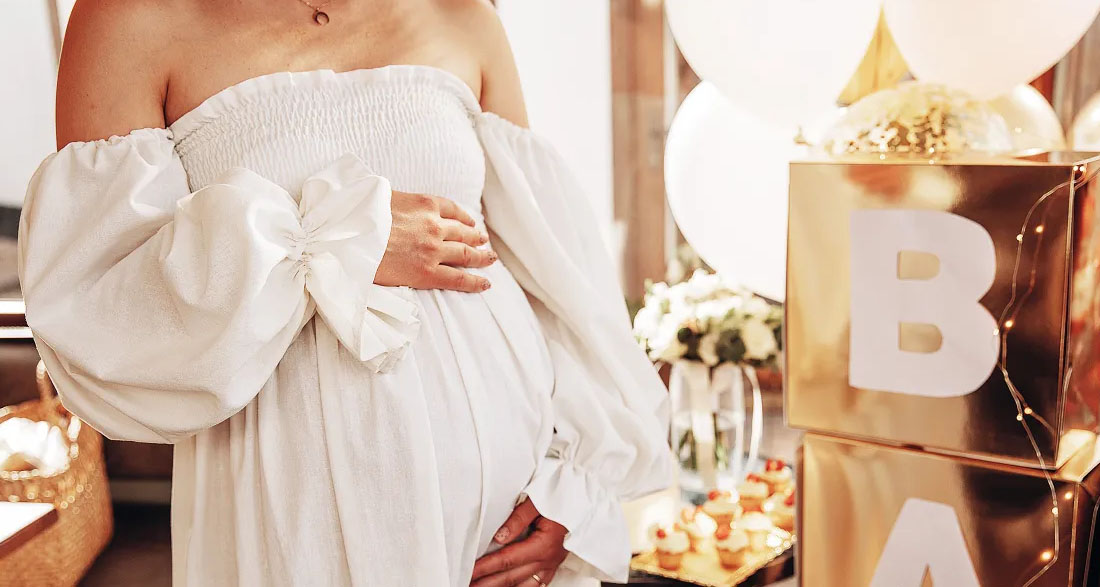
Maggie’s baby shower looked like it belonged in a magazine.
White and gold balloons floated perfectly. The dessert table overflowed with macarons and tiny cakes. Fresh flowers filled crystal vases everywhere.
Money. Perfection. Effortless elegance.
Maggie stood in the center, glowing in a designer maternity dress that probably cost more than my car payment. Her friends laughed around her, sipping mimosas.
I smoothed my plain sundress and clutched my box.
“Carol! You made it!” Maggie said, smiling without warmth. She air-kissed my cheek. “Sit anywhere. We’ll open gifts soon.”
I sat in the back and watched, feeling like I didn’t belong. But I was here for my brother. I was here for the baby.
That had to count.
Gift opening began.
“Oh my God, the diaper bag!”
“This stroller is stunning!”
“You’re so lucky!”
Each expensive gift was praised loudly. My box sat near the bottom, looking smaller by the minute.
Then Maggie picked it up.
“Oh, what’s this?” she said. “Carol’s?”
She opened it.
The blanket unfolded softly in her lap.
Silence.
Then Maggie wrinkled her nose.
“Oh. A cheapy-beepy thing.”
My heart dropped.
“Why didn’t you buy from the registry?” she continued. “I sent it for a reason.”
Someone whispered, “It’s homemade.”
Maggie nodded. “Homemade stuff shrinks. Falls apart. Honestly, it’s garbage waiting to happen.”
Laughter followed.
“I’ll probably just throw it out,” she shrugged. “But thanks, I guess.”
I couldn’t move. I couldn’t breathe.
Then—
A chair scraped loudly against stone.
John, Maggie’s father, stood up.
“Maggie,” he said firmly. “Look at me. Now.”
The yard went silent.
“Do you know what that is?” he asked, pointing at the blanket. “That’s over fifty hours of work.”
He continued, “My mother made me one just like it when she was pregnant with me. It survived my entire life. It’s still in my closet. Fifty-three years later.”
His voice cracked.
“It was love you could hold in your hands. And you just called it trash.”
Maggie whispered, “Dad, I didn’t mean—”
“Yes, you did,” he interrupted. “You wanted to shame love that didn’t come with a price tag.”
Applause erupted.
John turned to me.
“Carol, your gift will last generations.”
Then he returned Maggie’s expensive bassinet.
Instead, he placed his mother’s blanket in her lap.
“This is what matters,” he said. “Not money. Love.”
Maggie sat frozen.
I felt seen.
As I left later, my brother said quietly, “I’m so sorry.”
I smiled. “Your daughter is lucky.”
That night, my twins asked, “Did she love it?”
I smiled. “Someday, she will.”
Because the most precious things in life are not bought.
They’re made—with love you can hold in your hands.