

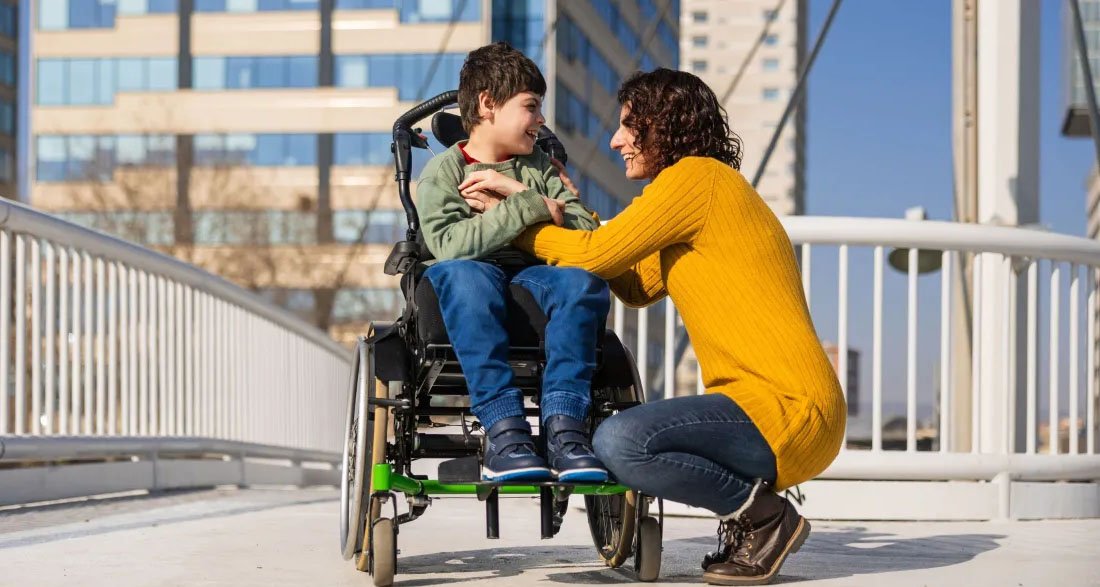
She left her disabled son with me and vanished. I thought I’d never see her again—until the day she knocked on my door with a lawyer and a plan I never saw coming.
My name is Amy. I’m 37 now, but back then, I was only 27—tired in my bones, broke in my bank account, and barely holding my life together in a tiny shoebox apartment in Queens.
I worked two jobs just to survive. In the mornings, I waitressed at a greasy diner where my shoes always smelled like old coffee and hash browns.
In the evenings, I worked at a small bookstore, shelving novels while my feet throbbed and my hands smelled like dusty paper. It wasn’t glamorous. It wasn’t even stable. But it paid the rent and kept my fridge stocked with yogurt cups and instant noodles.
I wasn’t dreaming about the future anymore. I was just trying to get through each day with chipped nail polish, sore legs, and hopes I’d quietly packed away.
Becoming a mother was the last thing on my mind.
But life didn’t ask my permission.
I had always loved my nephew, Evan. He was born while I was still in college—this wide-eyed baby with thick lashes and a laugh so pure it could make you forget how unfair the world really was.
Evan was born with a congenital condition that affected his legs. From the beginning, life was harder for him. He wore braces. He needed physical therapy. Some days, when he tried to stand, the pain made him cry.
And yet—he was the happiest child I knew.
Always smiling. Always curious. Always gentle.
Then came the night everything changed.
It was a Friday. I had just finished a double shift. My hair smelled like fried food and bookstore dust. My legs were screaming after standing for twelve hours straight. All I wanted was a hot shower and bad TV before passing out on the couch.
Instead, when I turned the corner toward my building, I saw her standing there.
Lila.
My older sister.
She stood under a flickering streetlamp, wrapped in a beige coat, her long hair tied back. Her face was stiff, unreadable. Beside her stood Evan, just four years old, holding a tiny suitcase covered in cartoon stickers. His leg braces glinted under his jeans.
“Lila?” I whispered, unsure if I was imagining things.
She didn’t move. Her hand rested on Evan’s shoulder like she was bracing herself. No tears. No emotion. Just a cold, decided look.
“Amy,” she said quietly, not meeting my eyes. “I can’t do this anymore.”
My stomach dropped.
“What do you mean you can’t do this?” I asked.
She inhaled sharply, then nudged Evan toward me.
“I met someone,” she said. “He doesn’t want kids. He’s offering me a fresh start. I deserve a better life.”
I stared at her, my mind refusing to accept her words.
“So you’re abandoning your son?” I cried.
Her jaw tightened. “You don’t understand. Taking care of him is exhausting. I want a normal life.”
Without thinking, I wrapped my arm around Evan’s small shoulders. He looked up at me, confused but silent.
“You’ve always loved him,” Lila said softly. “You’ll do better than me.”
Then she kissed Evan’s forehead quickly, dropped his suitcase on the sidewalk, and walked away.
“Wait, Lila! What are you doing?” I shouted.
She didn’t turn around.
She got into a black car waiting at the curb and drove off.
She never looked back.
Evan tugged my coat sleeve.
“Auntie,” he whispered, his voice so small it shattered me. “Where’s Mommy going?”
I dropped to my knees and hugged him tightly.
“I’m here,” I told him. “I’m not going anywhere. I promise.”
Inside, I was terrified. I had no money. No space. No plan.
But I had him.
That night, I made him hot cocoa with extra marshmallows and let him sleep in my bed. I stayed awake listening to his breathing, wondering how anyone could leave a child like that behind.
The days after were chaos. I called Lila again and again. Texted. Emailed. Messaged her everywhere.
Nothing.
She vanished.
I spoke with Evan’s doctors, his therapists, his school. I asked questions I never thought I’d need to ask.
“What kind of braces does he need?”
“How often is therapy?”
“Can Medicaid cover this?”
One night, after Evan fell asleep, I sat on the bathroom floor staring at my phone. I had $43 in my account and rent due soon.
I cried quietly.
But every time I thought I couldn’t do this, I remembered how Evan looked at me.
Like I was his whole world.
So I kept going.
The early months were brutal. I sold my car. Took buses everywhere. Worked sixteen-hour days. My apartment filled with therapy equipment. My landlord complained.
I didn’t care.
Evan never complained either.
“Auntie,” he’d say, gripping my hand, “one day I’m going to run. You’ll see.”
People stared at us in public. Some parents pulled their kids away from him at the playground. It hurt—but Evan didn’t notice. He was too busy trying.
Teachers underestimated him. But Evan was smart. Curious. Determined.
By ten, he was walking short distances with crutches. Doctors called it a miracle.
I called it strength.
Ten years passed. I became a bookstore manager. We moved into a small house with a backyard. Evan had his own room. His own desk.
By then, I was Mom in everything but name.
Then one day, Evan came home glowing.
“I got this!” he said, holding up a certificate.
“Best Academic Achievement.”
“I want to be a physical therapist,” he said. “I want to help kids like me.”
I cried and hugged him tight.
I thought that was our happy ending.
I was wrong.
One week later, someone knocked on our door.
When I opened it, my blood ran cold.
Lila stood there.
Behind her was a man in a suit with a briefcase.
“Hi, sis,” she said casually.
“We need to talk.”
“I want him back,” she said quickly. “I want to be his mother again.”
Her lawyer added, “We’re prepared to file for custody.”
I laughed in disbelief.
“You abandoned him,” I said. “Now he’s successful, and suddenly he matters?”
“He’s valuable now,” she said.
That word burned.
Then Evan stepped outside.
“You’re not my mom,” he told her. “She is.”
The courtroom battle was long. Evan testified.
“She left me,” he said. “Amy stayed. She’s my mom.”
The judge ruled in our favor. Full custody. No visitation.
Later, Evan asked me to adopt him.
When the papers were signed, he squeezed my hand.
“Mom,” he whispered, “we did it.”
And I knew—some doors, once closed, are meant to stay that way.