

When my thirteen-year-old son fell into a coma after going for a simple walk with his father, I truly believed my life was over.
One minute, everything was normal. The next, my child was lying in a hospital bed, surrounded by machines, his small body covered in wires.
But then I found a hidden note.
And a video message I almost missed.
And suddenly, I wasn’t just a grieving mother.
I was a mother who had to decide how far she was willing to go to protect her son — even if it meant exposing a secret that could destroy his father.
I will never forget the hospital smell. That sharp mix of disinfectant and fear. And those bright white lights at three in the morning that made everything feel unreal.
Just yesterday, Andrew had left the house with Brendon for a walk around the block. My Andrew — healthy, loud, full of life. The kind of thirteen-year-old boy who wore out his sneakers from running too much and left half-empty water bottles in every room.
As he stepped out the door, I called after him like I always did.
“Take your inhaler, just in case!”
He rolled his eyes but smiled a little. “I will, Mom,” he said.
That was the last time I heard my son’s voice in real life.
The next sound was my phone ringing.
And after that, Andrew wasn’t my laughing, messy, energetic boy anymore.
He was a body full of wires.
When I reached the ER, my hands were shaking so badly I almost dropped my bag. I pushed through the double doors, my nails digging into the leather strap.
Andrew was already in a coma.
Machines surrounded him. Monitors beeped steadily. A ventilator hissed softly. His chest rose and fell in a slow, unnatural rhythm.
Brendon sat in a chair near the wall. His shoulders were slumped. His face looked pale and drained of color. His eyes were red like he’d been crying.
When he looked up at me, he didn’t feel like my ex-husband.
He felt like a stranger.
“I don’t know what happened,” he kept saying. “We were just walking. He was fine, and then he collapsed. I tried everything, Olivia. I swear.”
The words sounded rehearsed.
Too smooth. Too practiced.
I wanted to believe him.
God, I wanted to believe him.
But something inside me twisted.
He wouldn’t look me in the eyes. He kept rubbing the back of his neck. He repeated the same sentences over and over like he had memorized them.
“We were just walking. He was fine. Then he collapsed.”
The doctor found me at Andrew’s bedside. She had tired eyes and a soft, careful voice.
“We’re running tests,” she said gently. “Early signs point to cardiac arrest. We don’t know why yet. Until we do, every hour matters.”
“Cardiac arrest?” I whispered.
She nodded. “We don’t know the cause yet.”
Every hour matters.
Those words wrapped around my throat.
I gripped the bed rail so hard my fingers hurt. The world became small — just the steady beep of the monitor and the slow rise and fall of my son’s chest.
Behind me, Brendon started crying loudly. Deep, dramatic sobs.
But it didn’t sit right.
It felt like he was building an alibi out of tears.
I knelt beside Andrew and brushed his forehead gently.
“I’m right here, baby,” I whispered. “You don’t have to be brave alone anymore.”
And then I remembered his last text message.
“Love you, Mom. I’ll see you at dinner.”
Brendon stepped closer.
“He was fine, Olivia,” he insisted. “We just walked around the block. He didn’t say anything was wrong.”
I kept my voice calm.
“Did he mention dizziness? Chest pain? Anything?”
He shook his head too quickly. “No. Nothing like that. He was happy, I swear. We talked about baseball. He wanted to practice pitching after dinner. He just tripped. That’s all. It’s not my fault.”
It’s not my fault.
When he finally met my eyes, something flashed across his face.
Fear.
Or guilt.
Or both.
“You know,” I said quietly, “if there’s anything else, I have to tell the doctors. We can’t help him if we don’t know the whole truth.”
He opened his mouth.
Closed it.
“Liv, I swear. He didn’t say anything.”
A nurse stepped in softly. “I’m sorry. Visiting hours are over. You both need rest.”
Brendon stood up, pulling on his jacket. “I’ll head home. Call me if anything changes.”
When he left, the room felt colder.
I sat beside Andrew and stroked his arm.
“I’m here, baby. I’m not going anywhere.”
That’s when I noticed his hand.
His fist was clenched tightly against the sheet.
At first, I thought it was just muscle tension.
But then I saw something crumpled inside his palm.
My heart started pounding.
I gently pried his fingers open.
There was a small, damp piece of paper.
I unfolded it carefully.
The handwriting was Andrew’s.
“Mom, open my closet for the answers. BUT DON’T TELL DAD!”
The words didn’t just sit on the page.
They screamed.
Why wouldn’t he want his father to know?
I leaned close to Andrew’s ear.
“Okay, sweetheart,” I whispered. “I promise. I won’t tell him. I’ll find out what you need me to know.”
The nurse checked his vitals. “He’s stable for now. Go home and rest. We’ll call you if anything changes.”
Stable.
It didn’t feel stable.
But I kissed Andrew’s hand.
“I’ll be back in the morning. I love you, bud.”
Outside, rain covered the parking lot. Streetlights reflected off the wet pavement like broken glass. I sat in my car, the note still clutched in my hand.
When I stepped into the house, it felt empty and cold.
I paused outside Andrew’s bedroom.
It still smelled like his deodorant and shampoo.
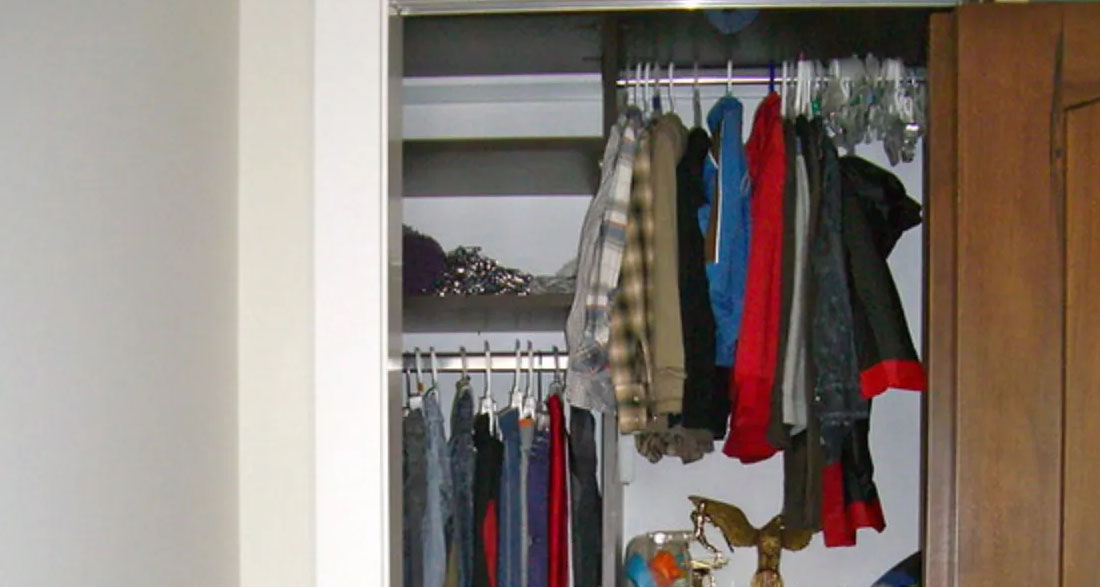
The closet door was slightly open.
Just an inch.
Like someone had looked inside recently.
“I love you, bud,” I whispered to the quiet room.
Inside the closet, everything looked normal at first. Shirts hanging. Soccer gear tossed in a pile. The usual teenage mess.
My phone buzzed.
Brendon.
I ignored it.
I kept searching.
The doctor’s words echoed in my head: unlikely.
If I was going to find the truth, it had to be before Brendon came back.
On the highest shelf, hidden behind a stack of old comic books, I found a blue shoebox.
I sat on Andrew’s bed and held it in my lap.
“Okay, Andrew,” I whispered. “What did you want me to see?”
I lifted the lid.
On top was an appointment card from a cardiology clinic.
Scheduled for next week.
Under it was a printed page from the patient portal.
I read the words out loud.
“Appointment canceled by parent — Brendon.”
Canceled.
Not postponed.
Not rescheduled.
Canceled.
My stomach dropped.
There was a sticky note in Andrew’s handwriting.
“Dad said I don’t need it. Mom is going to freak out.”
My chest felt like it was splitting open.
My phone buzzed again.
This time, I answered.
“Why did you leave the hospital?” Brendon demanded.
“I needed to get some things. And shower.”
“You’re not in his room, are you?” he asked sharply.
“Why would that matter?”
Silence.
“But I did find Andrew’s appointment card,” I said slowly. “Why did you cancel it?”
He sighed loudly. “I didn’t think he needed it. He was fine. You always overreact. My insurance doesn’t cover it anymore. I would’ve had to pay cash.”
“You canceled his heart appointment because of money?” My voice shook. “He trusted you! He told you something was wrong!”
“You always make everything a crisis,” he snapped.
“Maybe that’s what keeps him alive,” I shot back. “You should have listened.”
He hung up.
I stared at my phone.
You always overreact.
With shaking hands, I checked my notifications.
And there it was.
1 new video message: Andrew.
It was sent less than an hour before Brendon called me earlier.
I pressed play.
Andrew’s face filled the screen.
He looked pale. Sweaty. His eyes were anxious.
“Hey, Mom,” he said quietly. “I don’t feel good. My chest hurts and I feel dizzy. Dad says it’s nothing, and if he finds out I told you, he’ll get mad. But I’m scared. You said to always tell you if something was wrong. So… I’m telling you. If you see this, something happened.”
My heart shattered.
In the background, I heard Brendon’s voice.
“Put that away, Andrew! You’re fine! Stop making a scene. Don’t worry your mom.”
Andrew’s lips pressed together.
The video cut off.
I couldn’t breathe.
My son had reached out to me.
He had been scared.
And I hadn’t seen it in time.
Guilt washed over me like a wave.
How many times had I missed notifications while juggling work and single parenting?
But this wasn’t just about me missing a message.
This was about Brendon ignoring one.
I called the hospital immediately.
“This is Olivia, Andrew’s mother,” I said, my voice shaking. “I found something you need to hear. Please call me back as soon as possible.”
When I hung up, I whispered into the quiet house, “I’m here now, sweetheart. I’m listening. I promise.”
And for the first time that night, I cried.
I barely slept.
My phone lit up with texts from Brendon.
“Where are you?”
“Don’t make me the bad guy.”
“We need to look united. Stop digging, Olivia.”
Stop digging.
By sunrise, the nurse called me back. I explained everything — the canceled appointment, the note, the video.
She listened carefully.
“Thank you for telling us,” she said. “I’ll inform the doctor immediately.”
When I returned to the hospital at noon, Brendon was pacing in the waiting room.
“Did you find something else?” he asked quickly.
I looked straight at him.
“You canceled his follow-up. You told him not to call me even when he was scared.”
He sank into a chair.
“I thought he was fine,” he muttered. “I didn’t want you to worry.”
“You told him not to call me.”
He rubbed his face. “I knew you’d blame me.”
“This isn’t about blame,” I said firmly. “It’s about Andrew.”
His sister Hannah arrived just then. She hugged me tightly. I handed her my phone without speaking.
She watched the video.
Then she watched it again.
Her jaw tightened.
“He told you he was scared,” she said to Brendon. “You heard him. And you still shut him down.”
“Hannah—” he started.
“Don’t,” she cut him off. “Don’t you dare make her the problem when he begged for help.”
He looked at the floor.
Inside the consult room, I handed the doctor everything — the appointment card, the note, the video.
She listened carefully.
“I’m documenting all of this,” she said. “The canceled cardiology follow-up. The note. The video reporting chest pain and dizziness. This changes how we read what happened.”
The social worker nodded.
“Because this involves a minor and delayed medical care, a report will be filed for review,” she explained calmly. “This isn’t about punishment. It’s about safety.”
“A report?” Brendon whispered, his face draining of color.
“Yes,” the doctor said gently but firmly. “We don’t ignore warning signs and call it parenting.”
The social worker slid a card across the table.
“This is the hospital’s patient advocate and legal liaison. If you want to clarify emergency medical decision-making today, we can help. We can also note in his chart that only you may authorize changes or cancellations.”
I picked up the card like it was oxygen.
“I want that,” I said. “Today. No more misunderstandings.”
Later, the doctor found me again.
“We’re adjusting Andrew’s treatment,” she said. “Because of the information you gave us, there’s a path forward now. But we did lose time.”
We lost time.
I went back into Andrew’s room and took his hand.
“I found your answers, honey,” I whispered. “No more secrets. I promise.”
The sun had set when Brendon stood quietly at the door.
“I’m sorry, Olivia,” he said. “For all of it.”
I was too tired to argue.
“We were both scared,” I said honestly. “But Andrew comes first.”
He nodded and walked away.
I curled up in the chair beside my son, resting my head near his arm.
My son was still fighting.
And so was I.
If — when — Andrew wakes up, he will know one thing for sure.
When he was scared, I chose him.
Someone tried to teach him that his fear was a nuisance.
I will never let that lesson stay.
My son was still fighting.
And I will fight right beside him.