

When my thirteen-year-old son fell into a coma after a walk with his father, I felt my world crumble. One minute he was full of life, joking about baseball and leaving water bottles everywhere, the next, he was hooked to machines, unresponsive.
But a hidden note and a message I almost missed forced me to confront the one secret that could ruin his father — and make me decide how far I would go to keep my son alive.
I’ll never forget the hospital smell, that mix of antiseptic and fear, or the blinding lights at three in the morning.
Yesterday, Andrew had left for a simple walk with his father. I had sent him off like I always did, inhaler in hand, “Take your inhaler, just in case.”
He rolled his eyes, a half-smile on his face. “Okay, Mom, I got it.”
That was the last time I heard his voice—until the phone call that changed everything.
When I burst into the ER, Andrew was already unresponsive, a tangle of wires and tubes. My bag dug into my hands so hard that my nails left marks in the leather.
Brendon, my ex-husband, sat slumped in a chair, pale and red-eyed. He looked almost like a stranger.
“I don’t know what happened,” he muttered, voice tight. “We were just walking. One second he was standing… the next… he just went down. I called 911. The ambulance came. I rode with him the whole way.”
I wanted to believe him. I tried. But Brendon had a history of brushing off Andrew’s health concerns. He’d skipped a follow-up last year and told Andrew not to “baby himself.” My gut twisted, sour with suspicion I didn’t want but couldn’t ignore.
A doctor, a woman with tired eyes but a gentle voice, approached me by Andrew’s bedside.
“He was fine and then he collapsed. We’re running tests,” she said softly. “His heart stopped briefly, but we revived him. He’s in a coma, and we’re still trying to find out why. Every hour counts right now.”
“You have his files? His history?” I asked.
She nodded.
I gripped the bed rail, staring at the steady rise and fall of Andrew’s chest. The beeping monitors became the only rhythm in my world.
Brendon’s sobs were loud, raw—but something about them felt off, rehearsed, like he was shaping an alibi out of grief.
I knelt beside Andrew, brushing his damp hair from his forehead.
“Early signs point to cardiac arrest,” the doctor murmured.
“I’m right here, baby,” I whispered. “You don’t have to be brave alone—not anymore.”
I remembered his last text: “Love you, Mom. I’ll see you at dinner.”
Brendon leaned closer. “He was fine, Olivia. We just walked around the block. He didn’t say anything was wrong.”
I kept my voice steady. “Brendon, did he feel dizzy or have chest pain before he collapsed?”
He shook his head, too quickly. “No, nothing like that. He was happy, I swear. We talked about baseball. He wanted to practice pitching after dinner. He tripped—that’s all. It’s not my fault.”
I watched him. A flicker of fear or guilt flashed across his face.
“You know if there’s anything else, I have to tell the doctors, right?”
Brendon opened his mouth, then shut it, jaw tight. “Liv, I swear. He didn’t say anything.”
“He was happy, I swear.”
The nurse stepped in. “Visiting hours are over. You both need rest.”
Brendon sighed, pulling his jacket tight. “I’ll head home. Call me if anything changes.”
I turned back to Andrew. The room was almost unbearably quiet. That’s when I noticed his fist, clenched tight against the sheet. At first, I thought it was tension, but then I realized—he was holding something. A small, crumpled, damp piece of paper.
I coaxed his fingers open, heart pounding. The handwriting was unmistakable.
“Mom, open my closet for the answers. BUT DON’T TELL DAD!”
My chest tightened. Why didn’t he want his dad to know? I smoothed the paper flat and leaned close to his ear.
“Okay, sweetheart. I promise I won’t. I’ll find out what you need me to know,” I whispered.
The nurse checked his vitals and smiled softly. “Go home, get some rest. He’s stable for now.”
Outside, the parking lot glistened with rain, streetlights reflecting like little stars on wet asphalt. I gripped the note all the way home.
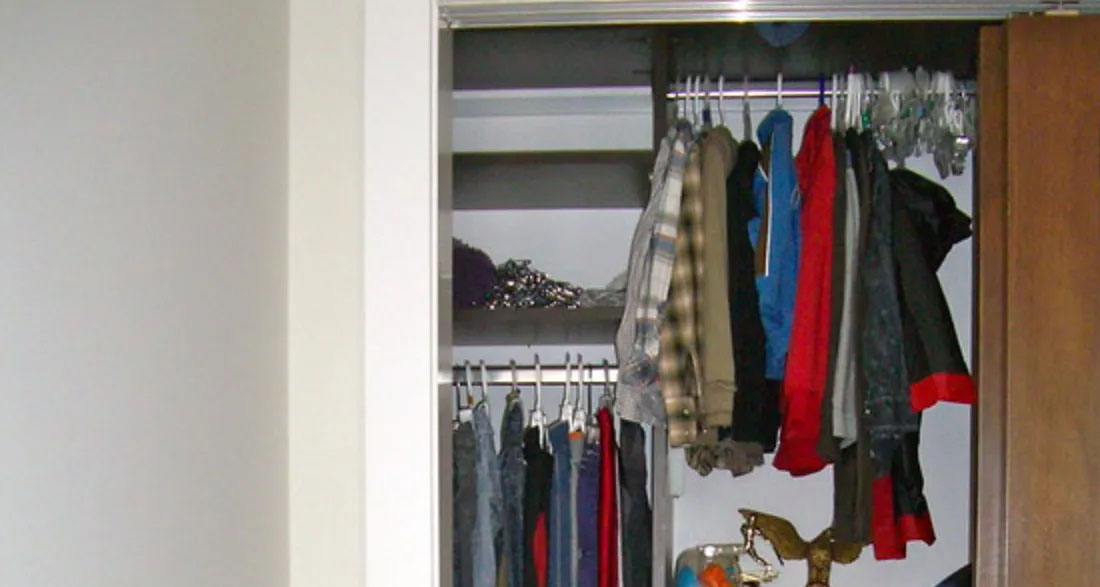
At the house, the world felt cold and still. I paused outside Andrew’s bedroom, inhaling the faint scent of his deodorant and shampoo. His closet door was cracked open just slightly, as if someone had peeked inside and left.
“I love you, bud,” I whispered.
Inside, everything seemed normal, but nothing felt normal anymore. I ran my hand over the clothes, searching for the secret Andrew had left. My phone buzzed with another text from Brendon. I ignored it.
Andrew and Brendon had left a little after four. What happened in that hour? Had Andrew already felt sick?
On the top shelf, behind a stack of old comics, I found a blue shoebox. Sitting on his bed, I lifted the lid.
On top was the appointment from the cardiology clinic, scheduled for next week. Beneath it, a printout from the patient portal. Andrew was healthy—mostly—but he had a minor heart defect that required regular check-ups. Vital check-ups.
But then I read the line that froze me: “Appointment canceled by parent — Brendon.”
A sticky note in Andrew’s handwriting was tucked beside it.
“Dad said I don’t need it. Mom is going to freak out.”
My hands trembled. My phone buzzed again. I answered.
“Why did you leave the hospital?” Brendon asked.
“I needed to get some things, Brendon. And a shower.”
“You’re not in his room, are you, Liv?”
“Why would that matter?”
There was a long pause. Then I asked, “But I did find Andrew’s appointment card. Brendon, why did you cancel it?”
“I didn’t think he needed it. He was fine. You always overreact. My insurance doesn’t cover it anymore. I would have had to pay cash.”
I gripped the phone tighter. “He trusted you, Brendon. And you canceled the appointment! I would have paid for it. You should have told me.”
“You always make everything into a crisis,” he snapped.
“Maybe that’s what kept him alive all this time,” I shot back. “You should have spoken to me.”
He hung up.
My chest tightened. I was about to give up when a notification blinked on my phone. One new video message: Andrew.
The timestamp: fifteen minutes before Brendon had called from the ER.
Andrew’s face filled the screen, pale and scared.
“Hey, Mom. I don’t feel good. My chest hurts, and I feel dizzy. Dad says it’s nothing. But I’m scared. You said to always let you know if something was wrong, so… I’m letting you know.”
Brendon’s voice boomed in the background: “Put that away, Andrew! You’re fine! Stop making a scene. Don’t worry your mom. Just sit down.”
Andrew’s lips pressed together, eyes searching the camera. The video cut off.
I froze. Guilt crashed over me like a wave. My son had reached out, scared, and I hadn’t been there in time.
I called the hospital immediately. “This is Olivia, Andrew’s mother. I found something you need to hear. Please call me back as soon as possible.”
I kept talking to him anyway. “I’m here now, sweetheart. I’m listening. I promise.”
That night, I barely slept. Brendon’s texts kept coming:
“Where are you?”
“Don’t make me the bad guy.”
“We need to look united. Stop digging, Olivia.”
I ignored them. I had a mission.
By sunrise, the nurse called back. I explained everything: the appointment, the note, the video. She promised to inform the doctor immediately.
By noon, I was back at the hospital. Brendon was pacing in the waiting area. When he saw me, he hurried over.
“Did you find something else?”
I looked him in the eye. “You canceled his follow-up, Brendon. You told him not to call me even when he was scared.”
He dropped into a chair, shame on his face. “I really thought he was fine. He said he was tired, that’s all. I didn’t want you to worry.”
“You told him not to call me.”
“I… I need to speak to the doctor and the social worker. Andrew deserves better from both of us.”
Brendon’s sister, Hannah, arrived. She watched Andrew’s video message twice, tears in her eyes.
“He told you he was scared,” she said to Brendon, voice calm but firm. “You can’t ignore that now.”
Brendon slumped. “I… I thought he’d bounce back. Like always.”
I handed everything—the note, the appointment card, my phone—to the doctor. The social worker listened, pen poised.
“You can’t ignore this,” I said, my voice steady.
The doctor nodded. “We’ll update Andrew’s chart immediately. Olivia, you will be listed as his primary medical decision-maker. No appointments or changes without your approval. The case will be reviewed, and we’ll keep you informed every step of the way.”
The social worker gave me a card. “You’re not alone.”
I exhaled for the first time in hours. “No more misunderstandings,” I whispered.
Later, the doctor came by. “There’s reason to hope, Olivia. You did the right thing.”
Back in Andrew’s room, I held his hand, feeling the faint pulse beneath the monitors.
“I found your answers, honey,” I whispered.
The sun had set when Brendon appeared at the door.
“I’m sorry, Olivia. For all of it.”
“Andrew comes first,” I said, exhausted but firm.
He nodded and left without another word.
I curled up beside my son, hand on his arm. He was still fighting. And so was I.
If—and when—Andrew wakes, he’ll know I chose him. Someone had tried to teach him fear was a nuisance. I wouldn’t let that lesson stick.
My son was still fighting.