

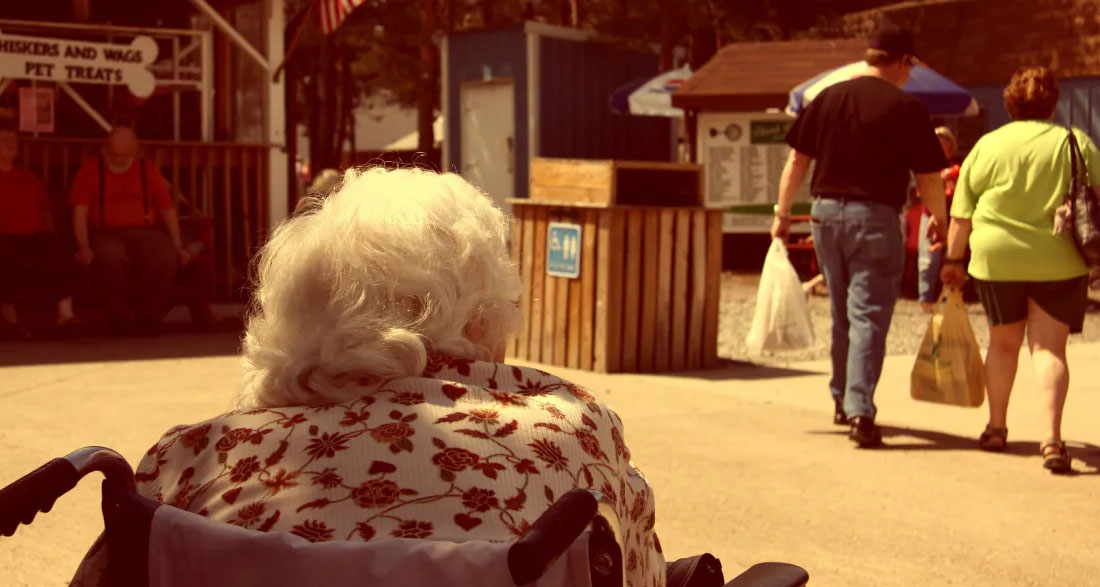
My name is Mabel. I’m 83 years old, and all my life I thought I understood loneliness. I thought it meant being alone in a quiet house or eating dinner with no one sitting across from me.
But I learned the truth much later.
Real loneliness is when the people you love most—the ones you brought into this world—decide you’re not worth even a moment of their time.
And nothing prepared me for the emptiness my own sons created.
For decades, I believed Trenton and Miles were good boys. I told myself that over and over, especially on those nights when I couldn’t sleep and only had memories to keep me company. But life has a funny way of showing you the truth when you least want to see it.
Somewhere between childhood and adulthood, I became nothing more than background noise in their very important, very busy lives.
I raised two boys who grew up to forget I existed.
But like any mother, I tried. I tried until my heart cracked open. I tried until the rejection hurt more than the silence.
I baked their favorite chocolate chip cookies and wrapped them carefully in boxes full of nostalgia. I mailed them across the country even though I knew the packages might sit untouched. I wrote letters on every holiday.
I called on every birthday. I flew across states for milestones, showed up with flowers, and smiled when they barely glanced up from their phones.
After my husband died seven years ago, the truth hit me harder than grief ever could—I had already lost my sons, too. I just hadn’t realized it yet.
Trenton moved to the West Coast and apparently forgot my number. Miles married a woman who never liked me and had children I had seen exactly twice, both in photographs.
Their excuses came dressed up as apologies but sounded more like obligations.
“Mom, I’m swamped with work right now.”
“Mom, the kids have soccer, we just can’t make it this year.”
“Maybe next Christmas, Mom.”
Next Christmas never came.
Eventually, I stopped asking. The rejection hurt worse than the silence.
Then last year, I got pneumonia and landed in the hospital for a week. I called both boys. Trenton’s wife answered and said, “He’ll call you back.”
He didn’t.
Miles sent a text that said: “Hope you feel better soon 👍.”
I lay in that hospital bed surrounded by machines and strangers and realized something terribly painful:
My sons had decided I wasn’t worth the inconvenience.
When I finally went home, the house felt too big and too full of memories that only reminded me of everything I no longer had.
At 83, I had become invisible in my own life.
That’s when I decided to rent out my guesthouse.
Clara answered my ad on a Tuesday. The moment I heard her voice, something warm stirred in my chest. Sometimes you can just tell when someone understands being alone.
She was a single mother with a teenage daughter, Nora. They arrived with hopeful eyes and worn-out smiles.
“I can’t afford much,” Clara said softly, her hand on Nora’s shoulder. “But we’re quiet and clean, and I promise we won’t be any trouble.”
I didn’t need money. I needed life in my house again.
“Let’s talk about rent after you settle in, dear,” I said, opening the door wider.
At first, I stayed distant. But Clara and Nora… they had this gentle way of showing up without pushing, without demanding anything. They treated me like I mattered.
Clara loved the same mystery novels I did. We began swapping books. Nora found my old recipe box and asked if I’d teach her how to make apple pie.
Soon, we were spending Saturday mornings in the kitchen, elbows deep in flour, laughing like I hadn’t laughed in years.
Within weeks, they weren’t tenants anymore.
They were the family I thought I’d lost forever.
Clara checked on me every morning before work. Nora did her homework at my kitchen table. They wanted to hear my stories. They wanted to learn from me. They wanted me.
When I tripped over a rug one afternoon and fell, Nora ran so fast you’d think her feet didn’t touch the floor.
“Mabel, don’t move. I’m calling Mom!”
She held my hand until Clara rushed home.
“You’re okay,” Nora whispered. “We’ve got you.”
I couldn’t remember the last time someone said “we’ve got you.” Maybe no one ever had.
When I caught a deep chest cold, Clara took three whole days off work to stay with me. She lost money to make soup, read to me, keep me company.
“You don’t have to do this,” I croaked.
She frowned like I had said something ridiculous.
“Of course I do. You’re family.”
Meanwhile, my sons were out in the world somewhere, not even wondering if I was still alive.
Six months later, my doctor gave me the news I had half expected. My heart was slowly failing.
“Could be months. Could be a couple of years, if you’re lucky,” he said.
I went home, sat in my quiet kitchen, and realized something:
If I was running out of time, I wasn’t going to spend another second giving love to people who didn’t care whether I lived or died.
I called my lawyer.
“I want to change my will,” I said.
He asked if I was sure.
“More certain than anything in years.”
We scheduled the reading for a Thursday. I sent my sons formal notices. They ignored my phone calls for months, but the word “inheritance” brought them running.
Money speaks louder than a mother’s love ever did.
Trenton arrived first—expensive suit, fake smile. Miles came later, annoyed, barely glancing at me.
No hug. No warmth. Just a stiff “Mom.”
Clara and Nora sat quietly in the corner. My sons didn’t even look twice at them.
“Who are they?” Miles asked.
“You’ll find out,” I said.
My lawyer began reading the will.
All my assets—my house, my savings, my investments—were going to Clara and Nora.
My sons were getting two silver goblets. Family heirlooms, nothing more.
The silence after that was delicious.
Miles erupted.
“This is INSANE! You can’t do this!”
“I absolutely can,” I said calmly. “And I have.”
“Mom, these are strangers!” Trenton hissed.
“They’re not strangers. They’re my family. More loving than either of you has been in years.”
“We’re your SONS!” Miles shouted.
“Then you should’ve acted like it.”
They threatened lawyers. They stormed out. And for the first time in years, I could breathe.
Clara came to me. “Are you okay?”
“I am,” I said. And I meant it.
Three weeks later, they came crawling back. Guilt takes time, but it always arrives.
“Mom,” Trenton said stiffly. “Can we talk? We want some things from our old rooms. Just memories.”
Memories. The irony nearly made me laugh.
“Clara and Nora own the house now. You’ll need to ask their permission.”
Their faces tightened, but they obeyed.
Clara, kind as always, said, “Of course. Take whatever personal items you’d like.”
I watched from the hallway as they pretended to look through their rooms. But I knew better—they weren’t searching for souvenirs. They were looking for something they could use against Clara and Nora.
Then Miles found it.
The envelope I had placed under his old bed two weeks earlier.
I knew they’d come. I knew they’d try something. And I wanted them to hear every word.
He opened it and read aloud with shaking hands.
“Dear Trenton & Miles,
Being born to someone doesn’t give you the right to break their heart.
Clara and Nora are my real family now.
I’m not choosing strangers. I’m choosing the people who chose me…”
His voice cracked.
“…Show up for your own children. Love them before it’s too late.
All my love, Mom.”
Miles swallowed hard. “Mom… we didn’t mean—”
“Yes, you did,” I said softly. “Every time you didn’t call. Every time you made me feel like loving you was a burden.”
“We’re your blood,” Trenton insisted.
“And Clara and Nora are my heart.”
“This isn’t fair,” Miles whispered.
“No,” I said. “It’s not. But neither was being abandoned by my own sons.”
They left empty-handed—just like they had been leaving me for years.
That evening, Clara made dinner. We sat together, the three of us.
“Are you okay?” Nora asked, her voice gentle.
I squeezed her hand. “I’m better than okay. I’m home.”
Clara wiped her eyes. “We love you, Mabel.”
“Love you too,” I replied. “And that’s worth more than any inheritance.”
Next week, I turn 84. My time is running out, but I’m not afraid anymore. I will leave this world in a house filled with warmth and laughter—not silence.
My sons may never understand what they lost. But that’s their burden.
I’m done carrying pain that wasn’t mine.
In these final months, I’m choosing joy. I’m choosing love. I’m choosing the people who showed up.
Family isn’t blood. Family is who stands beside you when life gets dark.
My sons lost a mother.
But I gained daughters—daughters my heart chose—and that is the greatest gift I could have asked for.