

When my mom started sounding different on the phone, I felt it right away. Her voice was still gentle, still loving, but something underneath it had changed. It was thinner somehow, tighter. I knew something was wrong — but I never imagined how bad it truly was.
What I found when I showed up without warning changed everything.
After I left for college in another city, I finally felt like I was starting my own life. My mom, Paula, had spent most of her life giving herself away piece by piece. First to my dad, then to me, and then to her demanding job.
She worked long hours as a hospital administrator, the kind of job where everyone else’s emergencies came first. She skipped lunches, stayed late, answered calls at all hours. Helping people wasn’t just her job — it was who she was.
My mom, Paula, had spent most of her life giving first to my dad.
So when she told me she had started seeing someone from work, I was honestly happy for her. She deserved love. She deserved someone to care for her the way she had always cared for everyone else.
That man was Dennis.
I met him briefly during my senior year. To be honest, he didn’t seem terrible at first. He smiled too much, laughed too loudly, and somehow managed to turn every conversation back to himself. Still, none of that felt dangerous. Just… annoying.
He didn’t raise any red flags.
At least, not then.
When my mom was with him, she looked hopeful. Lighter. Like she was finally allowing herself to imagine a future that wasn’t all responsibility. So I smiled too. I nodded and told her, “If you’re happy, Mom, then I’m happy.”
They got married just a few months after I moved away.
I didn’t think much of it. Life moved fast. I had exams, internships, deadlines, and a life that felt like it was finally beginning. Still, I called her often. And for years, everything seemed fine.
She told me about Dennis’s fishing trips, about their plans to see the fall leaves in Wisconsin. She laughed. I believed she was happy — or at least, that’s what I told myself.
For years, everything seemed fine.
Then something changed.
It wasn’t dramatic at first. Just small things. Pauses. Short answers. A sadness she tried hard to hide.
I’d ask her directly, “Are you okay, Mom? How are you really?”
She never hesitated. “I’m fine.”
But it was the way she said it. The rushed tone. The way people say they’re fine when they are anything but.
One Sunday morning, I called her like I always did.
“Hi, Mom,” I said. “You sound tired.”
“Oh, I’m fine,” she replied quickly. “Just a lot of work lately.”
“You sure?”
“Mm-hmm. Just busy. You know how it is.”
But I didn’t believe her. That night, I couldn’t sleep. I kept thinking about the way she said the word “busy,” like it hurt to say it out loud.
So I took the next day off work and drove straight to her house early the next morning without telling her. I told myself it was just a surprise visit.
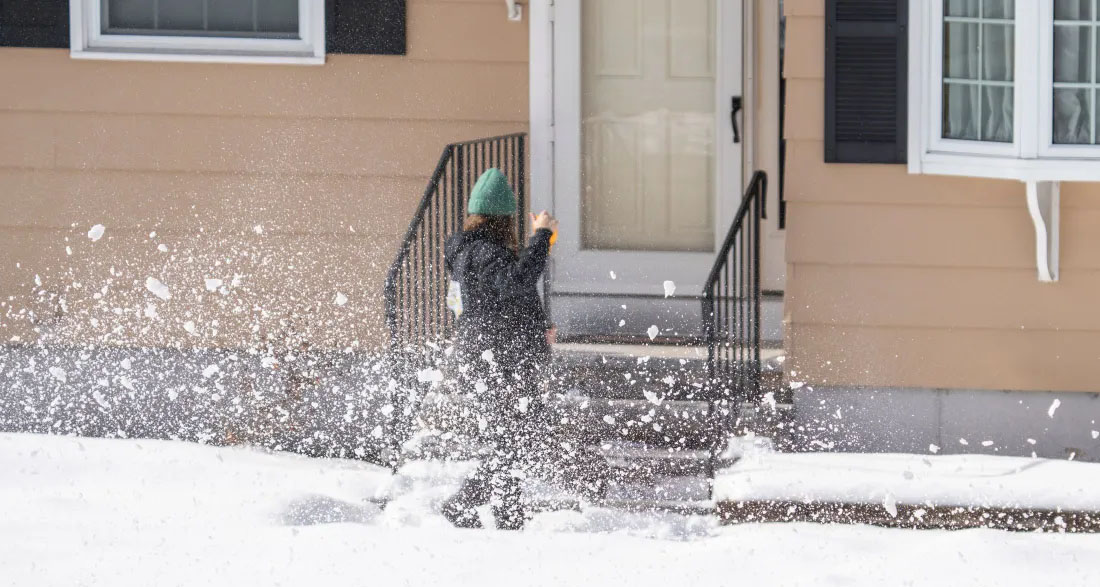
I parked at the end of the street. The driveway was packed with snow, thick and heavy. There was no way my little Civic was getting through that mess.
When I walked up the icy path and looked through the window before ringing the bell, my heart stopped.
My mom was inside the house. Her leg was wrapped in a cast. And she was cleaning.
She scrubbed the floors. She carried laundry baskets. She moved slowly from room to room in the two-story house, leaning on furniture just to stay upright.
I tried the front door. It cracked open.
There she was — sweating, pale, gripping the kitchen doorframe like it was the only thing holding her up.
“Mom?!” I shouted. “What happened?!”
She tried to smile, but it barely formed. “Oh… honey. I slipped a few days ago. I broke my leg.”
“What?” My voice shook. “Why didn’t you call me?”
She looked away. “I didn’t want to worry you.”
“Mom, you’re walking around on a broken leg. That’s not something you keep to yourself.”
“I didn’t want to worry you.”
Then I really looked around. The kitchen was spotless. The floors shined. A vacuum sat in the hallway. A mop bucket rested beside the stairs.
“Why are you cleaning?” I asked, my voice rising. “You’re injured!”
She nodded slightly and limped past me into the living room.
“Dennis’s daughter is coming tonight,” she said quietly. “He wants the house to look perfect.”
I turned to her, stunned. “Are you serious? He’s making you clean the house for her?”
She didn’t answer.
“Mom, what’s really going on?”
She sighed and carefully sat down, lifting her leg onto the ottoman. “Your stepfather said it was important. Kylie is… particular. He wants her to feel welcome.”
“Kylie? The grown woman with the Range Rover? The wealthy one who lives in a gated community?”
“He said she’s obsessed with luxury and cleanliness,” my mom continued. “I’m also supposed to shovel the snow all the way to the garage so she can park comfortably. Dennis doesn’t want to be embarrassed.”
“With a broken leg?” I asked, my hands shaking.
“He said it was just snow. That I could use the shovel to support myself.”
That was it.
I didn’t scream. I didn’t yell. I knew men like Dennis didn’t respond to noise. They responded to consequences.
“Mom,” I said gently, taking her hand, “go sit in my car. I parked down the street.”
I helped her into her coat, grabbed blankets from upstairs, and held her arm as she struggled down the porch steps. She slid into the passenger seat, exhausted, and I blasted the heat.
Then I made calls.
I hired a private snow removal service and told them I needed all the snow from the three surrounding streets moved — onto our driveway and yard.
“Ma’am,” the man said, “that’s three blocks of work. You sure?”
“I’m sure. Charge me whatever you need.”
Then I called the city. I reported an unsafe property. I explained that a woman with a broken leg was being forced to shovel snow alone. I sent photos — her cast, the snow, the cleaning supplies.
Finally, I called her doctor and asked for a nurse to come check on her, officially.
About an hour later, the snow crew arrived with massive trucks. They didn’t just clear snow. They piled it high. They buried the driveway, blocked the garage, stacked snow against every window.
The house looked like it had been swallowed by an avalanche.
An hour later, Dennis’s old pickup rolled down the street. He slammed on the brakes when he saw the house.
“What is this?!” he shouted. “What happened to my house?!”
“You might want to wait before calling the police,” I said calmly.
“What? Elsa? What are you doing here?”
Two city vehicles pulled up behind him. Then a black SUV. Kylie stepped out, took one look at the house, and froze.
“Is that… Paula?” she asked when she saw my mom.
My mom smiled weakly. “Hi, Kylie.”
Kylie rushed over. “What happened to your leg?! You’re in a cast!”
Dennis tried to explain. “She insisted on cleaning—”
“You made her clean with a broken leg?” Kylie snapped.
The city inspector stepped forward. “Sir, we’ve received reports of neglect and unsafe conditions.”
Dennis lost it. “This is insane!”
“Not everyone shovels snow with a fractured femur,” I said coldly.
Kylie turned to my mom. “I’m so sorry. You didn’t deserve this.”
We left him there, buried in snow and consequences.
I brought my mom home with me. We made soup. She rested. Two weeks later, she filed for divorce.
Dennis tried to dig himself out. Slipped. Twisted his back.
Karma really does wear boots sometimes.
In my small apartment, my mom healed. One night she said, “You saved me.”
I smiled. “You’re just a terrible liar.”
She laughed — a real laugh. And that was the sound I missed the most.